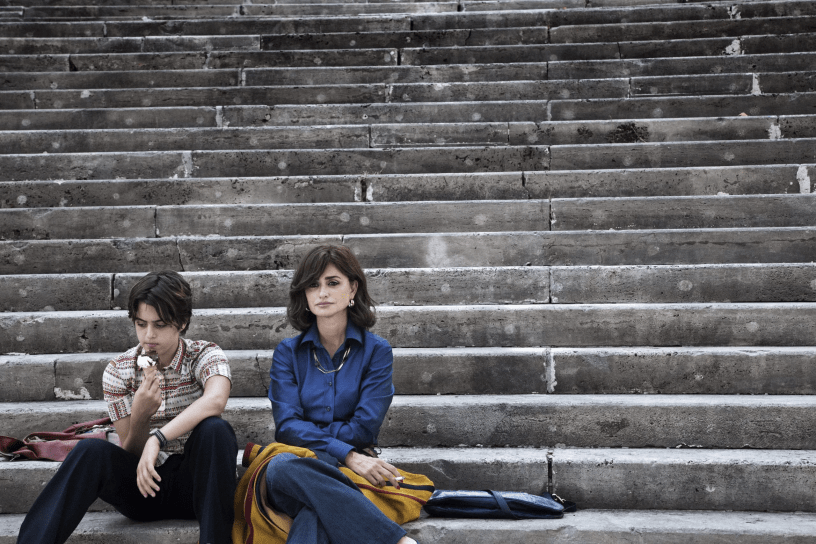
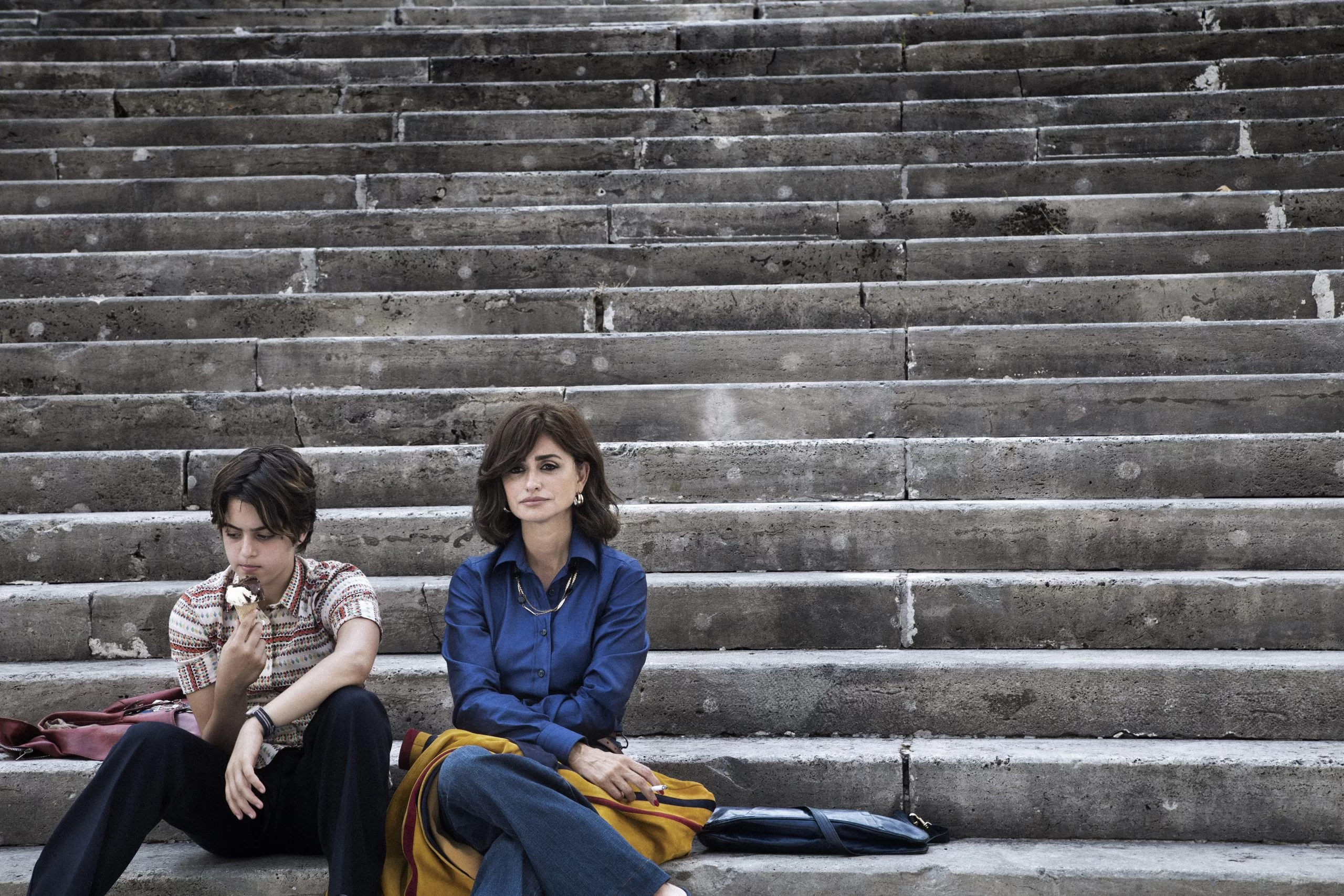
If there is one word to describe Emanuele Crialese’s semi-autobiographical drama L’Immensita, it would be ‘muted’. From the emotions to the camerawork to the lighting to the actual volume of the sound mix itself, this is a film that is, for the most part, quiet to a fault. It’s undoubtedly a well-intentioned piece as it looks at gender non-conformity and female disappointment in ‘70s Italy (not exactly a place for either of these things to receive a warm understanding), but there’s simply not enough *feeling* here to consistently bring the story to life.
Penelope Cruz gets the top star billing here as Spanish expat Clara, married to real-piece-of-shit businessman Felice (Vincenzo Amato) in early ‘70s Rome, but it’s Clara’s eldest child (of three) Adri/Andrea (Luana Giuliani) who forms the heart of the story. Born Adriana and known to the family as a girl, Adri (who would prefer to be called Andrea but makes do with the more neutral shortening of their birth name) is profoundly struggling with their gender identity, desperate to be a boy. It’s a struggle that receives limited understanding, even from the loving Clara, but it’s reinforced constantly as Adri/Andrea sees the treatment of Clara at the hands of both the philandering and violent Felice and the gaggle of cat-callers that follow Clara through the streets.
Clara herself, in the midst of an ongoing nervous breakdown throughout the film, often acts like a child – both her and Adri see the miserable life available to adult women and seek to reject it in their own ways. It makes for an uneven performance from Cruz – compelling at its best, but generically whimsical at its worst, like in a scene where Clara and Adri play a game that involves running through the streets of Rome while hooting and whooping.
These grand moments of release feel lifted straight out of a different film when so much of L’Immensita takes place beneath a shroud of drabness. Some of the flights of fancy are intriguing, like a temporary workers’ camp hidden behind a forest of reeds right in the centre of Rome or a sequence in which Adri and their siblings and cousins hide from their parents in an underground drainage system, but these are a bit too few and far between. There are precious few moments of real emotional pull, while all the bright colours of ‘70s Italian style are hidden beneath dim lighting.
Naturally, some of this is part of Crialese’s point, the social roles and heteronormativity of the milieu acting like a grey cloud that constantly follows and casually oppresses these characters. It’s a choice that works better on paper than in practice though, and makes the occasional schmaltziness feel that much more discordant – there are a few musical numbers that should be fun but instead come off as mostly quizzical – while a lot of the more grounded drama is frankly quite dull. In the end, that’s not a hugely pleasant cocktail, the 100-odd minutes spent in L’Immensita’s company eventually feeling like entirely too much.
 Jack Blackwell – Film Reviews