Though the celebrated musical adaptation of Alice Walker’s The Color Purple has proven that a perhaps initially unintuitive match of song-and-dance routines and a story of unrelenting misogyny and racism can work, the question of how to transfer its tonal balance from the stage to the screen when the film was announced was a rather perplexing one. It’s a question that Blitz Bazawule’s film doesn’t really answer – this 2023 big-screen adaptation is, for better and worse, theatrical through and through, grand and overpowering but, under the harsh glare of a digital camera, also jarring and unsteady. The bits that work are a delight, but as a whole, The Color Purple doesn’t cohere into more than the sum of its parts.
With a story spanning almost 40 years, there’s plenty of admirable ambition to be found here – it’s only Bazawule’s second feature as a solo director (he was also part of the three-person directing team on Beyonce’s Black is King), but he’s not afraid to go big. Telling the life story of the meek but resilient Celie (Fantasia Barrino), a poor Black woman in rural Georgia between 1909 and 1947, Bazawule and writer Marcus Gardley try to balance the tragic smallness of Celie’s world as she’s handed off by her sexually abusive father to violent drunk husband Mister (Colman Domingo) with the expansiveness of the musical numbers.
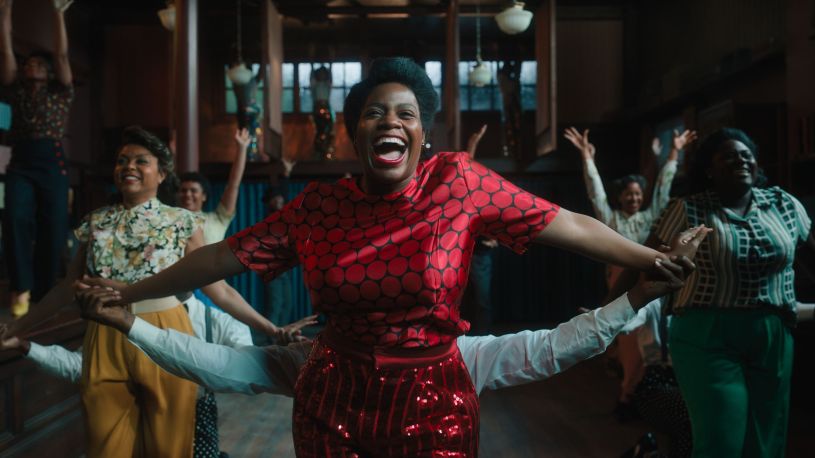
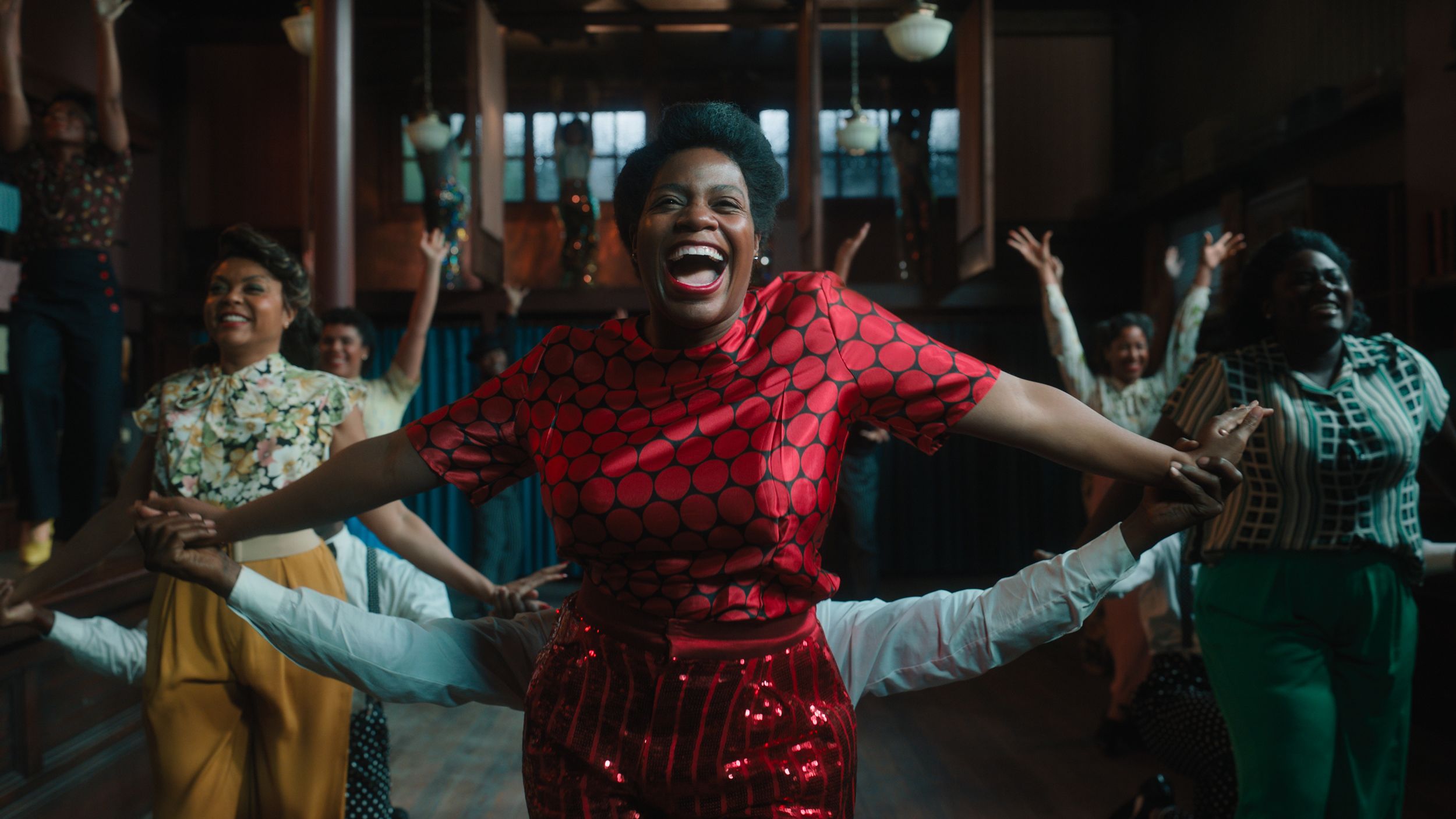
It’s an approach that is very affecting when it works, particularly in the last third as Celie takes more control of her life. Barrino, reprising her Broadway role for her first ever film performance, has an irresistibly powerful voice and, when it’s used to its fullest as Celie finally finds her own, there weren’t very many dry eyes left in my screening. Bazawule can be too cut-happy in the musical numbers, which does slacken them (given that the tone is so theatrical, why not commit more in the one area where it really counts?), but the songs themselves are strong and moving, stepping into the fantasies of the characters to allow for some lovely set design work.
Given that the last person to adapt this story for the screen was one Steven Spielberg, Bazawule’s The Color Purple doesn’t have the visual beauty or splendour of its predecessor, and a steady hand like Spielberg’s is missed when it comes to the jagged tonal line that this film walks across and sometimes trips over. When the stumbles become too noticeable, it puts a sort of cartoon-ish sheen on the more harrowing drama and proves a genuine obstacle to a lot of the cast. Even Domingo, as the most prominent of the story’s many wretched men who find joy only in the diminishing of the women around them, can look a bit lost at points, and he’s one of the most reliably excellent actors currently working.
Absolutely conquering the tonal challenge, though, are Taraji P Henson as heroic Blues singer and ‘loose woman’ Shug Avery and Danielle Brooks as the joyfully indomitable Sofia, who marries into Celie’s otherwise miserable family through Mister’s son Harpo (Corey Hawkins). Henson and Brooks are both just fantastic, Brooks in particular just a lightning bolt of energy that, even though it’s a supporting role, I’m not sure the film would function without. I’m sure awards season will feature both of them prominently, and all honours will be well-deserved.
It’s in their moments of sisterhood and solidarity with Celie that The Color Purple is at its most moving, as well as their moments of levity that are easily the film’s funniest. Even if the film around them can’t always keep its shape well enough to match its finest performers, there are enough of these moments of brilliance to ensure that the sometimes wobbly finished product is a solid and crowdpleasing entry into this year’s awards shuffle.
 Jack Blackwell – Film Reviews