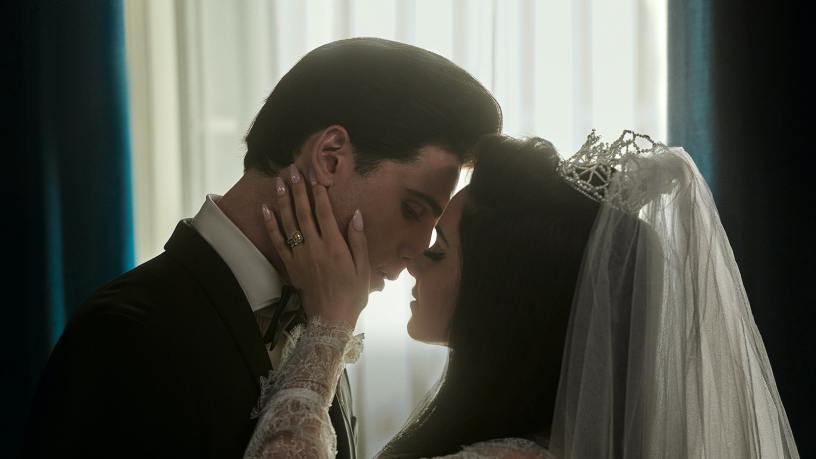
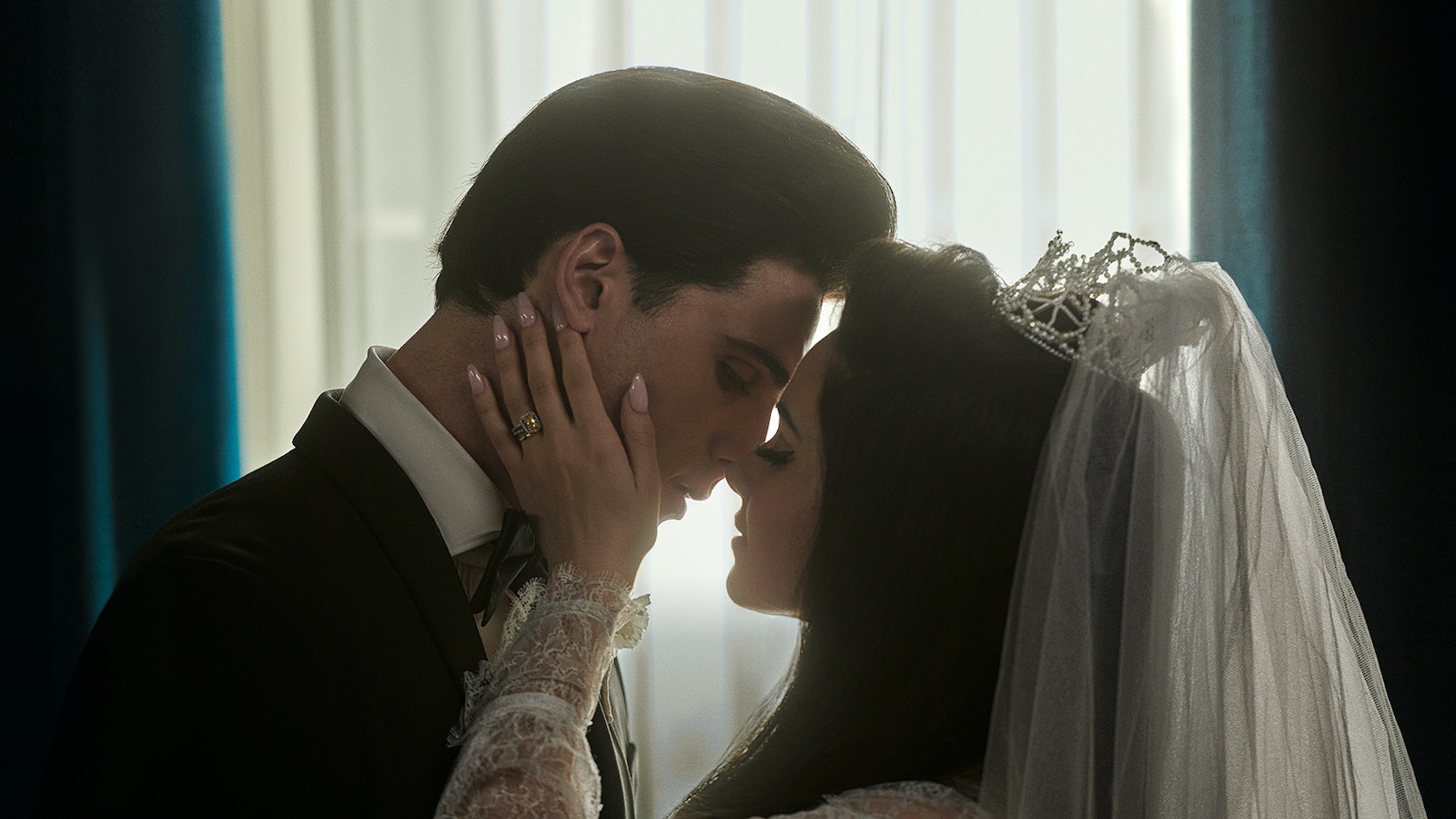
A mere 18 months after the release of Baz Luhrmann’s manic and epic Elvis, do we still have room for further insights into the Presley family? It’s a question that lurks around the periphery of Sofia Coppola’s Priscilla almost from start to finish, and though the answer is an eventual ‘yes’, it’s not quite as hearty as one as you might like. Clever, empathetic, and immaculately styled, it also suffers from being noticeably emotionally underpowered, both in comparison to Elvis and Pablo Larrain’s Spencer, its closest spiritual cousin in the genre of ‘quasi-feminist 2020s gilded cage biopics’.
We first meet Priscilla Beaulieu (Cailee Spaeny, one of the few adult actors who can actually convince as a teenager) in 1959, aged 14, as an army brat whose family is currently stationed on a US base in West Germany, a base that just so happens to also house one Elvis Presley (Jacob Elordi). Invited to one of Elvis’s parties, Priscilla’s waifish innocence, mixed with her innate American-ness, instantly draws The King to her and it’s not long before they’ve begun a chaste but still really creepy relationship.
This chapter was rather glossed over in Elvis, but Coppola grants Presley no such discretion. Though we understand Priscilla’s thrill at dating the world’s most famous sex symbol, Elvis himself is, no two ways about it, a pathetic groomer, slowly enveloping Priscilla’s whole world even as he proves more emotionally unstable and needy than his teenage beau. We can see the traps being laid long before Priscilla can, and the later shifts to Elvis being more distant, uncaring, and actively abusive are discomfortingly real.
Oddly, then, a lot of the moment-to-moment stuff here feels rather underpowered. Coppola does a great job of showing us how Elvis’s outsized presence (even making itself felt in the colossal height disparity between Spaeny and Elordi) actually shrank Priscilla’s world, giving us claustrophobic locations and compositions, but doesn’t dig quite deep enough. There are a lot of montages within Priscilla’s very unhurried 110 minute runtime and the result is a world you never quite get to know, even with all the immaculate (and often amusingly absurd) design work, from sets to costumes to music – Coppola even gets a decent amount of comic mileage out of the adverts of the time.
Spaeny impresses throughout, charting a journey from not-quite-innocent to not-quite-jaded (Coppola avoids easy extremes throughout) without a huge amount of dialogue, and though Elordi’s Elvis isn’t even close to the incandescence of Austin Butler, he still makes for an absorbing quasi-villain. It’s often up to them to hold an otherwise fractured story together and though they don’t always succeed – a few third-act fights and betrayals simply land too softly – Spaeny in particular makes for an effective keystone.
Sadly, yet also somewhat fittingly given the subject matter, Priscilla sometimes feels like a gloomy footnote (bar some very rare exceptions, it’s a dimly lit film) to the much brasher and more exciting Elvis. Part of this, of course, is through the fault of nothing but bad timing, but for a film about a young woman being trapped by, and eventually escaping, one of the loudest figures of the 20th Century, Priscilla is just too quiet.
 Jack Blackwell – Film Reviews
Good review. I felt the same way about this movie. It was interesting, but too boring and fragmented that it felt like everything was merely “glossed over”.