Given how many more marketable films from last year’s Cannes (see; a historical epic about anti-Semitism in the form of Kidnapped, Josh O’Connor’s Italian crime caper La Chimera, or Jude Law playing Henry VIII in Firebrand) have yet to arrive in the UK, it’s somewhat baffling to see a film like Lisandro Alonso’s Eureka get distribution ahead of its stablemates. Here is a film that is a nearly impossible sell, a tone poem about the indigenous peoples of the Americas that tells its story in riddles rather than any identifiable plot, refusing to ever actually entertain its audience, making for a film that is boldly unique but also relentlessly, even insultingly boring.
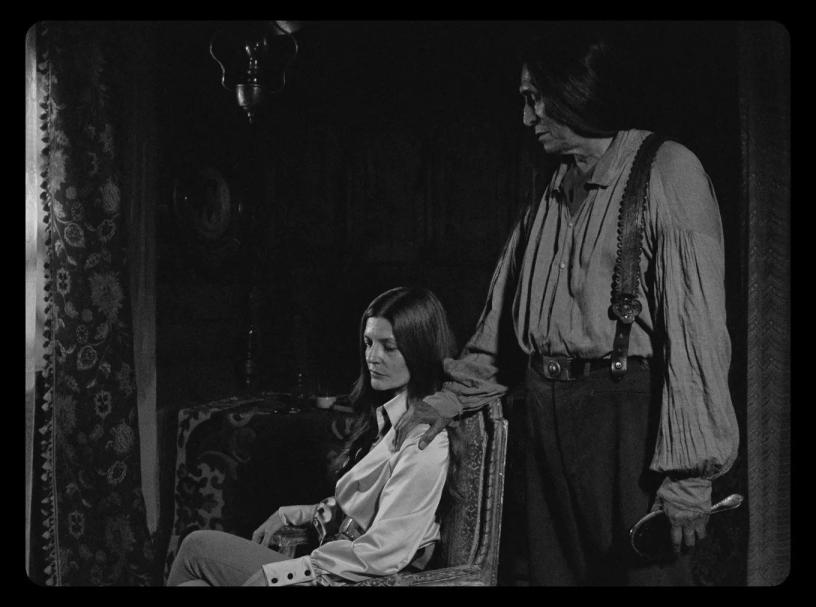
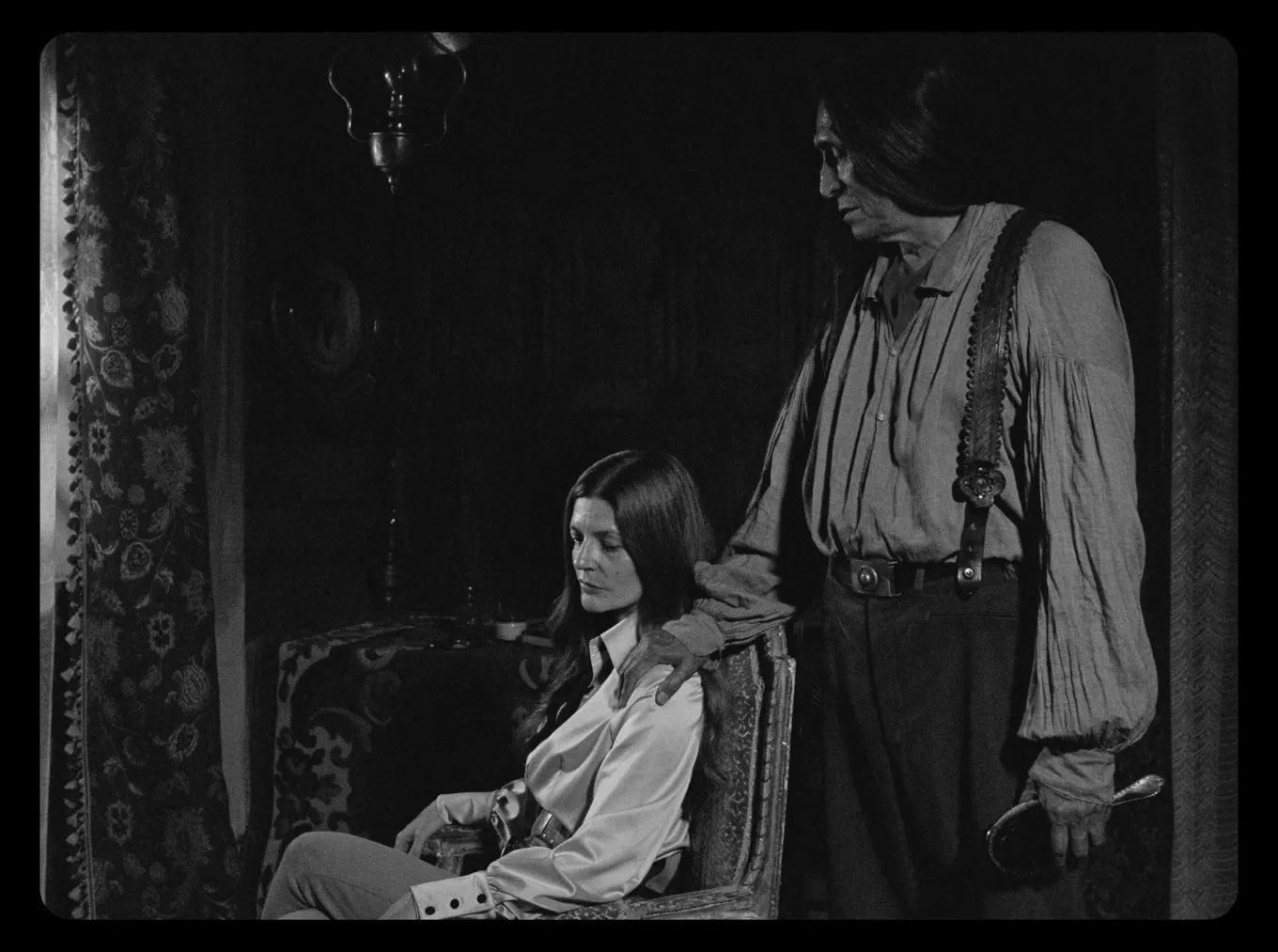
Across a truly endless two-and-a-half-hour runtime, Alonso splits Eureka into three distinct sections. The first, a black and white Western set in a dusty and sweaty 19th Century frontier town, at least holds some intrigue, as we follow European gunslinger Murphy (Viggo Mortensen) as he violently tracks down his missing daughter. There’s some snap and mystique here, but it’s over rather quickly (and also then revealed to be a movie within a movie, instantly throwing cold water over the drama), and it’s when we enter the second segment that things really go downhill.
Following a Native cop on a Sioux reservation as she trudges through a night shift breaking up drunken arguments and other relatively low-stakes kerfuffles, it’s just completely interminable sequence after completely interminable sequence, even a gently surreal interlude involving a lost French actress outstaying its welcome. Everything is so static and uninvolving and repetitive that it quickly stops feeling like, you know, a movie and more like a purgatorial endurance test to see just how much *nothing* an audience is willing to sit through. Yeah, it looks nice, particularly during a sunrise over the frozen middle-America landscape, but when you’re this bored it’s hard to care about the formal achievements.
Some actual interest is brought back by the third section, involving a girl who transforms her spirit into a bird in ‘70s Brazil to bear witness to an act of violence in the jungle, but it’s far too little, far too late. If there’s one note that particularly unifies the settings of each of Eureka’s sections, it’s how places and people can settle into chaos when there’s nothing better to aim for, but this chaos is a purely background force, adding no discernible drive to what Alonso actually ends up putting in front of us. An exhausting, irritating experience.
 Jack Blackwell – Film Reviews