In the build up to the release of Alex Garland’s Civil War, a lot of ink has been spilled about all the things the film *isn’t*. It’s not a believable portrait of near-future American politics, it doesn’t take a clear enough side, and it’s not an anti-war movie are criticisms that have already been levelled before most people have even had a chance to see it. While these takes may be technically true, though, it’s hard to see their relevance once you’ve actually watched the damn thing, which is a viscerally immersive look at the deep dehumanisation entailed by war journalism that treats America just like Hollywood has treated countless foreign warzones in the past –a terrifyingly unknowable morass of chaos.
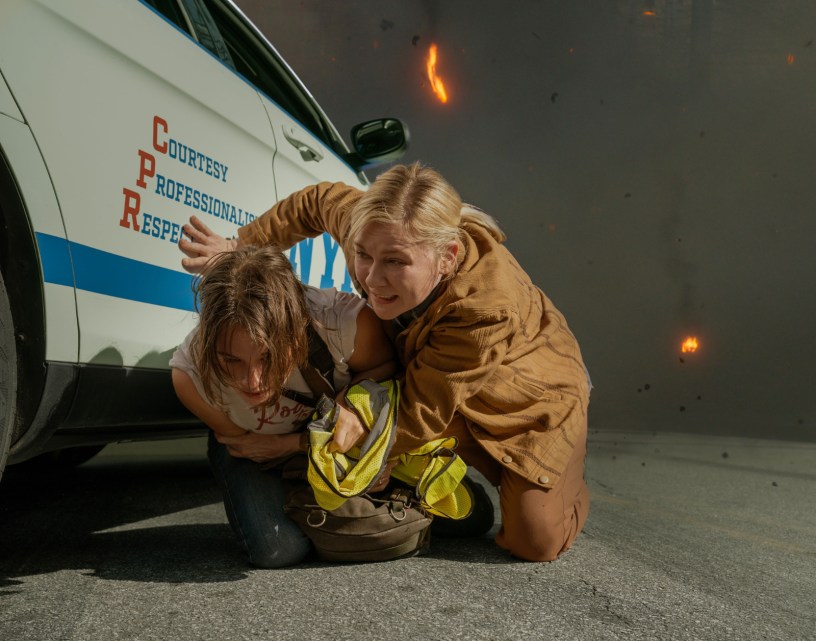
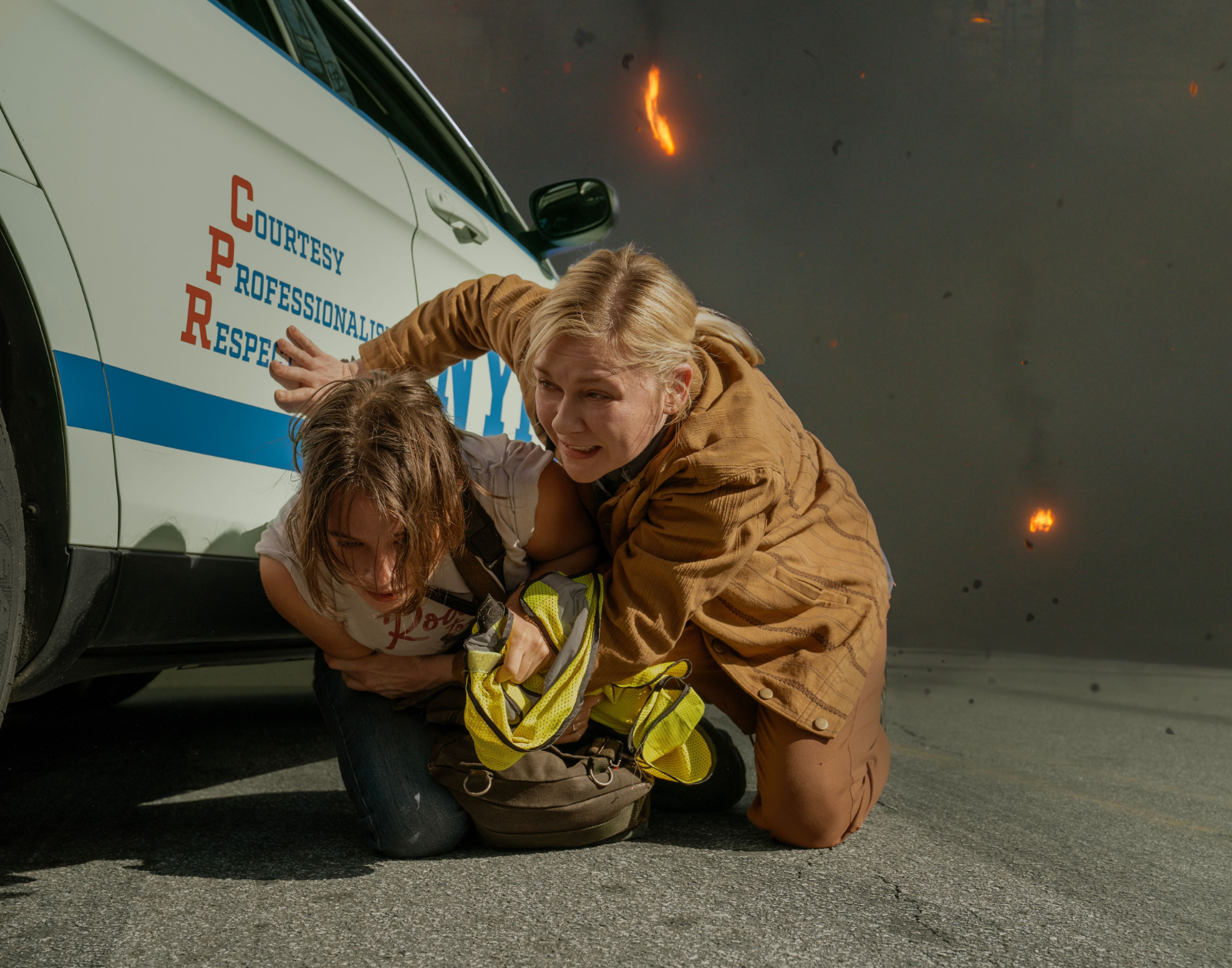
From the off, Garland wants us on the back foot. We’re an unknown length of time into a new American Civil War, being fought by three separate secessionist alliances against the loyalist United States, commanded by a tyrannical president (played in a brief but effective cameo by Nick Offerman). It looks like the loyalists are on the brink of defeat, so a team of war journalists – stony veteran Lee (Kirsten Dunst), adrenaline junkie Joel (Wagner Moura), youngster Jessie (Cailee Spaeny), and old-timer Sammy (Stephen McKinley Henderson) – set off on the treacherous drive from New York to DC to interview the president before he’s captured and executed.
Garland wastes very little on any exposition, instead embracing the chaos inherent to any civil war warzone and looking at this near-future America as another movie might look at Syria or the DRC – people shoot at each other with little real idea as to why, suicide bombers wreak havoc, and riots break out near aid trucks. The end effect is something akin to a head-spinning bad dream, both immediately immersive and eerily surreal, with Garland getting a lot of mileage out of the inherent indignity of the kitschy landscapes of America suddenly becoming battlefields.
Civil War might not have a lot to say about America, but it certainly does about the very notion of war journalism. We’re always seeing the world through the POV of whichever character has most successfully numbed themselves to the hideous human realities of war, which is frequently Lee in the first half but slowly becomes Jessie as she gets speedily addicted to the rush of seeing combat through a viewfinder. It might be other people actively shooting each other but, Garland argues, staring at desperation and violence through the lens of a camera is no less sociopathically dehumanising that doing it down the barrel of a gun.
Speaking of guns, Civil War has a pretty expert grasp of them too. Combat sequences are absolutely thrilling, brutish sound design and a real sense of momentum making them not just immersive and exciting, but actively cool – it’s not long before we’re craving their adrenaline highs alongside Joel and Jessie. Every bullet fired has a real weight to it, every rifle laden with terrifying power and potential, bodies dropping with sickening thuds and no fanfare as shots crack out. If Civil War does, rather by design, often lack a real human heart for an audience to latch on to, it’s more than made up for by these crunching, dizzyingly loud battles.
After a triptych of strange and existential sci-fi horrors, Garland’s fourth (and maybe final if his recent interviews are to be believed) directorial effort, while still with a decent amount on its mind, has a much simpler goal of pure entertainment than its predecessors. It’s a bar it clears easily, not just a thrilling story in its own right but also, especially in its siege-of-DC finale, the best Call of Duty movie we’re ever likely to get. It might not be a particularly deeply thought-out portrait of *America*, but as a road trip through the chaos, fear, thrill, and sudden death of combat, it would hard for it to be any more convincing.
 Jack Blackwell – Film Reviews
Great review! I haven’t seen Civil War yet, but I’m certainly intrigued to see A24’s take on a big all-guns-blazing action film.