
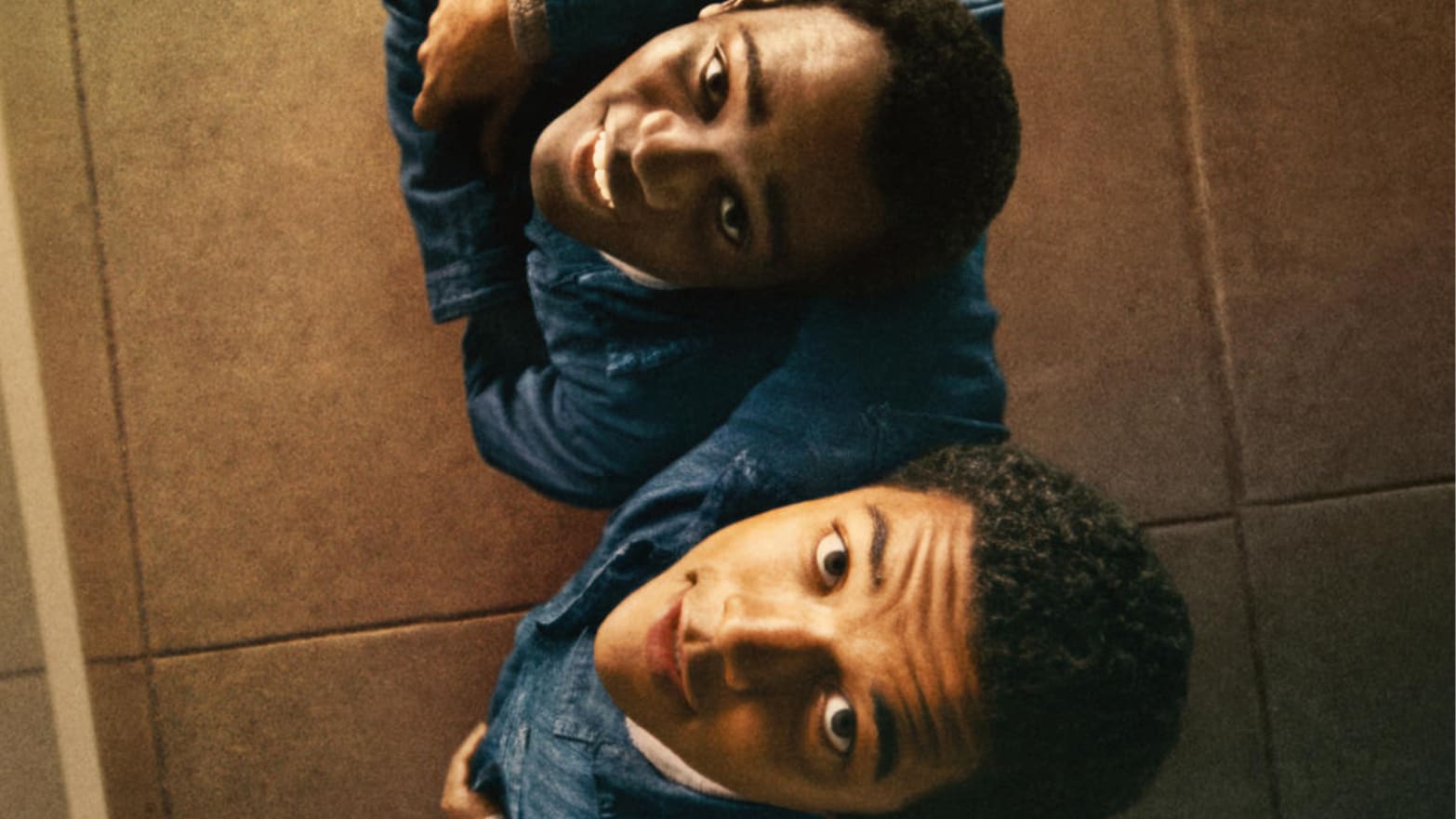
The question of how to bring the interiority of a novel to the screen is as old as the art of adapting books for movies, and it’s not one that has received many imaginative answers – typically either ‘voiceover narration’ or no real answer at all. In his sublime adaptation of Colson Whitehead’s Nickel Boys, RaMell Ross, alongside his co-writer Joslyn Barnes and DOP Jomo Fray, provides a genuinely innovative solution – shooting his film almost entirely in a first-person point-of-view. It’s a technique that has been tried before as a gimmick in films imitating videogames, but here Ross manages to make it feel not just revolutionary but also vital to understanding this story, making for an emotional gut-punch of a movie that is also one of the most formally daring mainstream-ish American movies in years.
Flitting back and forwards in time, the majority of Nickel Boys is spent at Nickel Academy in 1960s Florida, a brutal reform school based on real-life institutions that, at least for its black ‘students’, is less an educational establishment than a prison. It’s a prison that our lead, the bright and politically engaged Elwood (Ethan Herisse), has landed in for the simple mistake of being in the wrong car at the wrong time, arrested alongside a thief despite having committed no crime.
It’s incredible how well (and how quickly) we get to know Elwood through Ross’s first-person technique, even though he’s not that talkative and we only see his face in brief reflections or as he looks at a photograph. Eventually, the perspective will shift to the eyes of the best friend Elwood makes at Nickel, the more cynical Turner (Brandon Wilson), and from there hop back and forth between these two boys, but by the time it does, Elwood’s headspace has already become intimately familiar. This sort of constant first-person view will probably be most familiar to viewers as the technique employed in Peep Show, but where that unescapable intimacy was mostly used for hilariously bleak humiliation of its characters, in Nickel Boys it instead engenders a radical empathy.
It never once wears out its welcome or even becomes overly claustrophobic, instead just gripping you, forcing you to notice every horror or small joy or just change of breath of Elwood and Turner (in a real sonic masterclass, their voices sound a little different depending on whose perspective we’re in, just as your own voice does in your head). It’s all immensely moving and frequently beautiful, whether in extreme moments of anxiety and fury or in calmer spells of care and friendship.
We’ve seen plenty of ‘60s America-set films about the overwhelming spectre of the era’s racism, but to experience it so directly makes it horrifyingly new again, though Ross is very sparing in actually showing the worst physical horrors of the story – the overall atmosphere here is so powerful that explicit violence doesn’t become necessary. And yet, on the flipside, the joys are elevated too – when Turner first meets Elwood’s grandma (Aunjanue Ellis-Taylor, giving a phenomenal performance) as she visits Nickel, the small hug they share moved me almost immediately to tears.
Ross does break out of the first-person perspective on occasion, though never for a more conventional shot, instead peppering in archive footage from ‘60s newsreels, strange and brief dreamlike interludes, and clips from the Sidney Poitier/Tony Curtis film The Defiant Ones, all backed up by a magnificently eerie score from Scott Alario and Alex Somers. The end result is a film that begins to feel like a hazy, heartbreaking memory of your own, as if you’re recalling something long buried. An extended single-take scene set in the present day of the characters actually doing this, one much more comfortable confronting trauma than the other, took my breath away, suddenly hammering home just how deeply this story had crept into my mind and bones.
Through committing so fully to his central idea, Ross does limit himself a little – Herisse and Wilson’s central performances, in particular, are a bit hemmed in – but even these restrictions have benefits. When Elwood or Turner catch a glimpse of something bizarre or terrible or life-changingly violent, that’s all we get to see of it; a haunting glimpse. Ross always resists the temptation to give us the big, obvious beats of catharsis and the result is a film that hold on to you long, long after the credits have rolled. It’s a loving yet tragic epic of supreme emotional power and stylistic invention that should turn Ross (who, almost unbelievably, is making his fiction feature debut here) and Fray into absolute superstars behind the camera.
 Jack Blackwell – Film Reviews