The story of the 1972 Munich Massacre, in which Palestinian militants kidnapped and killed 11 Israelis during the Olympic Games is one that has been told relatively definitively in film by Steven Spielberg’s brilliant Munich, so how can one approach it again? With September 5, Swiss director Tim Fehlbaum and German writer Moritz Binder find their answer in telling the story of those who *originally* told the story – the ABC sports news crew who were the closest Americans on the ground at the time, and the only station to broadcast the event live – the first time people ever saw real-time terrorism on their TVs. The result is a solid, claustrophobic drama that’s less thriller and more removed than its cinematic predecessor, looking at the people who had to improvise covering one of the most important news stories of the 20th Century.
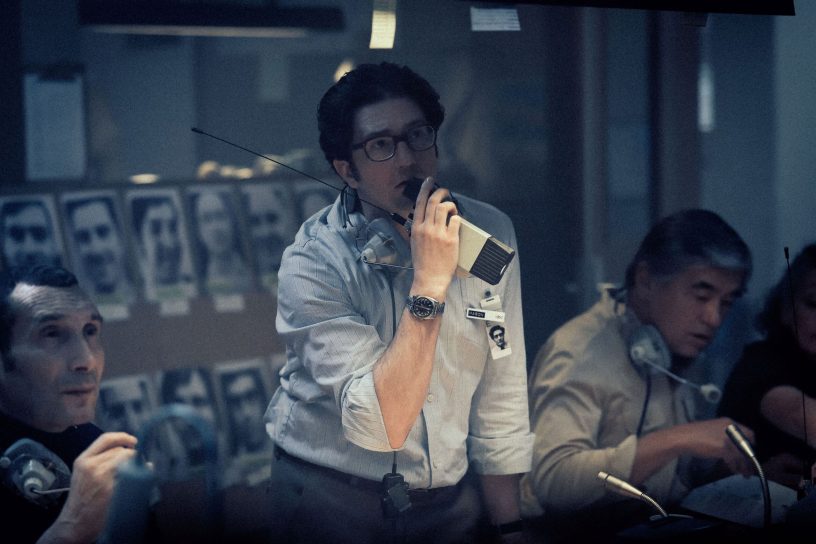
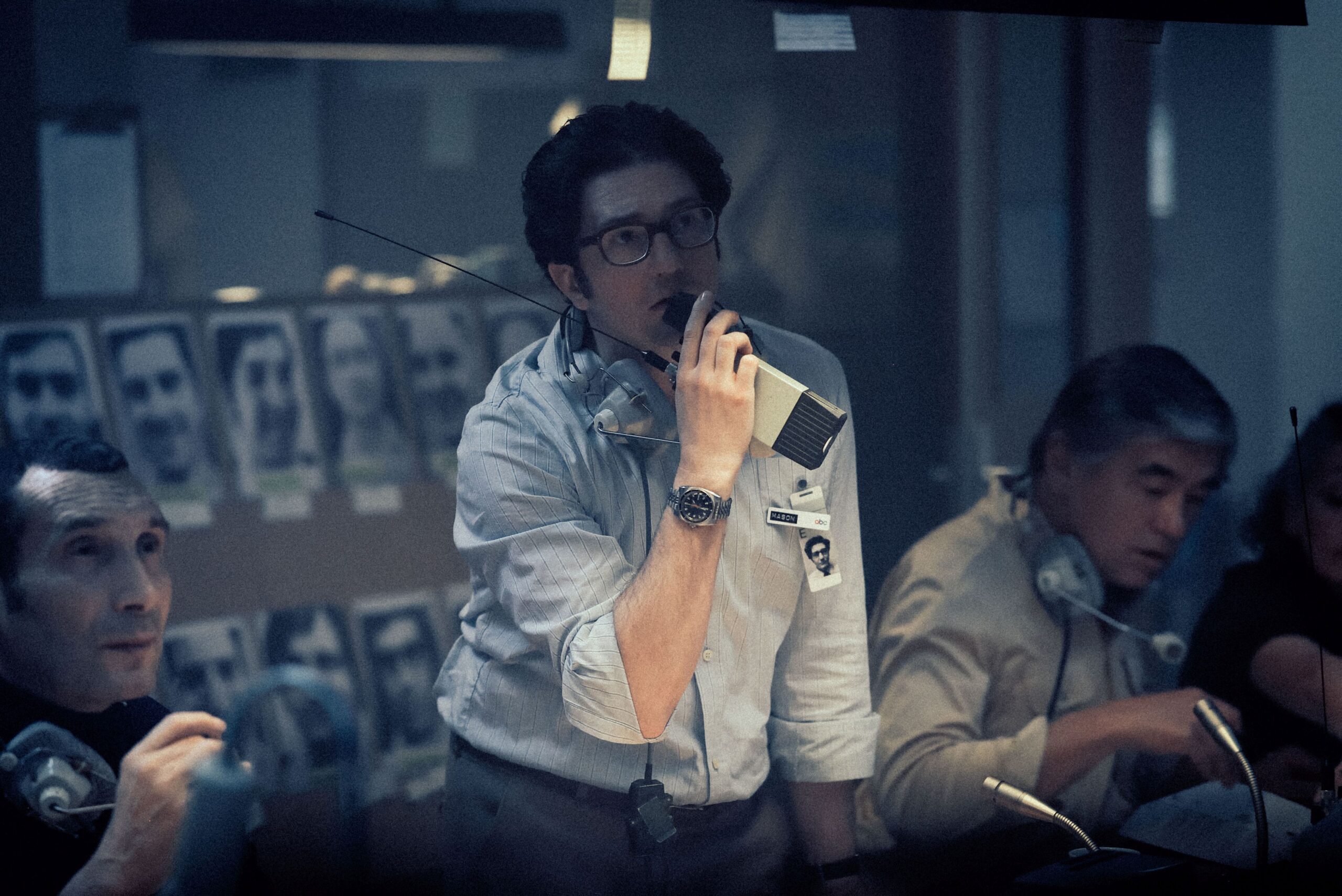
Crucially, we never see any of the attack ourselves – everything is through the uncertain eyes, ears, and fuzzy ‘70s cameras of the ABC crew. Getting top billing as the highest ranking producer Roone Arledge is Peter Sarsgaard, but the person we spend most time with is newbie director of coverage Geoff Mason (John Magaro), who is the person to whom it ultimately falls to orchestrate the coverage. He must keep himself and his crew informed, make sure all the cameras are in the best possible places, and, eventually, make the tough choices about what the right things to say and show are.
In keeping the actual events at arm’s length, Fehlbaum and Moritz are able to duck a lot of possible thorny moral choices on their end, making September 5 maybe a little less powerful than it should be, but they do very effectively capture the chaos of a newsroom often in the dark and always in over their heads – these guys are all experts in sports, not geopolitics. Sweat and cigarette smoke fill the studio, nicely shot on period-appropriate grainy film, and you can practically feel yourself jostling for space in the overcrowded newsroom.
The physical and visual immersion is great, though the writing is a bit less so – too many of these guys talk like they’re stepping out of a time machine from 2024, rather than being actually from the ‘70s. This can probably be in part explained by the fact that, outside of its cast (which does actually include one German in the form of Leonie Bernesch as the station translator Marianne), September 5 is an entirely German production, so some linguistic and cultural intricacies getting lost in translation is to be expected. This origin is also evident in September 5‘s main moral outrages, which it mostly aims at the West German authorities and their arrogance, vanity, and incompetence that allowed the crisis to happen at all.
Sarsgaard is uncharacteristically muted as Roone, but Magaro is great as Geoff, one of the meatiest roles this perpetual quiet scene-stealer has ever been granted in a film. The shifting dynamics between the characters across 24 hours of bonding through absurd stress and adversity, are really nicely handled, and the occasional breaks of gallows humour are infectious. September 5 is a limited film, but it is smart enough to know its limits, crafting a tight and entertaining look at how to inform millions of people at the highest possible point of stress.
 Jack Blackwell – Film Reviews