
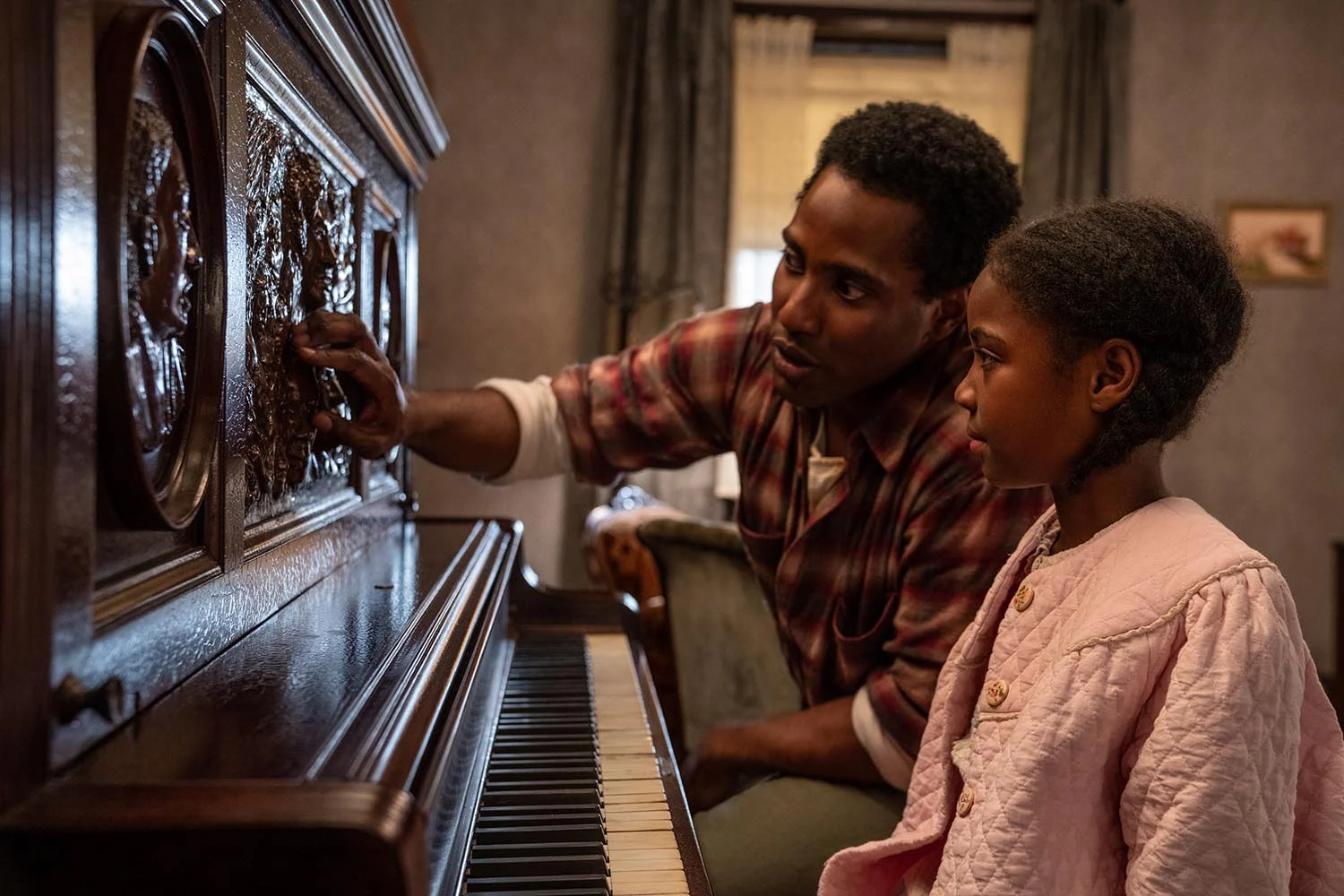
Fittingly for a story of inherited traumas and ghostly legacies, Netflix’s new adaptation of August Wilson’s The Piano Lesson is a real family affair. Produced by Denzel Washington, starring his son John David, and written and directed by his other son Malcolm, this is clearly material that means a lot to the people involved in bringing it to life. Sadly, though, that behind the scenes passion only occasionally translates to actual, on-screen success. Like previous Wilson adaptations Fences and Ma Rainey’s Black Bottom, The Piano Lesson’s total faithfulness to its theatrical source material renders it stolid on screen, and this time there’s no transcendent star performance from Denzel or Chadwick Boseman to elevate it.
Admirably, Washington (the director) does chase some visual expansiveness in a way that those two previous adaptations did not. In retelling the story of a Black family in 1936 Pittsburgh and the way their lives seem to revolve around a possibly-haunted piano inherited from a father in 1911 who was killed for stealing it back in Tennessee, Washington takes his time in the initial Tennessee landscapes before trapping us in the house where most of the action is to take place.
This house belongs to Doaker (Samuel L Jackson), though it is run by his niece (and daughter of Doaker’s slain brother) Berniece (Danielle Deadwyler). Ghostly apparitions flit through the place, getting more active upon the return of Berniece’s brother Boy Willie (Washington the actor). He’s driven up from Tennessee to take possession of his dead dad’s piano and sell it to buy the farm of John Sutter, a white man who has recently mysteriously died in a well and whose grandfather owned Doaker’s grandparents and father as slaves.
On a purely thematic level, it is powerful – it is Sutter’s ghost that haunts the house, the creeping legacy of slavery still a violently powerful thing 70 years after its end – and the greater formal ambition is certainly welcomed. Yet, where the visuals might be less stagy than Fences or Ma Rainey, The Piano Lesson’s actual writing is somehow even more theatrical than its predecessors. Conversations and monologues that are powerful on stage feel strained and unnatural on screen, both Washington and Deadwyler struggling to make their lines feel like anything more than, well, *lines*. Jackson does a much better job of letting Doaker seem like an actual flesh and blood human being, at ease with the language in a way that no one else quite is, but the vast majority of the characters here are less people and more pieces to be shunted through a story.
The end result is just kinda boring. There’s nothing showstopping here, even the more overtly supernatural finale failing to really raise the pulse. Jackson’s performance and some richly lived-in production design aside, The Piano Lesson struggles to hold attention even in a cinema, and I can’t imagine anyone other than total Wilson die-hards sticking it out on a laptop screen when it drops on Netflix in a couple of weeks.
 Jack Blackwell – Film Reviews