We first meet Laszlo Toth (Adrien Brody) deep in the bowels of a crowded boat, bringing its huddled European masses to the shores of New York past the Statue of Liberty. It’s chaotic, roiling, hopeful, joyous, terrifying – all at once. In many ways, it’s a location Laszlo never really leaves across the three-and-a-half-hour runtime of The Brutalist, the latest film from the prodigiously talented young director Brady Corbet that is, as plenty of early reviews already said, a stone cold masterpiece. Tackling the Holocaust, fascism, the American immigrant experience, architecture, and ego across about 15 years of one man’s life, it never loses this early mix of horror and opportunity, an overwhelmingly smart, beautiful, and gripping piece of work.
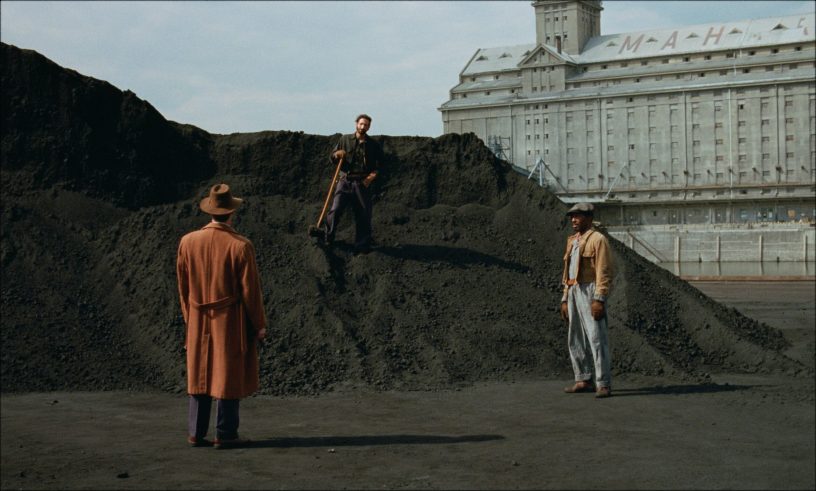
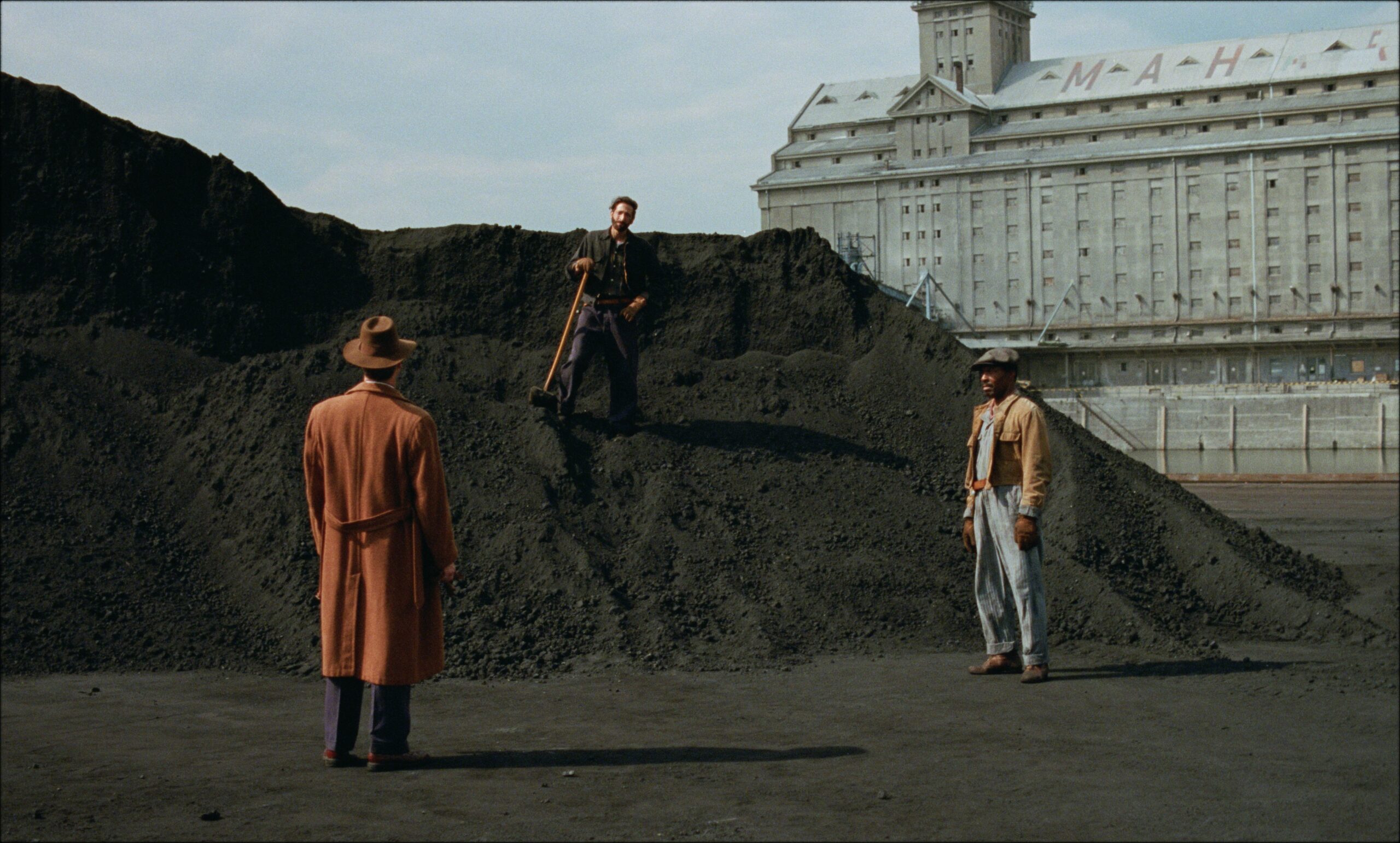
Laszlo is a Hungarian Jewish Holocaust survivor who, in 1947, has finally managed to make it to America, though his wife Erszebet (Felicity Jones) and niece Zsofia (Raffey Cassidy) are still stuck in Europe behind Soviet borders, their absence weighing heavy. A gifted but obsessive architect, Laszlo initially works for his Americanised and Christianised cousin Attila (Alessandro Nivola) but, after a falling out, finds himself getting menial construction jobs alongside his friend Gordon (Isaach de Bankole). Soon enough, though, he is discovered by Harrison Van Buren (Guy Pearce), an ultra-wealthy businessman from a small town in Pennsylvania who hires Laszlo to build a surreal, ultra-modernist community centre/church on his property in memory of his mother, a grand task that shall consume Laszlo, even as Erszebet and Zsofia make it to the States.
It’s a story that perfectly balances intimacy with an epic sweep, always about *America* as an idea or entity without ever sacrificing its rich character work. Corbet’s script, co-written with his wife and fellow filmmaker Mona Fastvold, is astonishing in the way it manages to let you know everything you need to about a character instantly while still leaving room for finding constant new depths and foibles across the gargantuan runtime.
At 215 minutes, it’s a runtime that does need addressing, but The Brutalist is never slow, never ponderous, and always knows exactly when to move on and leave things behind – the ultra-intuitive editing from David Jancso is a genuine marvel to behold in action. Of huge help to this is the intermission, which takes up 15 of those 215 minutes and proves absolutely vital – not just for letting you nip to the loo but also simply in breaking up the story, letting the first half sink in as the even grander second half begins to take shape.
You live so much of these characters’ lives with them that it’s impossible to not get invested, especially Erszebet, who serves as the film’s heart where Laszlo is its fragile genius head. It’s a role utterly unlike anything Jones has played before and she’s just brilliant, going toe to toe with what is likely Brody’s best non-Wes Anderson performance since The Pianist. All the acting here is so great that even Joe Alwyn (as Harrison’s slimy doofus son) is really good, but Guy Pearce really does blow everyone else out of the water.
As Van Buren, he brings a personified version of American Fascism to life in a way that I’ve really never seen before, just oozing the dismissive entitlement, bigotry, and psychosexual oddity that defines a fascist all while able to often remain charming – someone people want to please, and not just because he’s the richest man in the room. He’s extraordinary and completely magnetic in even the smallest of moments – a seemingly innocuous scene, for example, of him talking to Erszebet about helping her get a job tells an entire story of a man who is seethingly angry just below the surface, furious at others for their intelligence and himself for his own insecurity.
All of these performances are captured in exquisite style by Corbet and his DP Lol Crawley, who match the scale of the story with constant images that just feel *gigantic*. Shooting in the old-school style of VistaVision, even mundane landscapes look like gargantuan alien worlds, while a trip to a marble quarry in Italy is jaw-dropping, as beautiful as it is eerie. The actual construction project at the heart of the story takes on a sort of strange life, too, as it gets closer and closer to completion, its rooms becoming monumental in their emptiness, a crucifix design in the roof ensuring God’s light shines down into the building, but never on to a person.
It’s in this unnerving mode (bolstered by what might just be the year’s best score from Daniel Blumberg) that The Brutalist approaches its endgame with a surreal coda that feels half-inspired by the endings of both Tar (with which The Brutalist actually shares quite a bit of DNA) and Killers of the Flower Moon. Suddenly, Corbet gives us a half-cloaked but profoundly affecting message about the cultural appropriation, even commodification, of the Holocaust through art. After a story that has been very symbolic but also, on its face, relatively simple in exactly what it’s talking about, it’s an intellectual and spiritual confrontation that reframes what’s come before, turning an already unforgettable film into a haunting masterwork that represents the cinematic high point of this decade so far.
 Jack Blackwell – Film Reviews