Matthias Glasner’s Dying is not kidding with that title. This is a story infused with death; the fear of it, the longing for it, the abject physical reality of it, and the human capacity to defeat it (if only temporarily) with new life. The result is one of heaviest films of the year so far, a three hour look at ugly emotions and inescapable inevitabilities that manages to find, if not beauty, an irresistibly honest truth amidst all its darkness, a truth conveyed through some of the best writing and all of the best acting I’ve seen in a cinema in 2025.
Lars Eidinger stars here as Tom, a conductor in Berlin (though the marketing has leant into the similarities, the obvious parallels with Tar actually begin and end here – Dying is less cold, less weird, and, truthfully, less brilliant than Todd Field’s 2022 masterwork) with a life that could be kindly described as complex. He’s rehearsing a new piece composed by his suicidal and pretentious best friend Bernard (Robert Gwisdek). His ex-girlfriend and still-best-friend Liv (Anna Bederke) is having another man’s baby that she wants Tom to co-parent. And, on the family front, his dad Gerd (Hans-Uwe Bauer) has dementia, his mum Lissy (Corinna Harfouch) is terminally ill, and his estranged sister Ellen (Lilith Stangenberg) is a desperate alcoholic.
It’s a smorgasbord of pain, Glasner leaning into the absurd humour of how overwhelming it all is, but it rings true; adult life is often *hard* and sometimes literally nothing comes easy. It helps that Dying uses its colossal runtime to give all these characters real depth – no one here is a mere plot device, their own personal priorities meshing or clashing with Tom’s as and when feels natural. We actually don’t even meet Tom for a good while, Glasner dedicating the first 40-ish minutes purely to the ailing Gerd and Lissy.
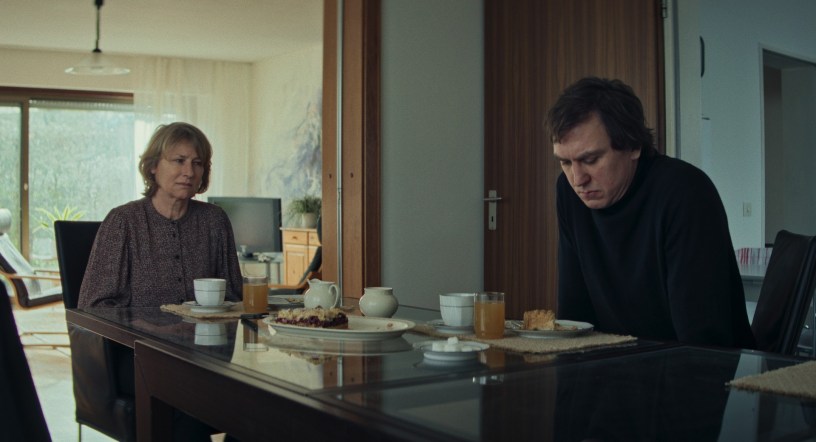
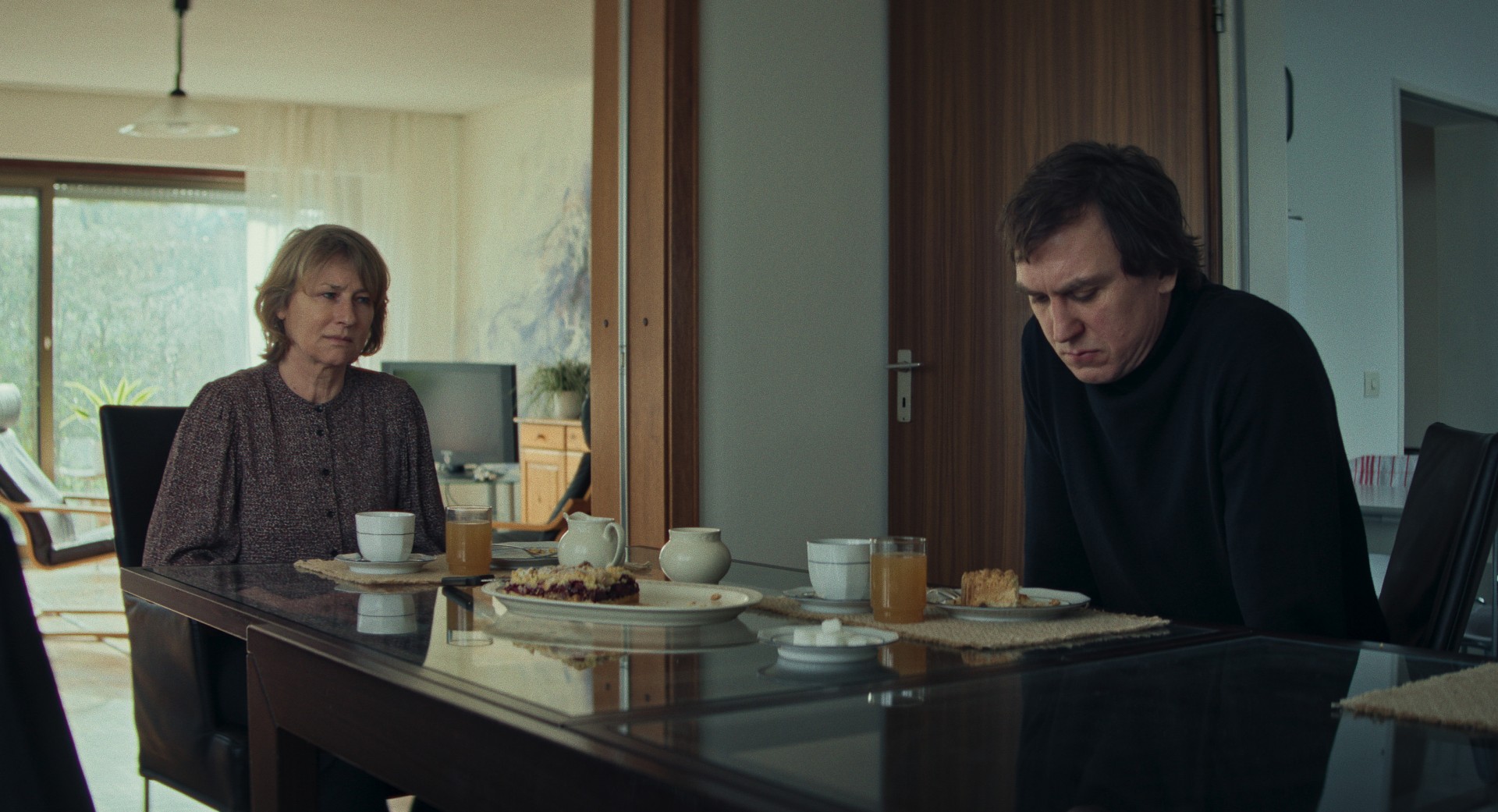
It’s a stress-test of an opener for the audience (the second scene of the entire film has Gerd confused and naked while Lissy has just soiled herself), but also vital – for a film about death, we should be introduced to it by the two characters most aware of their own mortality. Bauer and, especially, Harfouch are brilliant here, moving yet also frustrating as their version of life slips further into the inherent dehumanisation and humiliation of being too old to live independently. You really do get a sense of Lissy’s entire life from both Glasner’s writing and Harfouch’s performance, a brittle woman who has hardened her heart out of necessity; it’s exceptional character work.
It also means that we’re nearly as relieved as Gerd and Lissy themselves to finally meet Tom when he does arrive. Just as he brings some of the outside world to them, he is also our escape route into a less immiserated tone. Eidinger is no stranger to being the best thing in Serious European Films, but he really outdoes himself here, giving a truly phenomenal performance as a man who is clearly more comfortable dealing with other people’s emotions than with his own. He’s tragic and funny and capable of great kindness and insight, yet also cowardly; the way Eidinger’s face twists whenever Tom is forced to honestly self-reflect is spectacular.
If there is a weak link, it’s in Ellen’s story – this strand is still very well acted, but the tone goes quite wrong, everything suddenly mad and heightened and too, well, movie-ish. It’s still entertaining (for a three-hour film about bodily and mental deterioration, Dying is able to have a shocking amount of fun), but the needling specificity and emotional weight of Tom and Lissy’s segments are missing here, Ellen lacking much character behind her drinking and bad decisions.
Focused as it is on clear-eyed realism, Dying is a stylistically simple film, but it does manage to conjure up a couple of truly indelible images, especially in two mirrored scenes of death. One is horrifying in its total cold loneliness, the other is warmed by love and forgiveness. I’ll be thinking about them both for a while; hell, I reckon I’ll be thinking about a whole lot of Dying for a while. It’s abrasive and imperfect yet fearsomely clever and emotionally open, led by two of the best performances you’ll see anywhere this year.
 Jack Blackwell – Film Reviews