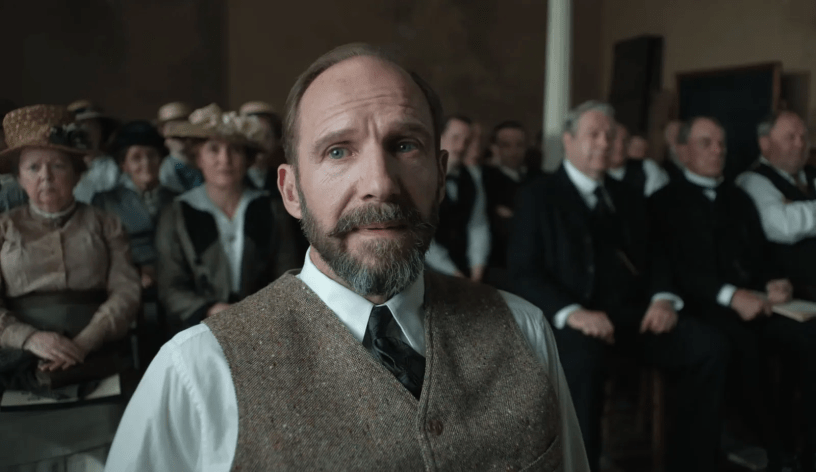
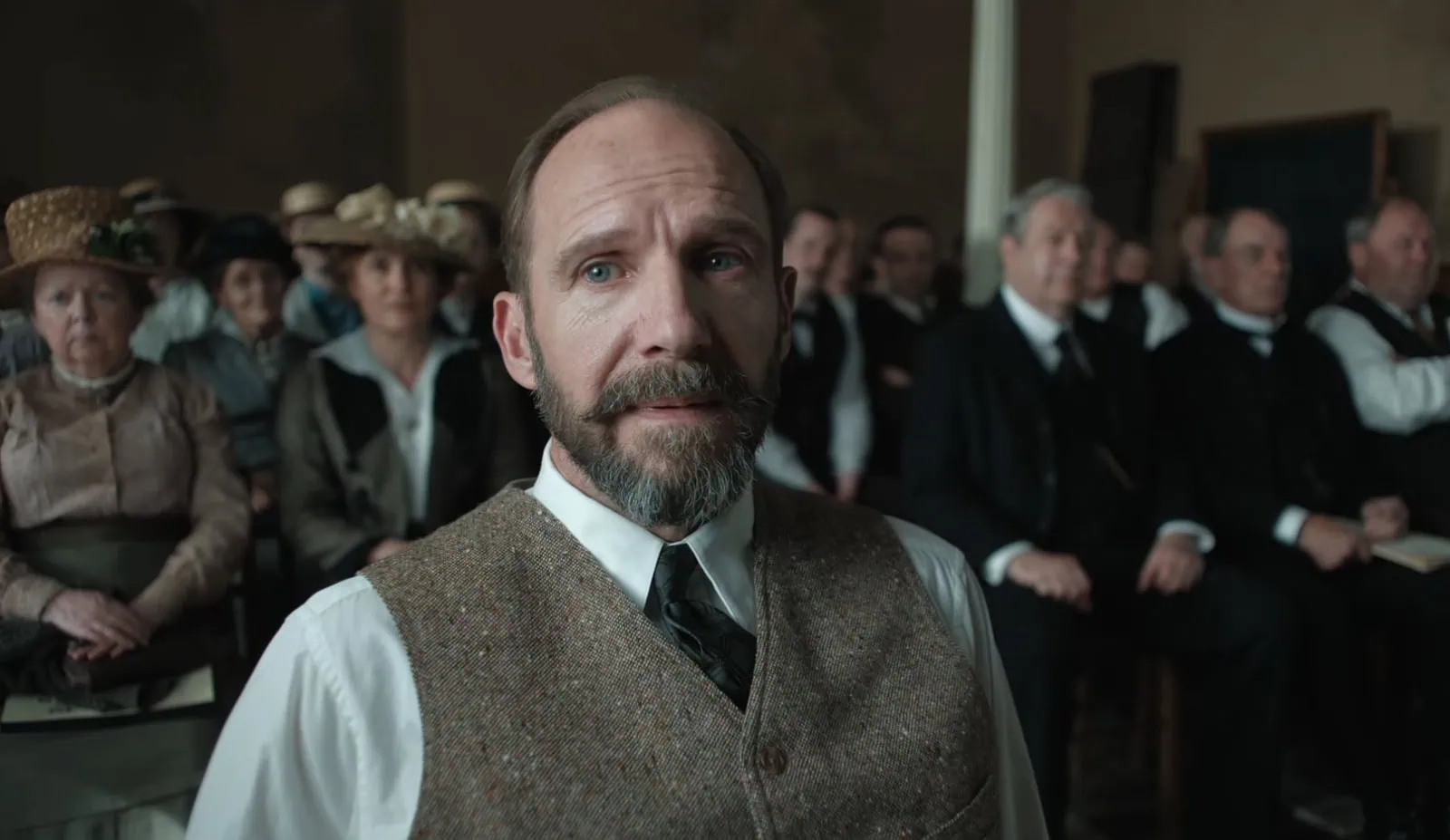
Though it’s Ralph Fiennes’s face on all the posters, Nicholas Hytner’s The Choral’s true claim to fame is in being the first script written directly for the screen from Alan Bennett in almost 40 years, with the last time this happened being all the way back in 1987’s Prick Up Your Ears. As a comeback-of-sorts, it’s a warm and gently witty screenplay from Bennett, predictable in a fun way, though lacking the transcendental artistic power that it concerns itself with in a tale of music healing and helping a northern community ravaged by World War 1.
It’s 1916 in Ramsden, a fictional Anytown in Yorkshire with most of its working-age men stuck in the trenches (the local postman’s duties consist of pretty regular deliveries of death notices to mothers and wives), leaving the local choral society in tatters. Feeling the need to revitalise it as a source of joy in their darkening world, the chorus’s founders/funders – local mill owner Mr Duxbury (Roger Allam), photographer Joe Fyton (Mark Addy), and undertaker Mr Trickett (Alun Armstrong – turn to controversial chorusmaster Dr Henry Guthrie (Fiennes, of course). Already turning heads in town thanks to his fondness for German culture and rumoured homosexuality, his leadership rocks the boat immediately as he, needing a large chorus to put on Elgar’s The Dream of Gerontius, starts recruiting singers from the town’s lower-class men who haven’t yet been drafted.
From here, you can imagine the beats The Choral takes as Guthrie slowly wins the town over despite misgivings and moulds his choir into following his beliefs on the almighty importance of music. Bennett does little to deviate from the formula, but there are enough laughs and sharp jokes (there are plenty of one-liners about the different proclivities of various northern towns and they all land) to ensure that this is no real weakness.
Fiennes is typically excellent, while the triple-A trio of Allam, Addy, and Armstrong are all great company, Allam especially sinking into a role that’s a lot kinder and more nuanced than he’s often given. The young lads and lasses of Ramsden are a little less compelling, but a couple (most notably Jacob Dudman as one-armed Ypres survivor Clyde and Amara Okereke as the local Salvation Army representative) are really powerful singers, and it’s through them that Bennett explores his thorniest theme. Yes, there’s a war on and casual bigotry all over the place, but The Choral’s most complex questions are about sex, and how all these young men (boys, really) seek it out before they head off to probably die.
The act of sex given as a kindness to a man rather than from mutual lust or excitement is not something most films would like to explore, especially when they’re as otherwise breezy as The Choral is, but Bennett mostly makes it work with the tragic Great War setting, even if a little but more depth might have been needed. It’s this same breeziness that robs the weep-seeking finale of a real knockout oomph. It’s a nice and tastefully done ending, but Hytner’s understated style is a little too quiet in this final stretch.
The Choral is one of those British films where you do pretty much know exactly what you’re getting from minute one, and it delivers on that promise with an easy charm and watchability. It’s ultimately limited in its power, but packed with fun performances and jokes that’ll make it an easy choice for the sort of between Christmas and New Year’s viewing where any film is made ten times better when it’s in a warm room and accompanied by a cup of tea.
 Jack Blackwell – Film Reviews