
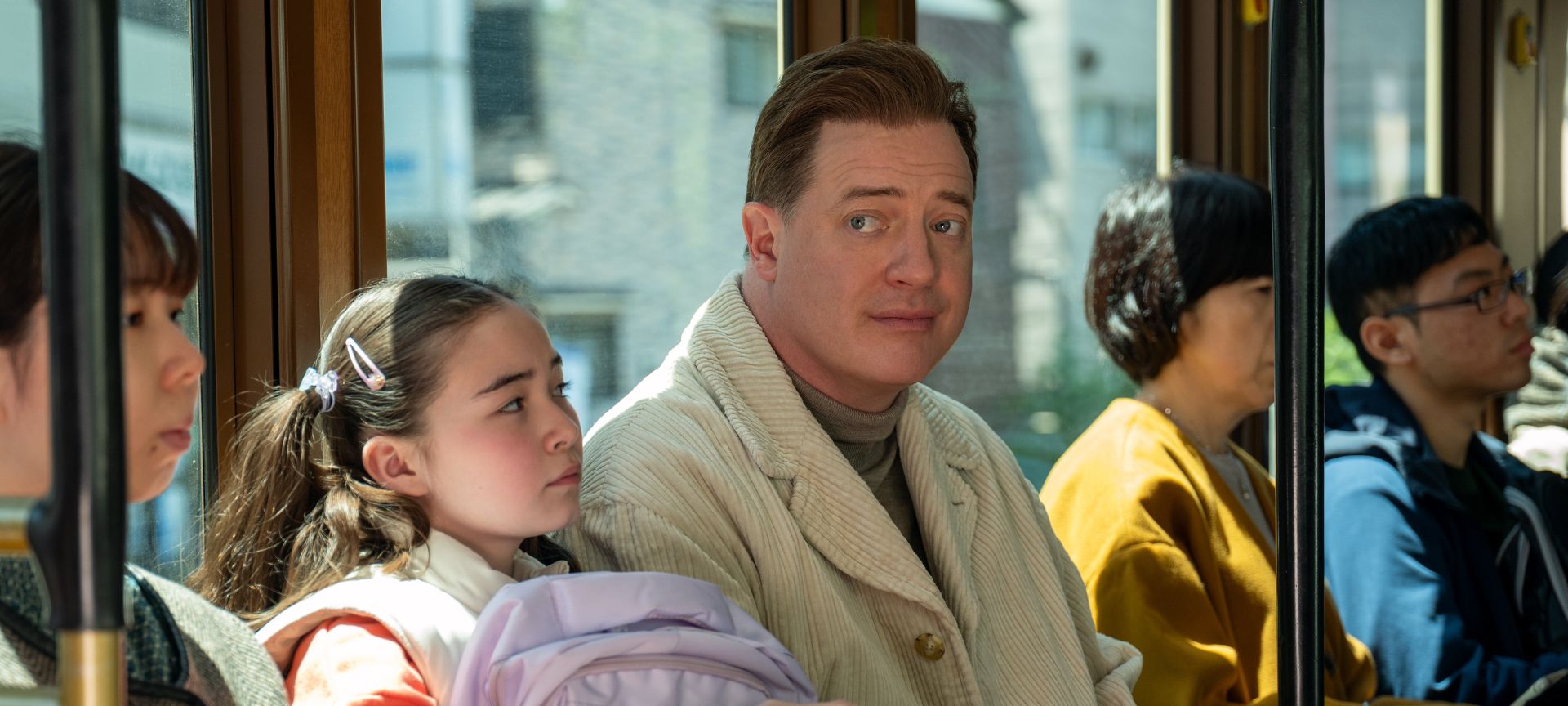
“Who am I playing?”, asks Brendan Fraser’s Phillip Vandarploeg, an actor who has moved to Japan to get work as a token white guy in TV shows and adverts. “A sad American,” replies his agent. It’s a neat summation of the totality of Hikari’s film Rental Family, but also of the way Fraser himself has revitalised his career of late, leaning hard into the melancholy of being a man past his prime. It creates a meta link between star and character that adds depth to a film that is otherwise sadly afraid to really dig into its own premise, a warm but shallow look at truth and identity.
Though he’s no diva, Phillip is a bit unfulfilled by the roles he’s been getting, so he’s intrigued by the opportunity he’s offered by a ‘Rental Family’ company, at which actors are hired to play roles in real people’s lives for varying purposes. Some want to work through emotions, some want to see what their own funeral might be like, and some are using it for deception – Phillip’s first real gig sees him pose as the Canadian groom for a younger woman’s wedding so she can leave Japan with her actual girlfriend without her parents panicking.
He gets other quick gigs, like posing as a friend for a lonely shut-in gamer, but there are two that really consume him. First up: pretending to be an American journalist interviewing an ageing legendary actor, hired by the man’s daughter so her dad won’t feel like he’s being forgotten by the wider world, a gig where he also takes on a care role as the actor is suffering cognitive decline. And, secondly, he has to pretend to be the American dad of a mixed-race young girl so that the competitive and conservative school she’s applying for won’t discriminate against a single mother.
For reasons only hazily explained, this little girl, Mia (Shannon Gorman), has to actually believe that Phillip is her real long-absent father for the three weeks leading up to the entrance exam and interview. This process of bonding between Phillip and Mia is undeniably sweet, Fraser’s warmth and large frame making him a naturally paternal figure while the young Gorman makes an impressive acting debut. But Hikari and co-writer Stephen Blahut never really reckon with how weird and cruel this deception is, reviving a dead familial relationship for just long enough to convince a little girl before then shattering her sense of reality and safety.
It’s a shallowness that is everywhere in Rental Family’s script, from the unclear logistics of the company itself – the CEO Shinji (Takehiro Hira) and backstory writer Aiko (Mari Yamamoto) also act in these often incredibly involved roles that would surely make other work impossible – to a lot of generic ‘Japan does things differently’ dialogue. The premise brings to mind Nathan Fielder’s The Rehearsal, and while I wouldn’t expect a crowdpleaser movie like this to hit those same bizarre notes, that weirdness actually feels like a more honest reflection on fakeries like this.
It would be hard to have a *bad* time with Rental Family. It aims at gentle warmth and a few laughs, and you certainly do get those. But it can’t face up to its own oddness which, when combined with not particularly snappy or insightful writing, also makes it hollow and forgettable, while its depiction of Japan (despite being from a Japanese writer-director) never feels distinct from the countless western movies about alienation in the Far East. Fittingly enough for a story of people paying to get their emotions validated, there’s a fear of displeasing here that proves fatal to actually making a real impression.
 Jack Blackwell – Film Reviews