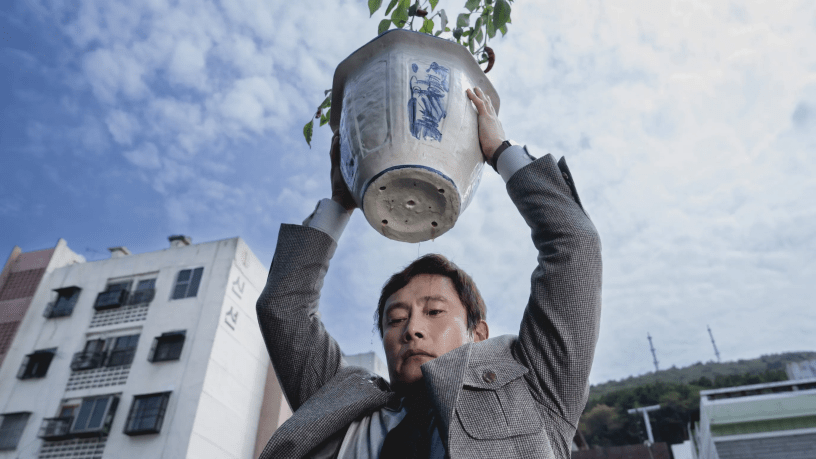
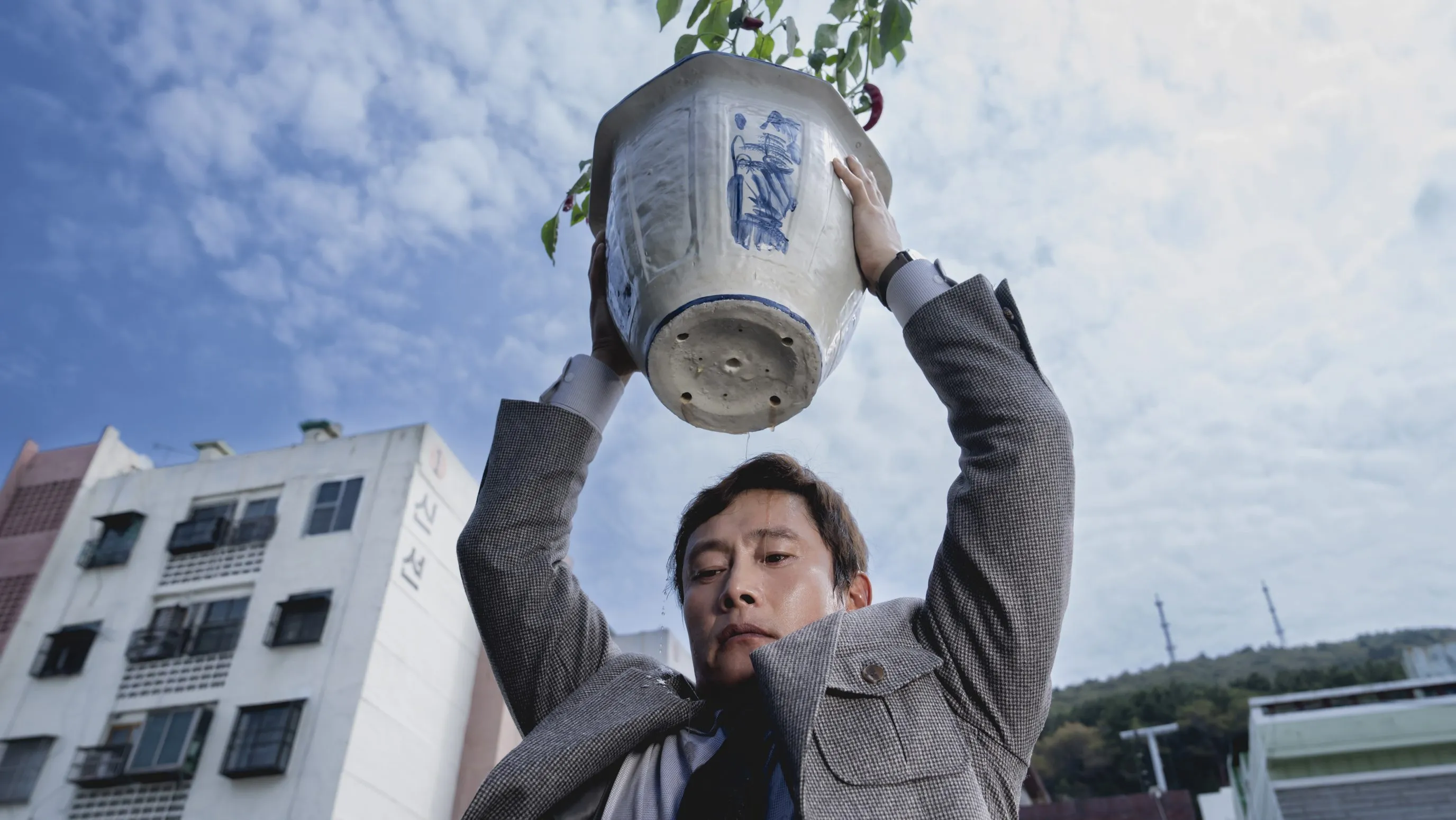
After the pulpy but grandiose epic seriousness of his last two films The Handmaiden and Decision To Leave, Park Chan-wook lets himself get silly with No Other Choice, his Korean adaptation of Donald Westlake’s American novel The Ax that also serves as a quasi-remake of that book’s French adaptation from Costa Gavras back in 2005. That this story works pretty much equally well across three continents ends up a perfect distillation of its own theme; that working for a paycheque, no matter where you are in the world, is always its own sort of death.
This time out, Lee Byung-hun takes on the role of a paper mill supervisor, Man-soo, who loses his job, possessions, and mind in short order after a takeover triggers layoffs. Desperate to keep his wife and kids living the comfortable life they’re familiar with, all while being unwilling to change industries (even though the world of paper is a rapidly shrinking one in the digital age), he comes up with a plan. He will kill the man who has the job he wants at the one paper company still thriving but, before that, he also has to kill the two men in Korea more qualified than him to take that future vacancy.
It is, of course, an insane plan, and Man-soo’s mania while concocting it and pulling it off is consistently very funny, but never played entirely ridiculous – Lee is one of those rare actors who has a genuinely frightening countenance, so the notion of Man-soo shooting an innocent, unemployed man dead feels chillingly plausible. Park gets this balance of laughs and winces exactly right in the lead up to the first assassination, in which Man-soo’s inefficiency exposes him to the fullness of his target’s miserable, unemployed, alcoholic life, which makes him depressed even as he plans to end it.
It’s dark and funny and absurd, while later efforts are played much straighter, which contributes to No Other Choice eventually feeling a little overlong. All of Park’s films have pretty indulgent runtimes, but without the earnest sweep that made his last couple entries so masterful, there’s a sense of padding here. Of course, a lot of this is offset by Park’s incredible visual style, which is still here in spades. What really amazes is that, despite being pretty stylistically different from its immediate predecessors, every shot and edit is still distinctly *Park*, his camera swinging through space and time in dizzying ways.
A funny and very angry indictment of the hyper-capitalism that is killing us all but really does feel most pronounced in South Korea right now, No Other Choice doesn’t reach the heights of Park’s last two films, but it is still rich and sharp in both its writing and style. Little details like a maddening recurrent toothache or the fact that Man-soo’s daughter only ever speaks when she’s parroting the last sentence someone else said add to a spiralling nightmare of constant discomfort. With some of the darkest laughs of the year and a truly tremendous leading performance, it’s a satire both entirely of the moment and horrifyingly timeless.
 Jack Blackwell – Film Reviews