Just a year after The Brutalist staggered me with its brilliance, the creative team and husband-wife partnership of Brady Corbet and Mona Fastvold are already back – though this time with Fastvold behind the camera and Corbet on co-writing-only duties – with another instant favourite. Fastvold’s The Testament of Ann Lee is a strange and magnificent thing, a historical epic musical paying tribute to a bizarre religious sect and its messianic leader, transporting us to the religiously unhinged times of the 18th Century, as ideals of human liberty crash against the brutal reality of everyday life to create new frontiers of faith.
Ann Lee, as played here by Amanda Seyfried, was not the founder of the Quaker-derived evangelical movement known (thanks to their full-bodied worship involving dance, convulsions, and speaking in tongues) as the Shakers, but she was its Chosen One. Worshipped essentially as an avatar of Christ by her followers – first in Manchester and later in Revolutionary Era New York – she believed in the values of peace and hard work and total sexual abstinence. In her unwavering faith in herself and her tenets, she earned extreme loyalty from her flock, in turn prompting accusations of witchcraft and heresy from authorities wherever she went, maddened by her popularity and her assertion that God could take a female form.
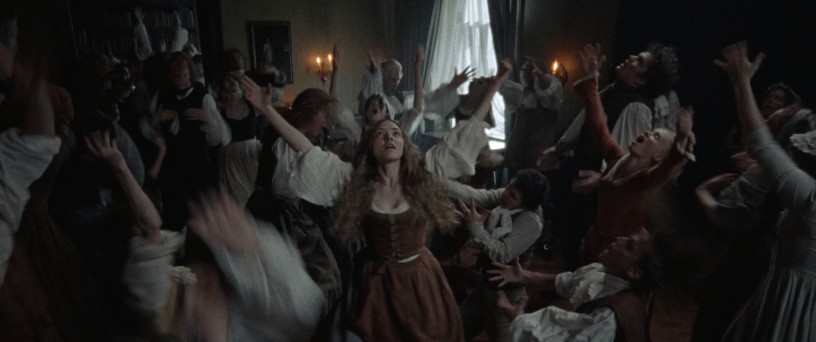
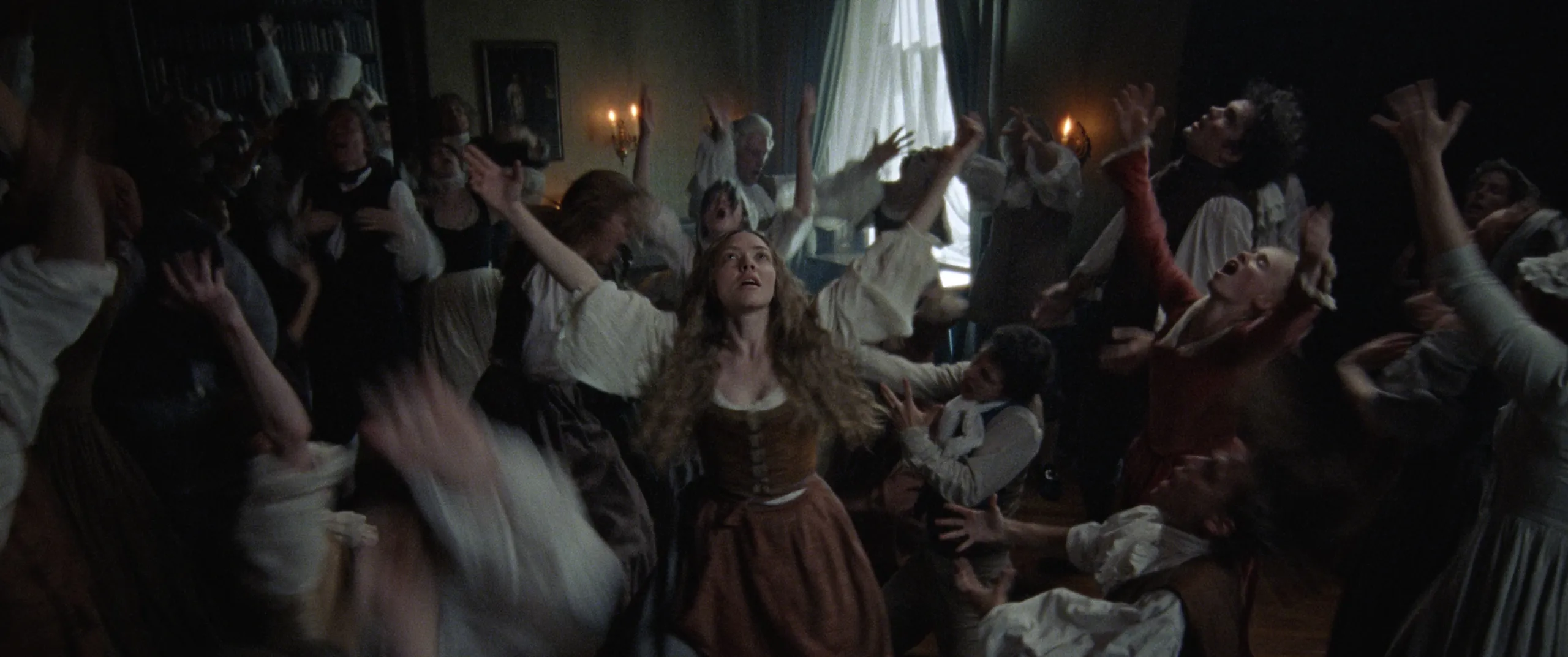
First and foremost, The Testament of Ann Lee is a perfect union of form and content. The sort of religious exultation (or hysteria, depending on your own spiritual bent) practiced in their church is the closest real-life equivalent to a film breaking into a musical number, the emotional wavelengths precisely intertwined. While the songs, written by Daniel Blumberg (who also composed the majestic soundtracks for both this and The Brutalist), aren’t going to knock Frozen or Encanto off the movie-musical charts, they are deeply moving and, at least for me, genuinely pretty catchy. There’s so much force and faith behind them that they become irresistible, especially when melded with choreography that revolves around masses of ecstatic human bodies writhing closer and closer.
With the focus on self-restraint of the flesh and then release through worship, there is of course a sexual charge to a lot of the numbers, but Fastvold doesn’t make it purely about that, keeping the emotional centre teetering between human need and true godliness. The earnestness of the belief of both Ann and her loyal followers, especially right-hand woman Mary (Thomasin McKenzie, who also narrates) and Ann’s own dutiful younger brother William (Lewis Pullman), who really has more faith in his older sister than anything else, is utterly entrancing.
Though the Mancunian accents trip the entire cast up to one extent or another (Seyfried is pretty good but falls into Irish sometimes, Pullman just goes for a generic ‘old-fashioned’ voice, and Stacy Martin, as the actual founding woman of the Shakers, is just completely lost), this ends up feeling like a minor quibble. It’s a superb ensemble, Seyfried simply magnificent in the truly testing lead role she’s deserved for a while but everyone bringing their own richness and humour to a cast that is large but loses no one in the shuffle.
Fastvold’s diegetic-light-only approach can make The Testament of Ann Lee a little murky in the first half, the dark houses and workplaces of Manchester impossible to truly fill with light with just candles, but it works wonders once the Shakers reach America (though, like The Brutalist, Hungary stands in for the USA). Sudden expanses of nature and light are beautiful and freeing – visions come true for Ann and her faithful. We do get to see flashes of Ann’s own miraculous dreams, and they are striking, shot with a much more slick digital finish than anything in her real life, though the visual highlight of the whole thing may well be a solar eclipse that causes a religious frenzy, soundtracked by one of Blumberg’s reckless, anachronistic electric guitar riffs.
If you want to pick and prod, there are flaws here and there within The Testament of Ann Lee, but its cumulative emotional effect is such that they do not matter at all. This is a glorious, freaky, and even sometimes funny (Fastvold makes sure one of the musical numbers is a silly comedy one) look at a truly radical moment in the history of faith. There’s absolutely nothing else like it, a revolutionary film for a revolutionary woman.
 Jack Blackwell – Film Reviews