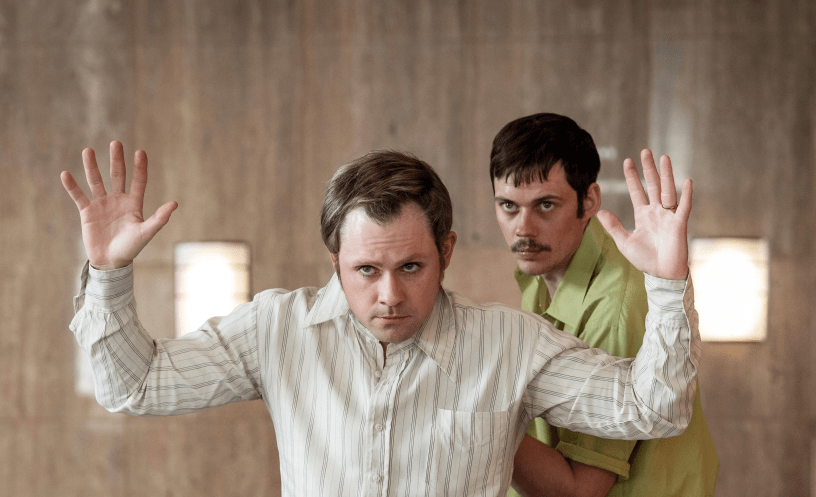
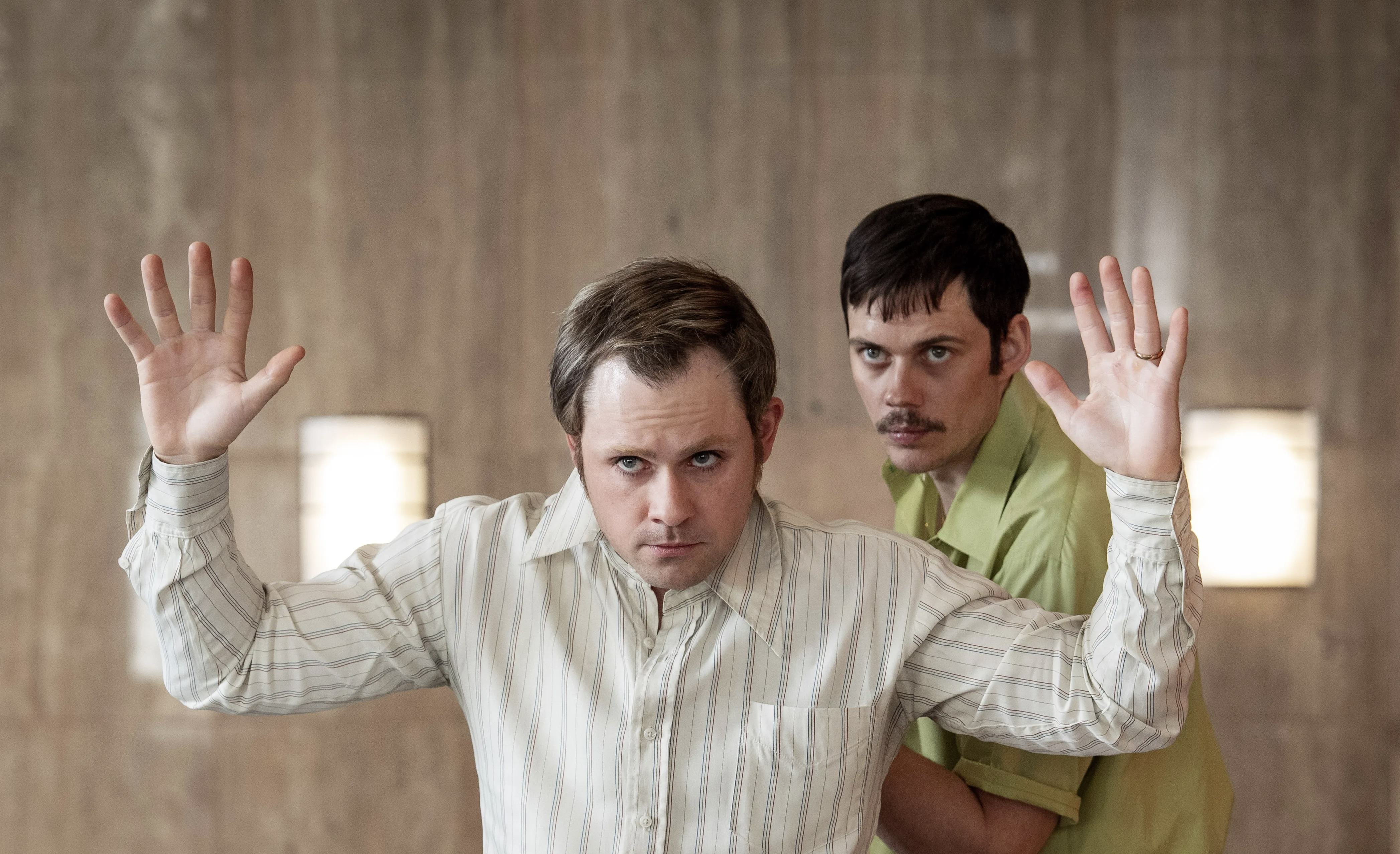
Fresh off the back of the torturously involved makeup processes of Nosferatu and the HBO It series Welcome to Derry, I can only imagine how relieved Bill Skarsgard must have been to get the call for Dead Man’s Wire, where the only thing asked of his face is a proper ‘70s moustache and a patina of manic sweat. There are no monsters in Gus Van Sant’s first film in seven years, just a very angry man in the middle of a surreal true-crime tale that is brisk and involving without ever *quite* reaching the energy and impact you want it to.
Skarsgard stars as Tony Kiritsis, a man deeply in debt to a mortgage company that he (perhaps correctly) believes has deliberately sabotaged his attempts to drum up the money to pay them back and who, on a cold February morning in 1977 Indianapolis, marches into their offices and takes the CEO’s son hostage. Having devised a ‘dead man’s wire’ contraption that ties a shotgun to his victim’s head that will go off at the slightest provocation, Tony thus begins a drawn-out hostage crisis, demanding $5 million, immunity from prosecution, and a proper apology from the firm’s boss.
As brought to the screen by writer Austin Kolodney, Dead Man’s Wire is one of those classic ‘stranger than fiction’ crime stories. Tony flips between psychotic rage and attempts to be a good ‘host’ to his hostage, all while slowly getting drunk off the power of having his face on TV non-stop and getting to talk to his favourite radio DJ, ‘voice of Indianapolis’ Fred Temple (Colman Domingo). Skarsgard, as far as he can get from Pennywise or Orlok, does a fine line in righteously twitchy anger, especially as you see his infamy go to his head in real time, though it’s Dacre Montgomery who proves the real revelation.
As Richard Hall, Tony’s hostage (he was meant to kidnap actual CEO M.L. Hall, played, in a Dog Day Afternoon-homaging touch, by Al Pacino), Montgomery trades in his bad boy sex appeal from his Stranger Things era for a more Pete Campbell-in-Mad-Men look. Vanity free, he disappears into the part of a skeevy guy who probably still doesn’t really deserve having a shotgun in his face for days on end, and his tragic call with his dad that ends with M.L steadfastly refusing to actually help him out of the situation is easily the best sequence here.
It’s both a great moment and, in being so much more affecting than the rest of the film around it, one that highlights Dead Man’s Wire’s key weakness – while it is well-paced and entertaining, there’s very little urgency or actual tension here, Van Sant frequently sitting us at an emotional remove from the action. It’s a fitting choice for his commentary on the media’s cold-hearted, ratings-chasing approach to covering violent crime, but this commentary is never particularly novel or interesting (there’s a whole subplot about a sparky young journalist chasing a primetime slot that could have easily been excised), so it doesn’t feel like a worthwhile tradeoff.
As an old-school procedural led by a compelling double act, there’s fun to be had with Dead Man’s Wire and, at a brisk 100-ish minutes, it really knows how to not outstay its welcome. Yet, there’s also something missing, the horror and gravity of the situation only briefly grasped in a medley of underexplored American social ills, neuroses, and quasi class war.
 Jack Blackwell – Film Reviews