European directors making the leap to English-language movies is a common enough move, but very few do it in the way Polish filmmaker Jan Komasa has. In the last 12 months, he has released his first *two* English films, each one skewering a different home of the language – 5 months ago he attacked American political dynasties with Anniversary and now he sets his sights on the UK with Good Boy (one of three films in the last year with that title). A psychological quasi-thriller of poshos and politeness, it’s a strange and intriguing deconstruction of British pathologies and neuroses with a trio of excellent performances at its heart making up for a stretched-thin story.
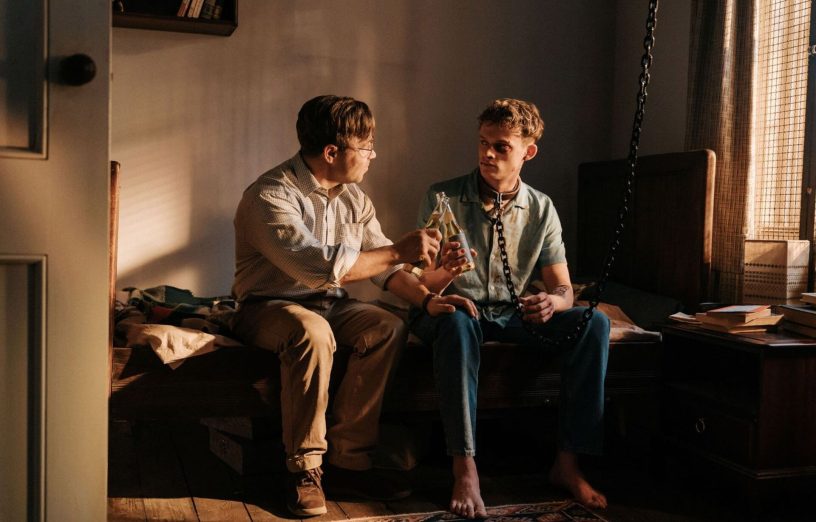
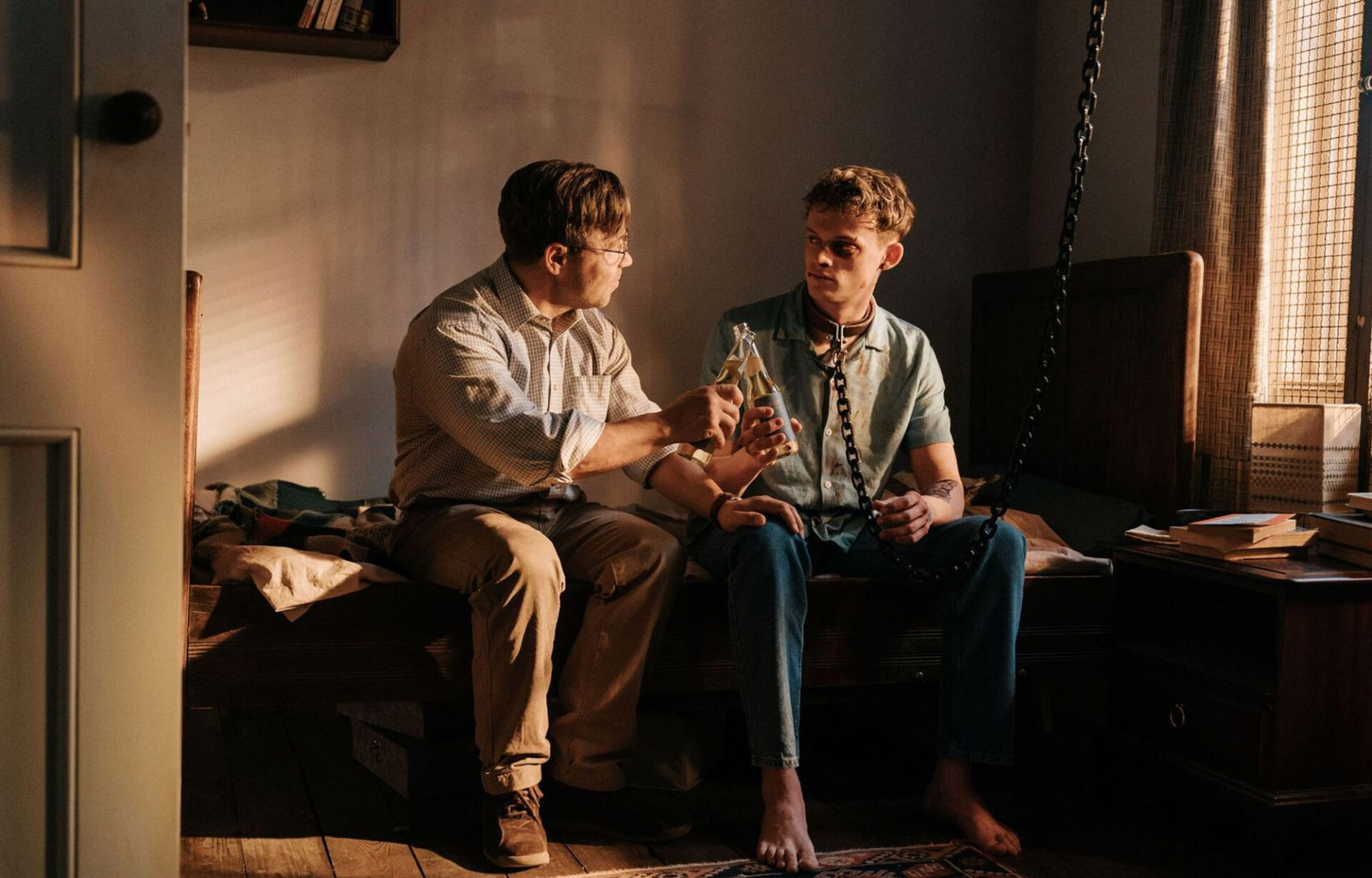
Playing much more of a toff than he’s usually allowed to, Stephen Graham steps out of the comfort zone he’s established very well recently as Christopher, a quietly psychotic patriarch of a wealthy family in the north of England. Along with his wife Kathryn (Andrea Riseborough), from whom the money and power *really* flows, he’s obsessed with order and discipline, lessons he decides to teach 19-year-old local terror Tommy (Anson Boon) by kidnapping him and keeping him chained in a basement until he can learn to behave.
Komasa and writers Bartek Bartosik and Naqqash Khalid are at their most pointed in this early phase of the film. Tommy thrashes and rages against his condition while Christopher and Kathryn show him his self-taken videos of his transgressions (drunk driving, muggings, street brawls) in an attempt to make him understand how bad he’s been. It’s a reactionary fantasy played for both laughs and horror; Tommy is undoubtedly awful, but does that mean imprisoning him for months without sunlight is justified? It’s a question a lot of Brits would answer with a resounding yes, and Good Boy lets us sit in this cruel national mindset for a while, an outside voice seeing the country for what it truly is in an impressively incisive way.
Slowly, the captors and the captive begin to warm to each other, Tommy seeming to take his new ‘parents’ lessons to heart and thus earning more and more freedoms around the house. It’s here, particularly as we get towards the ending, that the strength of the script does notably start to trail off, becoming more generic and shaken by the fact that it’s clearly written itself into a corner, but Graham, Riseborough, and Boon do fantastic work transitioning from enemies to a bizarre family unit.
Graham and Riseborough have already established themselves as two of the UK’s most reliably excellent actors, so it’s little surprise that they remain great here, but Boon is a real revelation, utterly convincing both as a coked-out shithead and a sad young man embracing the familial responsibilities given to him at taser-point. He shows Tommy enjoying family dinners despite himself, as well as the opportunity to be a big brother to Christopher and Kathryn’s 10-year-old biological son Jonathan, and we don’t need a trip into his home life to know how miserable it must be; Boon lets us know with defeated eyes and tired smiles.
A subplot involving the family’s non-imprisoned Macedonian cleaner and her dark past with an implied sex-trafficking gang doesn’t earn its keep, that very real darkness never meshing well with the more heightened, parable-like tone of the main story, and Good Boy ends up overexplaining itself a few too many times. Still, though, it is a mostly fascinating and entertaining view of the British psyche that throws you great performances from two of the country’s best actors and another one that suggests they could soon have new company in that national thesp treasure pantheon.
 Jack Blackwell – Film Reviews