Almost a full year after becoming the Japan’s highest-grossing natively made live-action film of all time (oh for a world where the UK or US could boast a similar success for a stately three-hour historical epic instead of Marvel or Star Wars), Lee Sang-il’s Kokuho has finally arrived on British screens with, to be a honest, a rather light impact. Clearly a massive crowdpleaser back home, I found this multi-decade-spanning tale of kabuki performers in post-war Japan to be emotionally flat and shallow just as often as it was impressively constructed or beautiful, a look into an alien world that is almost as unfamiliar by the end as it was at the start.
Adapted from Shuichi Yoshida’s novel by writer Satoko Okudera, Kokuho follows 50 years in the life of Kikuo (Ryo Yoshizawa), who we first meet in 1964 as the 15-year-old son of a local Yakuza bigwig who is soon killed at the hands of a rival gang, leaving Kikuo an orphan under the care of kabuki theatre owner and actor Hanjiro (Ken Watanabe). Immediately seeing talent and persistence in Kikuo, Hanjiro casts him as an onnagata, the ensemble member in charge of playing the female roles, a cultural hangover from a centuries-old edict outlawing women from appearing on stage.
Given 2020s cinema’s pre-occupations, you might think that what follows would be using this discipline as an interrogation of gender as performance, but that really isn’t what Lee and Okudera are interested in here at all. Kikuo’s feminine roles on stage and masculinity off it are treated as entirely separate things – here the driving forces are obsessions with success and commitment to a genuinely unique craft. These forces set in motion a rivalry between Kikuo, who rapidly becomes Hanjiro’s heir of choice, and Hanjiro’s actual son Shunsuke (Ryusei Yokohama), another onnagata with less talent and drive than Kikuo but a much better bloodline.
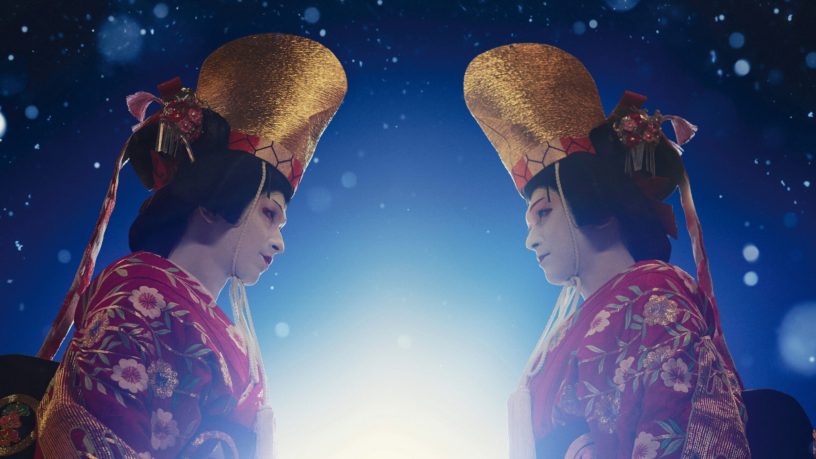
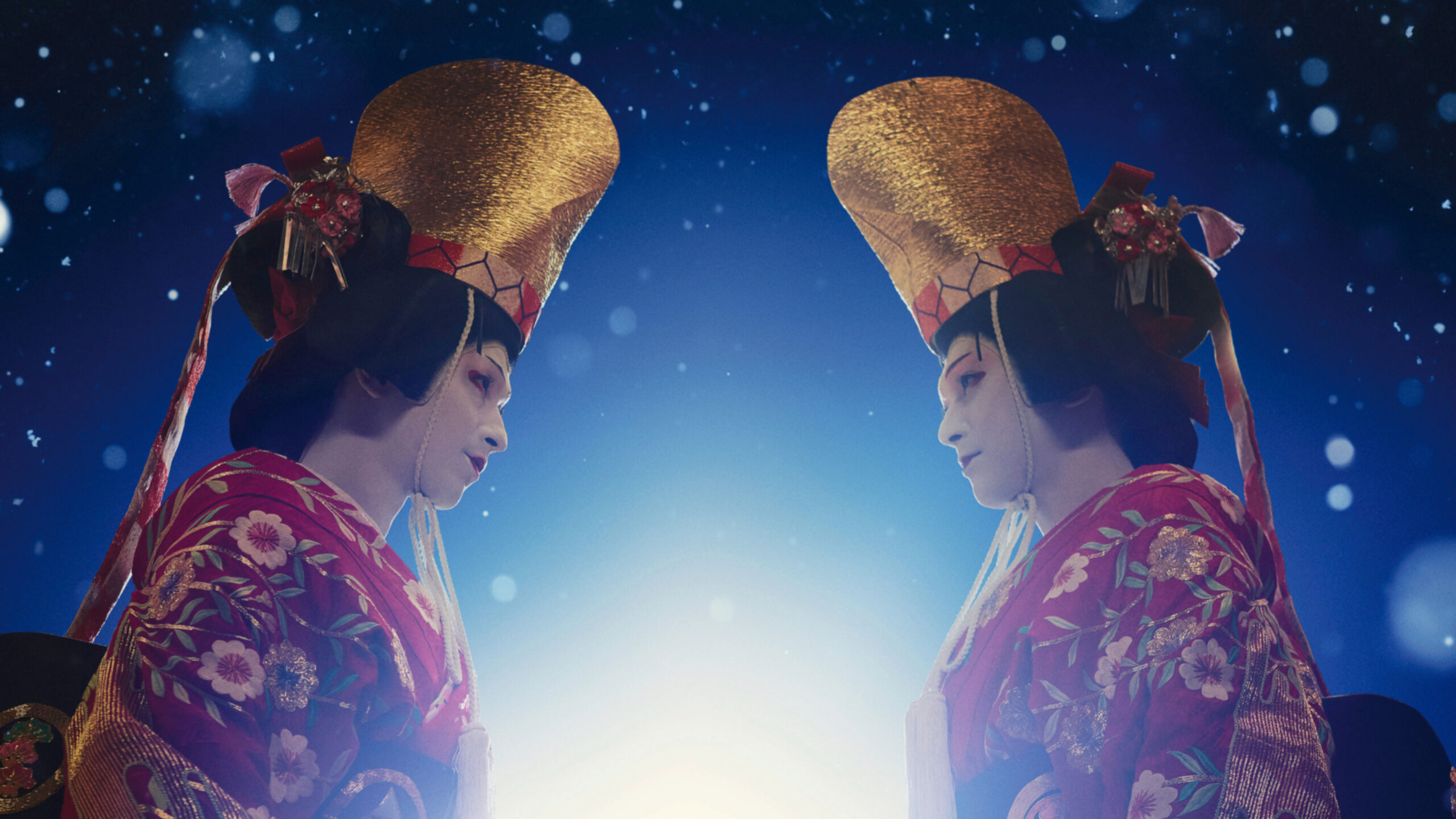
Their dynamic – sometimes friendly, sometimes close as brothers, sometimes violently hostile – is the heart of Kokuho, and when it is able to be expressed on stage through their art, it is very affecting. Lee shoots the kabuki sequences aiming at awestruck immersion and, at their best, the performances slip out of time – it’s the 1980s outside but, on the stage, it might as well still be the era of the Tokugawa Shogunate. While their deeper emotional registers might have remained beyond me, Lee still makes them affecting to a complete outsider through the precision of the movement and music, and all of Kokuho’s best moments come in these sequences.
Off stage, though, it’s considerably less engaging. Given how much time we spend with them across Kokuho’s mammoth near 180-minute runtime, the characters here never feel very richly drawn. While Kikuo’s ambition fuels the plot, it’s hard to get a sense of it or how it actually drives him – there’s an entire sequence where his whole personality seems to flip on a dime into actively sociopathic, which is never adequately explained and is then later reversed with equally minimal justification. Fittingly enough, given the art form at the core of the story, the women get this the worst; they’re all just background wives and mothers who barely exist despite decent chunks of screen time.
With its grand sweep and grown-up complexities, it’s impossible to begrudge Kokuho its success (its title literally translates to ‘National Treasure’, which it has certainly earned back at home), but I’d be lying if I said that I didn’t feel those three hours chugging on by. As a tribute to an utterly unique method of theatre and storytelling, it’s surreal and superb but as a story of two men changing alongside their ever-shifting country, Kokuho’s triumphs are much more intermittent.

