Always with John Carney, you know *roughly* what you’re in for – a story of the agony and ecstasy of being in a band, backed by a banging soundtrack of original songs. It’s a familiar but lovely recipe that Carney always manages to sprinkle an extra, unique flavour on each time round, whether it’s Dublin’s busking scene in Once or using music to try and impress a girl way out of your league in the magnificent Sing Street. In his latest, Power Ballad, the extra spice is how music gets tied into the male ego and the madness that can cause, making for a funny but honestly bitter tale anchored by one of the best performances of Paul Rudd’s career.
Rudd plays Rick Power, a former rocker who now fronts a wedding covers band called ‘The Bride & Groove’ and would probably think of himself as washed-up by choice. An American, he’s been living in Dublin for 15 years after falling in love and settling down with an Irish woman, only living out his old rock dreams when he sneaks one of his own original songs in amongst the accepted classics, a tactic that mostly goes down like a lead balloon. He still writes his own stuff, but even his family and bandmates only have a polite interest in that.
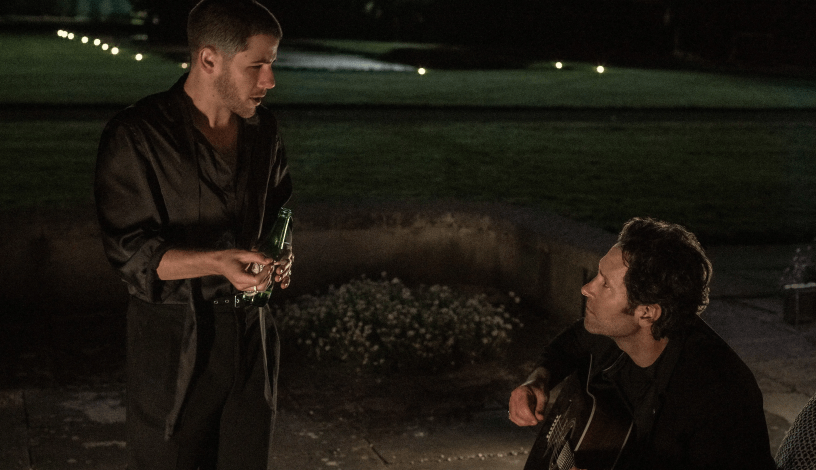
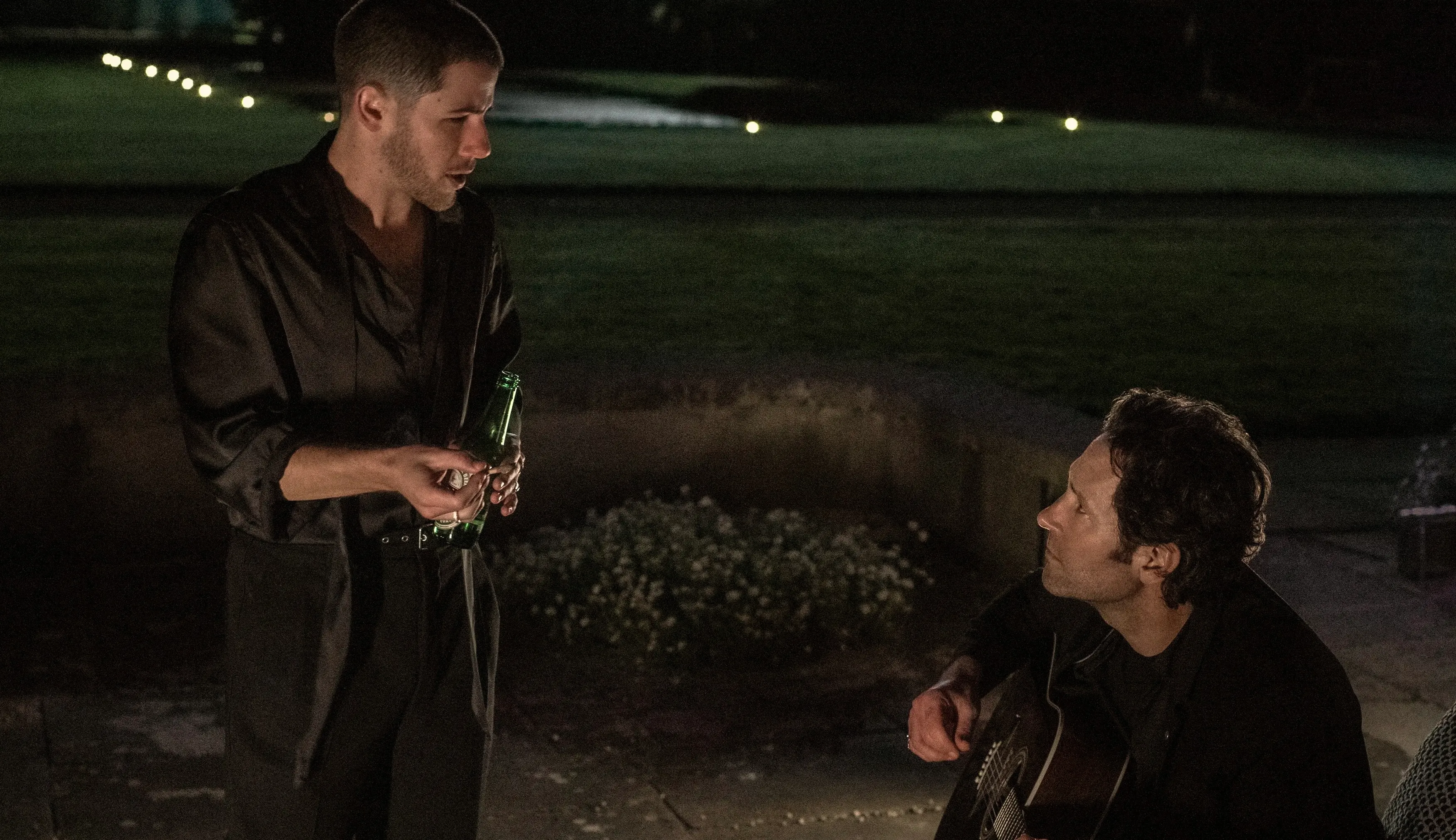
His passion is reignited, though, when he plays a wedding attended by Danny Wilson (Nick Jonas), a fellow American and, more importantly, a former boyband member trying to make a real go of becoming a serious solo artist. The two hit it off after Rick’s set and spend a drunken night jamming to one another’s work-in-progress tracks. They leave on great terms, Danny even gifting Rick a majestic guitar, and it’s all a bit forgotten for six months until Rick suddenly hears Danny’s megahit new single at a shopping centre – a single that Rick wrote and that Danny seems to have stolen.
Rick loses his mind from here until pretty much until the end of the film, and while that does result is some overindulgent silliness, Rudd plays this descent incredibly well, getting more and more fixated and petty as the single’s success climbs and climbs. It’s a more difficult, abrasive character than he’s usually allowed to play and he takes the opportunity with gusto. Jonas, meanwhile, makes for a solid villain of the piece; he’s charming and conflicted and obviously has the pipes to make the song a convincing hit – an exchange in which Danny states that Rick’s version of the song could never be successful, only his could, is excellently written and played by all involved.
The song itself, a ballad (of course) entitled ‘How To Write A Song Without You’, is great (though its singular focus means that the breadth of tunes in other Carney films is absent here), another musical triumph in an impressively long line of them across Carney’s career. He remains one of the vanishingly few filmmakers able to craft a hit song that actually convinces as something that could chart in reality, as well as one who can make a big party sequence seem genuinely raucous and spontaneous, a shockingly rare skill.
Outside of these successes, Power Ballad is, as per usual, not very stylistically flashy, Carney letting the music, performances, and sharp script (co-written by him and Peter McDonald, who also stars as Rick’s best friend Sandy) speak for themselves. It’s not as laugh-out-loud as you might expect given the presence of Rudd, but its exploration of music as both torture and healing is consistently amusing and affecting, landing the climactic emotional beats with the necessary heft. It might be true that Carney really only makes one kind of film, but when he can make it this good at a time at the movies *every time*, asking him to move away from wannabe-musician dramedies seems like asking Wes Anderson to get less symmetrical; who else is gonna fill that niche?

