From the upbeat trailers and smiley posters, your first impression of Night & Day may very understandably be that it’s one of those paint-by-numbers period pieces that grace UK cinemas four or five times a year, vaguely charm an older audience, and then vanish entirely into the ether of film history. Yet, Tina Gharavi’s film, whilst resembling that exact subgenre, is also an adaptation, albeit a very loose one, of a Virginia Woolf novel, and it’s this spikier literary heritage that elevates it past such forgettabilities, with a bit more anger in its heart and poetry in its soul than its ostensible aesthetic stablemates.
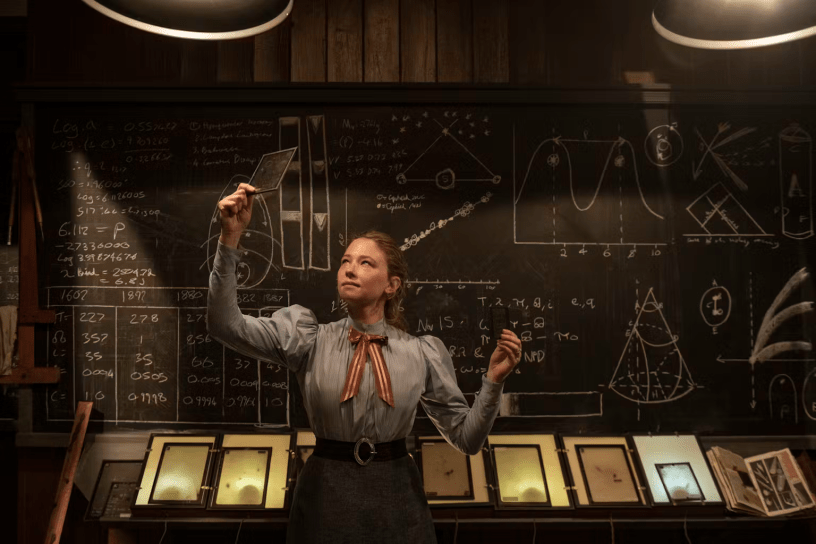
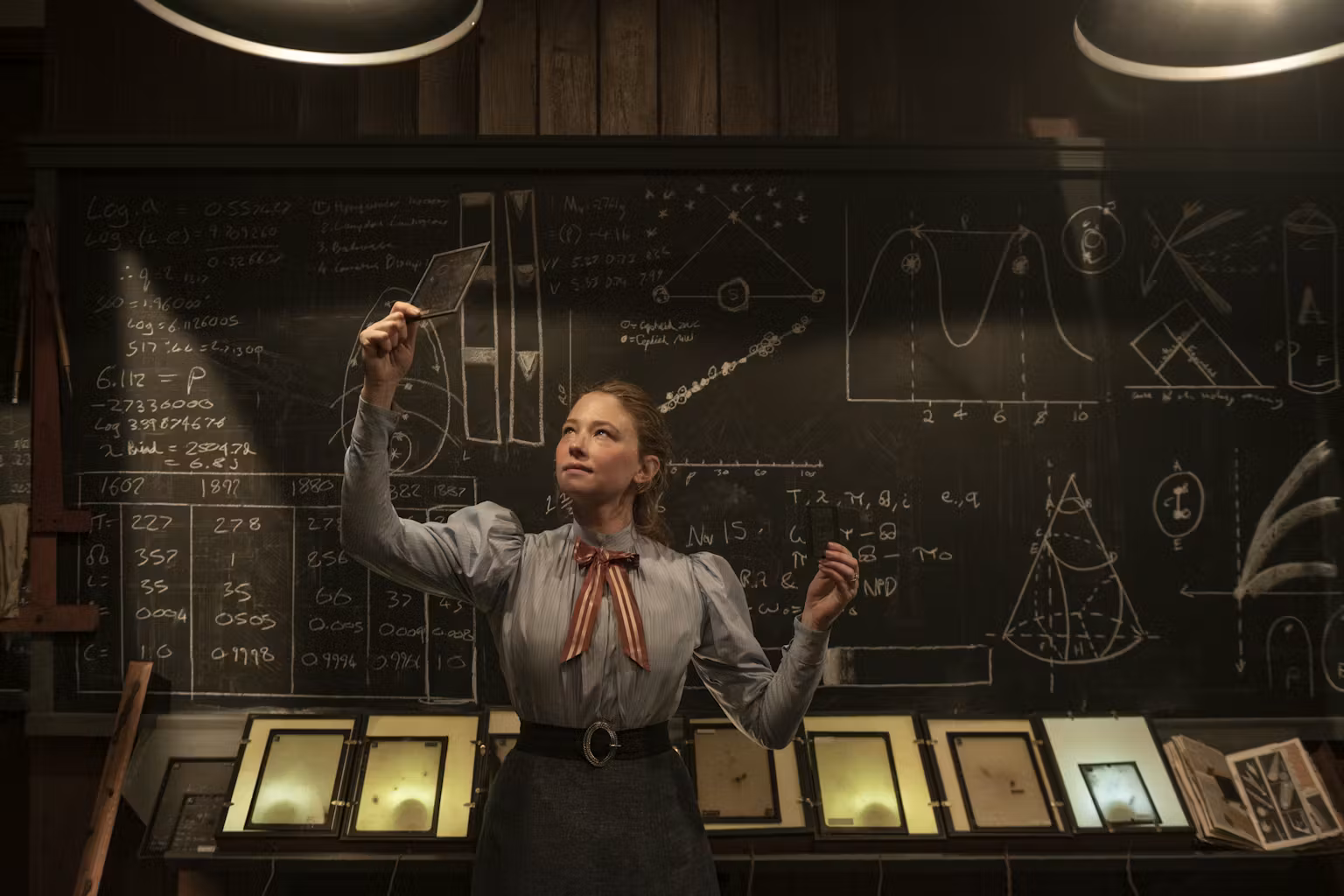
Taking a minor note of the original book and spinning that element out into its own entire story, Night & Day follows Katherine Hilbery (Haley Bennett, playing British very convincingly), a young woman in Edwardian London who has no interest in pursuing marriage and infinite interest in the cosmos. An aspiring, self-taught, and clearly deeply talented and committed mathematician and astronomer, her life’s quest is to study physics at Cambridge and join the Royal Astronomical Society – both quite impossible for a woman in 1910. Meanwhile, she’s fending off the demands of her father (Timothy Spall) to marry family friend William Rodney (Jack Whitehall, well cast), who himself is remarkably understanding of Katherine’s whole deal.
A chance of real love emerges in the form of Ralph Denham (Elyas M’Barek), an intellectually curious Persian hunk who is editing Katherine’s mother’s (Jennifer Saunders) epic self-published tome about her own poet father, but romantic awakenings are completely second fiddle here to intellectual ones. Inspired by the fearless minds of a local chapter of suffragettes, led by unflappable communist Mary Datchet (Lily Allen), Katherine schemes and studies her way to success, battling against the inevitable tidal wave of misogynist expectation and underestimation.
Justine Waddell’s script pinballs between insightful and cliched as it tries to balance all these elements – Night & Day is a bit less than the sum of its parts, individually compelling ideas rarely cohering into a fully excellent film. Katherine herself is a very fun heroine, well played by Bennett, who does a fine line in wounded idealism, and the treatment of her father as a genuine regressive villain is refreshing; a lot of Films Like This have the Austen-esque father figure of an ultimately loving grump, so I was glad to see Waddell resist any temptation for redemption.
On the other side of things, though, there are too many on-the-nose speeches about how a progressive future is coming (aside from Whitehall’s William, characters on the whole speak too much like they’re from right now, rather than 100 years ago) that feel like they could have been lifted from literally any other recent period piece. The result is a bumpy ride, genuinely intriguing for a few scenes before clattering to a predictable halt a bit later, particularly in the jarring scenes in which Katherine successfully disguises herself as a man to attend lectures despite Bennett having one of the most obviously feminine faces of any actress currently working.
Missteps like that aside, though, Gharavi’s sense of style here is very welcome. Deep colours and rich textures bring pre-war London and the more remote countryside to immersive life, while the actual astronomy is handled with the requisite sense of awe, backed by subtly excellent sound design. A real highlight is Katherine visiting the suffragette printing press, the sounds of the machines producing this radical literature harmonising into a sort of industrial choir, for me the single most striking moment of the whole film. It’s this capacity for sudden poetry that keeps Night & Day consistently alive.
 Jack Blackwell – Film Reviews