A few years ago, if you were asked what the most capital-E Epic sounding movie you could imagine would be, the answer may well have been ‘well, what if Christopher Nolan adapted The Odyssey?’ It’s the sort of project film-fan dreams are made of and now, three years since Oppenheimer conquered the world and with a full 12-month hype cycle behind it, the most ambitious single movie of 2026 is finally here. Does it deliver? A few nitpicks aside, the answer is a resounding yes, Nolan’s Odyssey a truly awe-inspiring spectacle, bringing the weight of one of the western world’s foundational myths to the screen in all its blood, thunder, and eeriness.
As we expect from Nolan by this point, he jumps back and forth through the story of Odysseus (Matt Damon), various flashbacks and framing devices keeping strict linearity at bay until the climax. We return often to Troy and the horse, as well as the beaches of the island of Calypso (Charlize Theron), while Odysseus’s wife Penelope (Anne Hathaway) and son Telemachus (Tom Holland) have their own story strand, one told rather more directly as the suitors circle the palace of Ithaca like randy vultures. Just as Oppenheimer was before it, The Odyssey is edited with near-peerless skill by Jennifer Lame, every shift in time perfectly intuitive, emotional clarity never a casualty of the frequent bending of time.
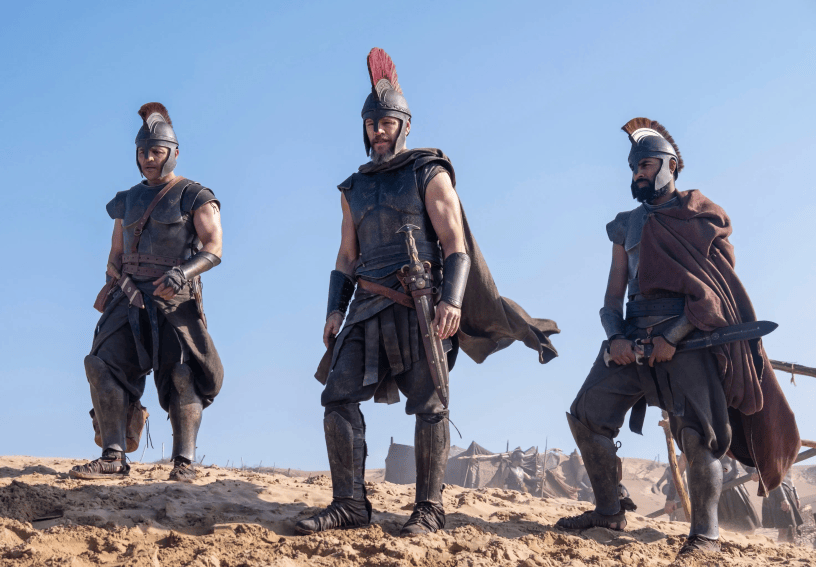
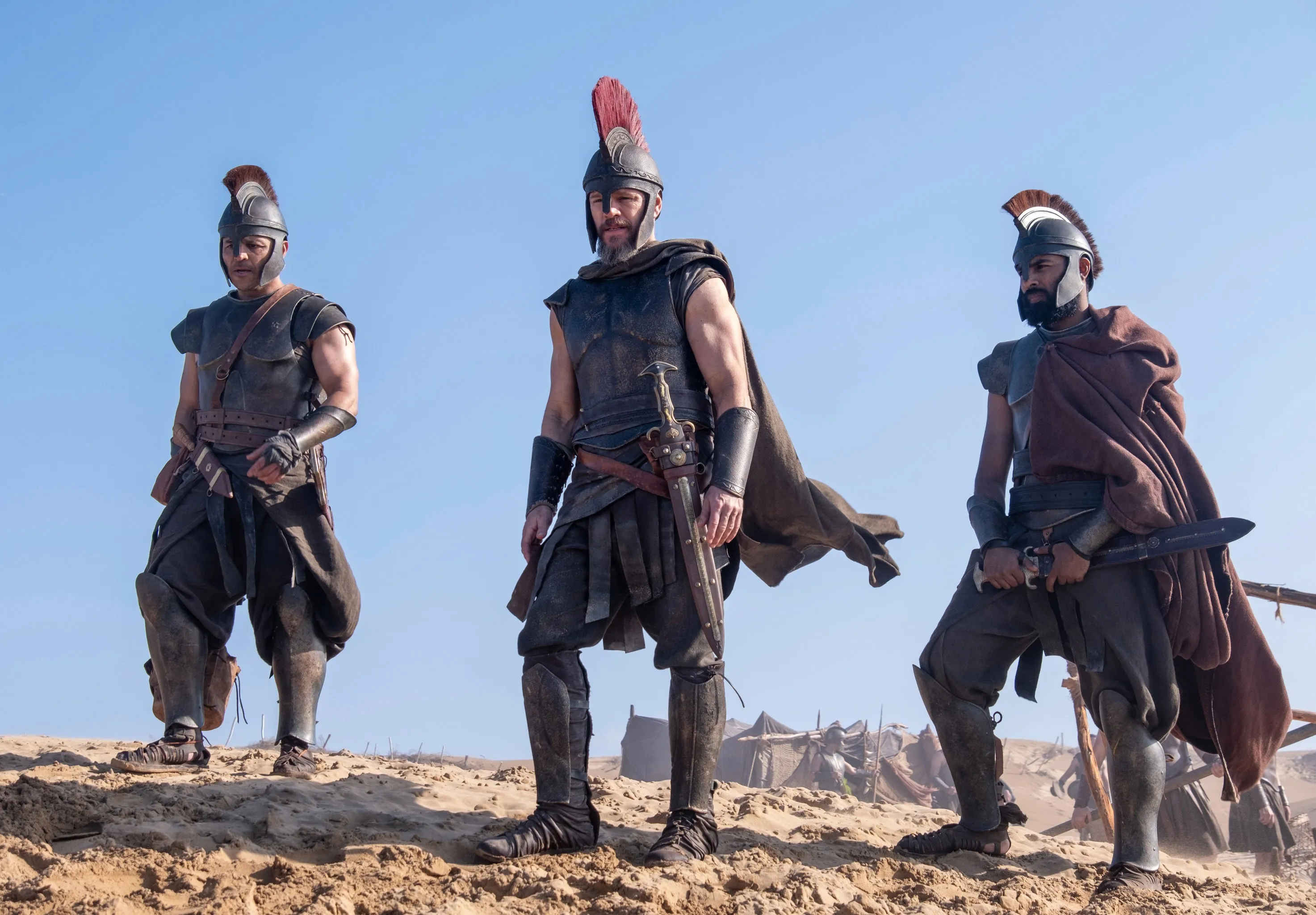
The actual, physical construction of the Heroic Age Greek world is just as sublime. Nolan embraces the old-school swords-and-sandals heritage fully, building immense, stunning sets, populating them with dozens, even hundreds, of boisterous extras, and travelling between endless evocative locations. It’s cinema on a scale that, at this point, very few directors other than Nolan can achieve and it is simply incredible to bear witness to. It’s a world, paradoxically, both immortally solid and in dangerous flux, a notion communicated expertly by Hoyte van Hoytema’s cinematography, which is as grand as ever but here also finds a new fluidity thanks to the flickering firelight of night scenes and focus depths that shift constantly within scenes. Of course, as we expect from Nolan, the soundscape is overwhelmingly powerful (one particular scene in a driving storm on the open ocean is up there with the most genuinely immersed I’ve ever been in a cinematic set-piece), further bolstered by another top-flight score from Ludwig Goransson. It’s not quite as astonishing as his career high of the Oppenheimer soundtrack, deliberately more subtle and ingrained with the overall sound design, but it further illustrates the ancient and primal tones that make The Odyssey so formally distinct from the rest of Nolan’s work.
If you were at all worried that Nolan, so famous for his in-camera realism and rationalism, might try and sand down the mythic unknowability of this story, have no fear. The mysticism and magic of Homer is completely retained, from the strange, horrible-yet-tragic cyclops to the spirits of Hades to the twisted magic of Circe (Samantha Morton), whose appearance here marks Nolan’s first time dipping his toes into raw horror. Her turning Odysseus’s crew into pigs is, by far, the nastiest and most unsettling Nolan has ever let himself get, an explosion of creepiness that echoes throughout the entire story.
The exception to this commitment to the bizarre, as has been seen in the trailers and already discussed ad infinitum, is the dialogue, which has been mostly modernised. You get used to it pretty quickly, but there are a few of the tin-eared lines we’ve come to expect from a Nolan script (the absence of any of these in Oppenheimer becoming even more impressive retroactively). It’s helped by the fact that these lines are delivered by a sprawling and starry cast with very few weak links. This is Damon’s show for the most part, but Hathaway and Holland are also consistently solid, while Morton, John Leguizamo (as blind and faithful servant of Ithaca Eumaeus), and, of course, Robert Pattinson (as suitor and complete weasel Antinous) are real scene-stealers.
There are some cracks in the armour – the framing device scenes on Calypso’s beach pretty reliably sap the energy and momentum of the film and the attempts to tie the story’s ancient ‘lost golden age’ atmosphere with our modern understanding of the real history of the Bronze Age collapse are always clunky. These aren’t nothing, but they’re also so small in comparison to the overwhelming power The Odyssey possesses at its best. The staggering ambition, the extreme catharsis, and the simple joy of seeing one of the oldest human stories find a new telling from the pre-eminent artist in one of our youngest mediums; all are more than enough to all but erase these flaws. Once the finale arrives, the culmination of everyone’s journey hits with an impact that’ll leave you weak in the knees.
Nolan’s obsession with how the world his generation created will burn and poison the generations of his children and beyond is still out in full force here. In fact, Odysseus is often framed as a sort of ancient Greek Oppenheimer, the Trojan Horse and invention of dishonourable warfare-by-deceit the Bronze Age equivalents of the atom bomb, a single man having the power to end one world and birth a new, scarier one. Generally, when you’re handed $250 million by a studio, there are a lot of rules you have to follow, a lot of lines you can’t cross. Nolan has taken that money (the most he’s ever been given outside of The Dark Knight Rises) and created a freaky, bloody, surreal epic in an unfashionable genre and infused it with all his deepest fears and preoccupations, another truly singular work from the one true king of blockbuster cinema.

