With their debut, We’re All Going to the World’s Fair, Jane Schoenbrun asked the question ‘how can young people possibly find real connection in a closed-off, atomised modern world?’ With their masterful follow-up I Saw the TV Glow, the question was ‘what do I do when I’ve wasted my life?’ Now we get their third film, with the don’t-google-this-at-work title of Teenage Sex and Death at Camp Miasma, where the central question has slightly lower stakes – ‘why am I so bad at sex?!’ It’s a central theme that is maybe less devastating than anything Schoenbrun has tackled before, but it makes for what is absolutely Schoenbrun’s most entertaining and *fun* film to date, without sacrificing any of the pulsing visuals and allegorical thrills that defined their earlier work.
After spending two films on the struggles of youth, Schoenbrun moves to a slightly more mature protagonist in Camp Miasma, 29-year-old lesbian filmmaker Kris (Hannah Einbinder). After her indie debut broke out at Sundance, Kris has been hired by a studio to resurrect the ‘problematic’ Camp Miasma slasher franchise – essentially an in-universe version of the Friday the 13th series, complete with a litany of risible sequels that go to Manhattan and outer space. Her queerness gives cover for the series’ offensive past, while it gives Kris the opportunity to seek out Billy Presley (Gillian Anderson), the actress who played the final girl in the ‘80s original, served as Kris’s lesbian awakening, and then basically disappeared.
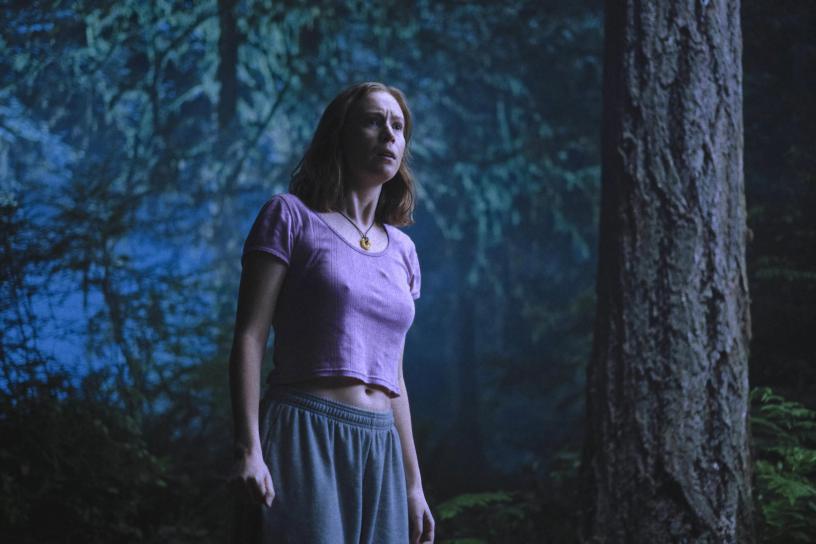
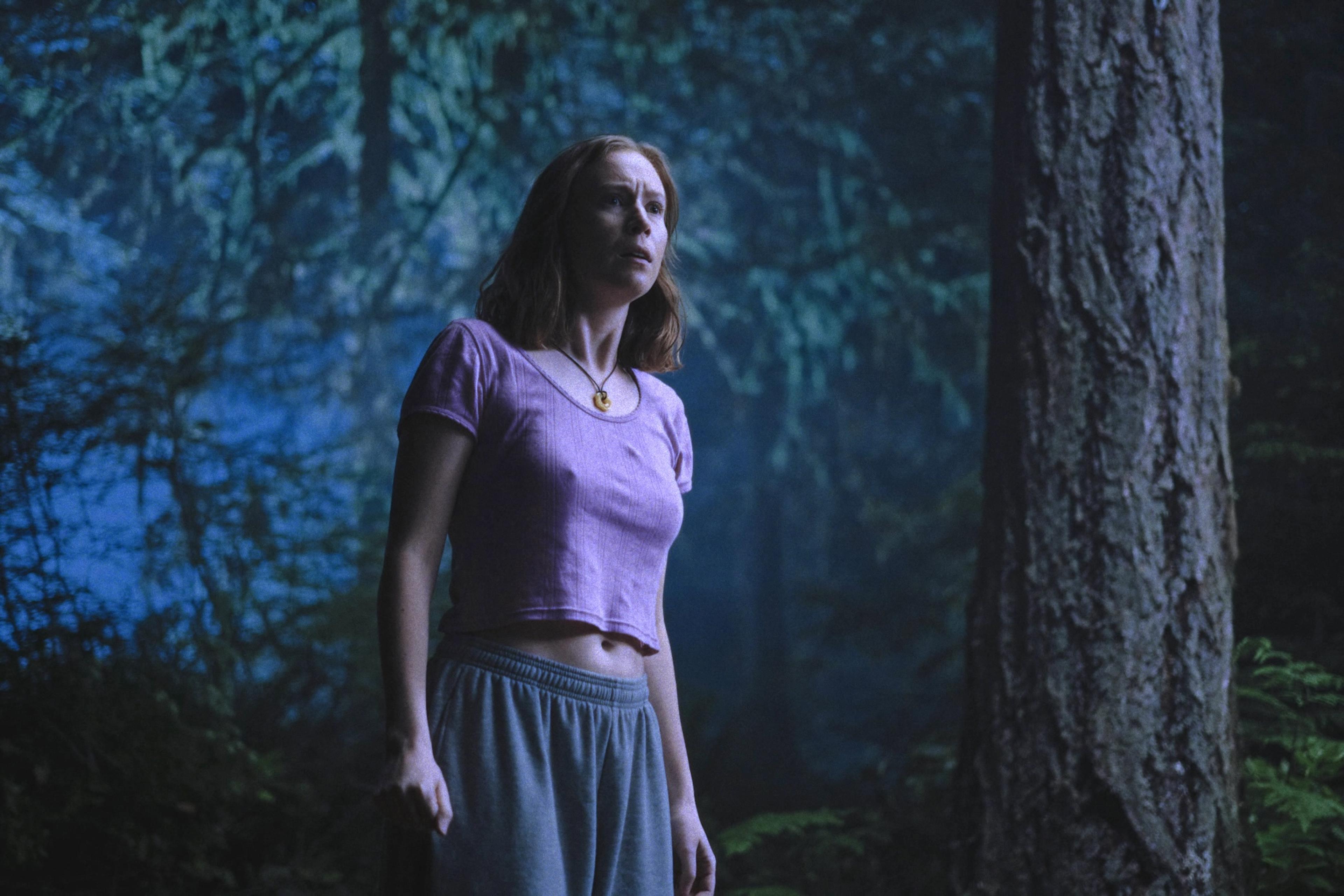
Kris wants Billy to be part of her reboot, so she drives out to the actual camp where the first movie was shot, since converted into a strange home/compound/living museum by Billy where the lines between reality and the fictional realm of Camp Miasma blur and collapse. As the film world and the real world start to meld, bringing to life the films’ iconic killer Little Death (Jack Haven), so too do Kris and Billy become closer and closer, a game of seduction as Kris chases what she finds most impossible – actually satisfying sex.
It’s not exactly a premise that fits on the back of a napkin, and Schoenbrun does take some time to really set the table, but Camp Miasma starts absolutely flying once all its ducks are in a row. Kris is an exceptionally well-drawn character: nerdy, flustered, and even a little annoying in ways that seem completely real (it’s not hard to imagine Schoenbrun is being a little autobiographical here, grappling with their own relationship with filmmaking and the modern moral moment). Meanwhile Anderson gets to go incredibly *big* as Billy – even the characters in the film acknowledge her Norma Desmond resemblance – and she and Einbinder have a fabulous and, yes, incredibly hot chemistry.
The centrepiece scene in which they watch the original Camp Miasma together clicks every previously disparate ingredient together and it’s a delight. Schoenbrun has put an incredible amount of love and effort into this film-within-a-film, and its climactic bloody rampage scene, set to the anachronistic but perfect soundtrack of Counting Crows (like I Saw the TV Glow, Schoenbrun’s song selection here is immaculate) is as gripping, fun, and funny as anything I’ve seen in the cinema this year.
Schoenbrun’s previous work, concerned as it has been with the realities of misery, has had very little humour, but Camp Miasma is very funny when it wants to be, particularly in the final third which is played almost entirely as a metaphor for a night of initially awkward, but eventually great, sex. Obviously, Schoenbrun is no stranger to allegory, but it’s so over the top here that it becomes utterly irresistible. It’s an astonishingly singular vision that is executed with complete commitment to the idea yet without feeling self-serious, a remarkable feat made all the more unforgettable by the film’s personification of an orgasm being a genderless serial killer with a Patrick Bateman raincoat and an air vent for a head.
The visual work is just tremendous, from the character designs to the coldly beautiful world they inhabit. As Billy says, horror is all about ‘flesh and fluids’, and there is plenty of the compellingly sticky imagery, neon glows, and unnerving close-ups that we’ve come to expect from Schoenbrun here, but Camp Miasma is also that much brighter and more hopeful. Kris and Billy stroll through painted winter forests, every sunset is a kaleidoscope of pinks and oranges and it’s all just gorgeous, punctuated by a sublime score from Alex G.
Camp Miasma isn’t *quite* up to the level Schoenbrun reached with I Saw the TV Glow – the time spent here on the Hollywood studio satire is a noticeable dip from everything else around it – but it’s still easily one of my favourites of 2026 so far. Unapologetic in its nerdiness, its horniness, its goriness, and its respect for its own undeniable cleverness, it’s another stunningly bold vision from one of American indie cinema’s brightest young stars.

