‘I have a high tolerance for despicable men’ purrs one of the very few women in Kent Jones’s Late Fame at a tense, snipey dinner. It’s a skill you’ll have to develop yourself to get the most out of this talky, literary New York drama which has a brilliant beating heart in the form of Willem Dafoe but also, quite deliberately, one of the most irritating supporting casts assembled in any film in years. How much patience you have for, or how consistently funny you can find, pretentious, low-stakes antics from wealthy pseuds will largely determine how much you can get out of Late Fame – I have to confess my tolerance was rather low, but Dafoe still steers this ship with magnificent skill.
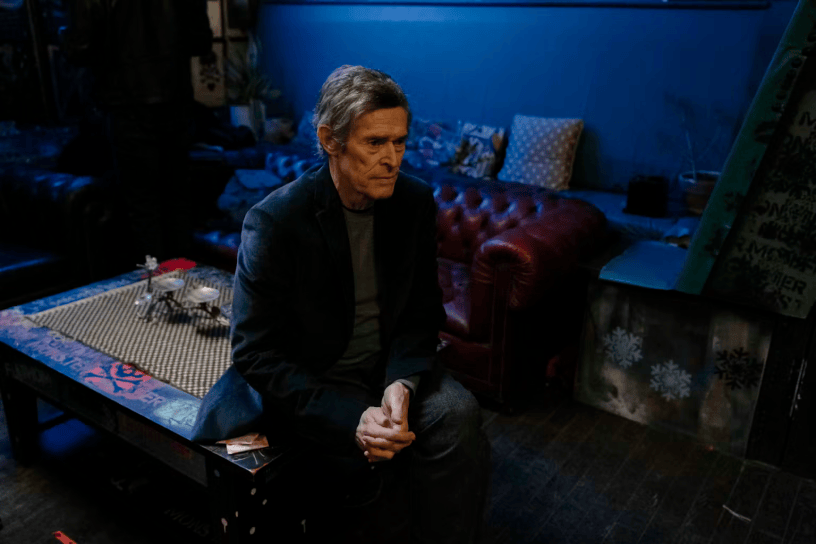
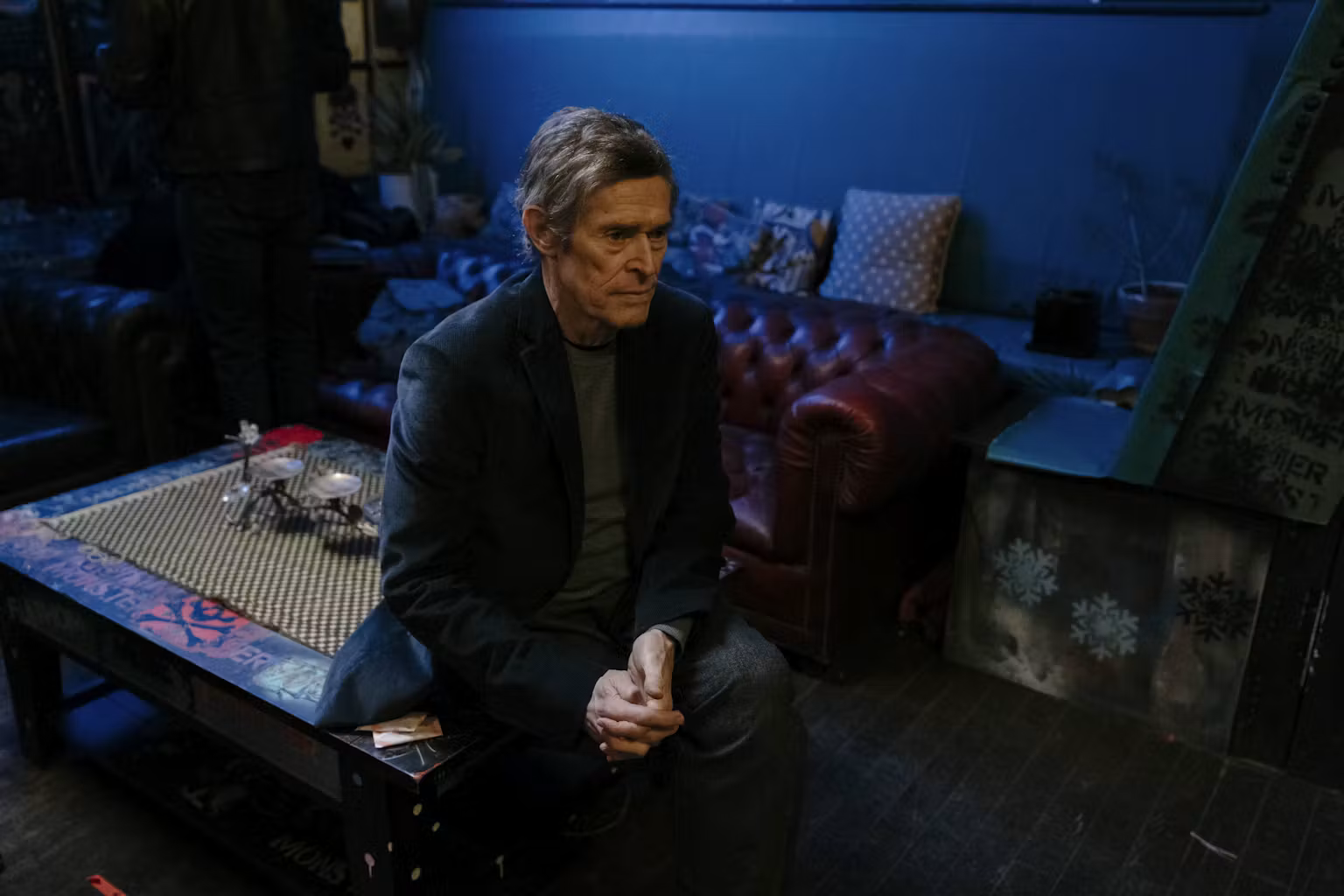
Adapting the novel of the same name by Arthur Schnitzler (who also wrote the novella that would inspire Eyes Wide Shut) but moving the action from 1890s Vienna to modern New York, Dafoe plays Ed Saxberger, a post office worker nearing retirement age who once ran with the city’s artist crowd back in the ‘70s. A poet himself, he aged out of the writing game without finding widespread success and has since built himself a small but worthwhile life amongst other working class New Yorkers who can remember when the city was still cheap and exciting.
Ed’s book of poems is rediscovered, though, by a self-proclaimed society of intellectuals (more a small gaggle of rich kids with affectations of old-school formality and high-brow sophistication) who decide that he’s a genius and his collection is an undiscovered masterpiece. Initially reluctant, Ed soon falls under the spell of their adoring attention, especially once the group’s only woman, excitable actress Gloria (Greta Lee), starts throwing affection his way.
From just Ed’s point of view, Late Fame is a touching cautionary tale about not getting too caught up in what could have been, and Dafoe plays this to perfection, especially in a scene where the society’s pretensions rub off on him and he snaps at his lower-brow actual friends, a masterclass in misfiring ego. Lee, too, is great as Gloria, and both Ed and Gloria are very well-written as interlopers in this world – they’re the only two with any actual discernible talent, which would have counted for way more back in Ed’s day, but their lack of wealth now keeps them at the margins.
Jones and writer Samy Burch do a very effective job with this pairing in exploring how the 21st Century has turned all kinds of art into a pursuit exclusively for the monied and idle, but whenever we’re in the company of said monied and idle ‘artists’, I found Late Fame more excruciating than entertaining. The society’s members all talk like a mix of Succession’s Kendall Roy and The Critic’s Jay Sherman, but nowhere near as consistently funny as that might imply and it’s hard not to feel trapped by their bloviating. This is, of course, entirely intentional, but it’s a technique that ran its course for me quite a while before the credits rolled – if you find it easier than I do to laugh through the cringe, you’ll have a better time.
Made with great care – the costuming, for example, is absolutely perfect, each outfit instantly summing up each character before the writing even gets a chance to – Late Fame is a witty and unapologetic thing, unconcerned with if you find its characters unbearable or its dramatic stakes a little bit non-existent. Literary not just in its subject matter but in the simple matters of how its characters talk and interact with one another, I bounced off its provocations a few too many times to say I loved it, but as 90 minutes in the company of one of Willem Dafoe’s gentlest, most natural performances since The Florida Project, it’s rarely without charm.

