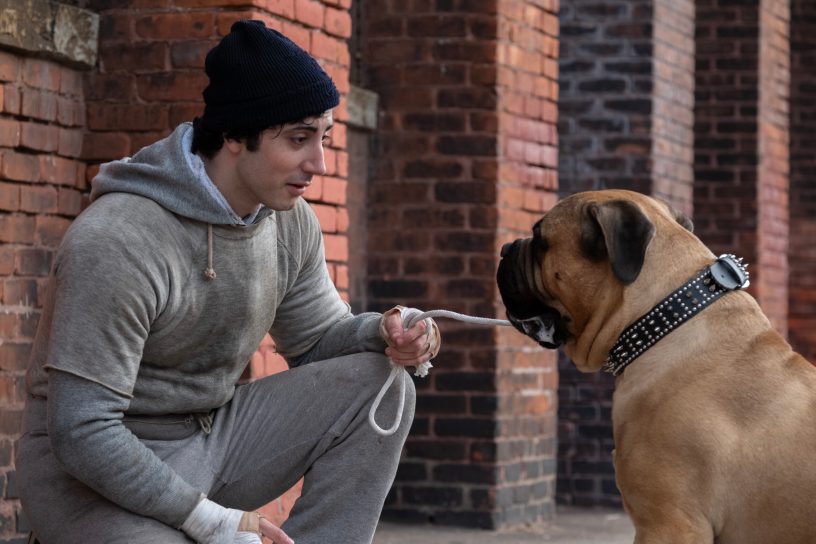
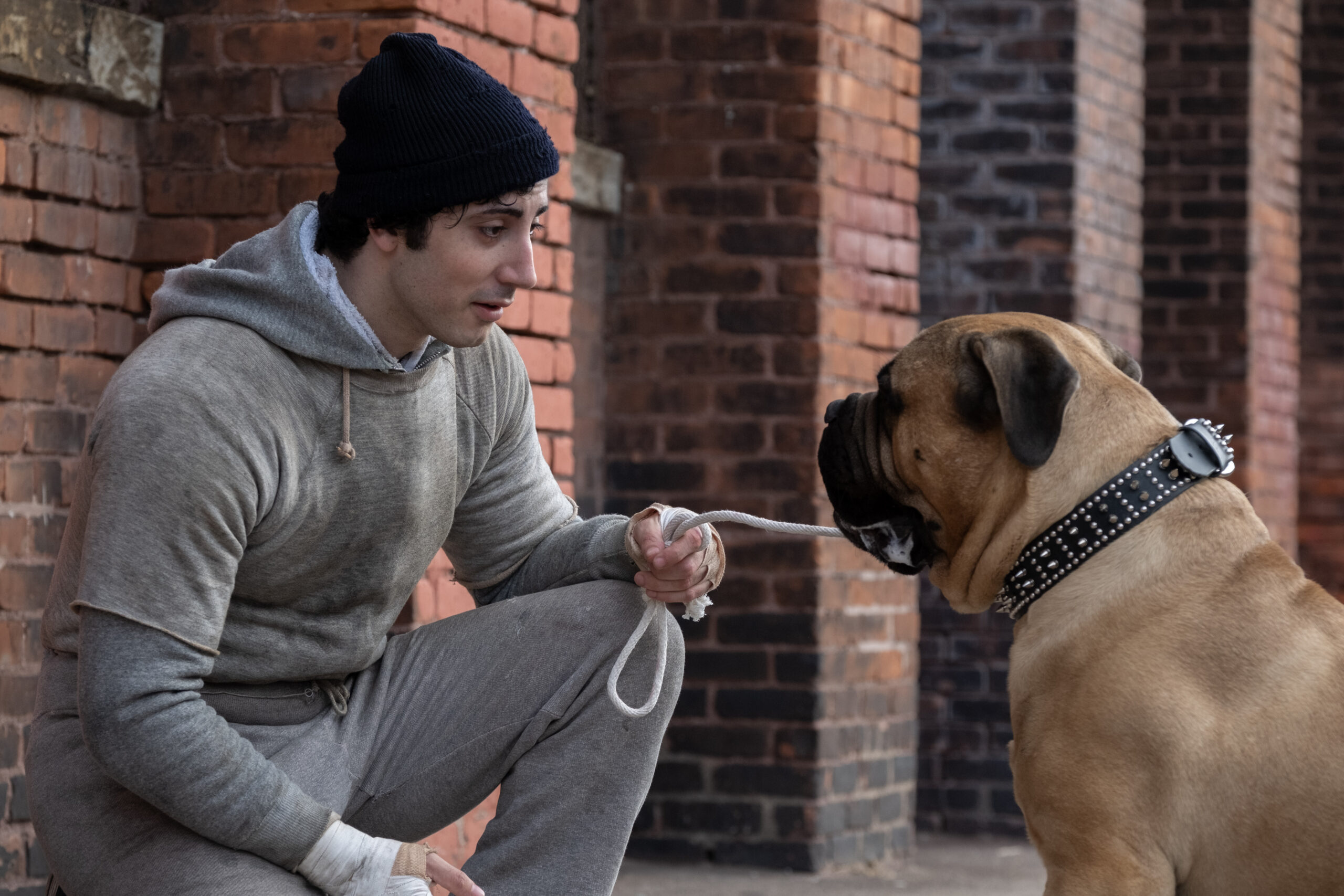
Ever since it was announced a year and a bit ago, pretty much the entire marketing campaign for I Play Rocky has been “wow, look at the resemblance between Anthony Ippolito and ‘70s Sylvester Stallone”. And, you know what, fair enough. It is an uncanny likeness and in our mostly stagnant and nostalgia-driven cultural moment, “this looks like a thing you remember” is a bankable hook. Unfortunately, director Peter Farrelly and writer Peter Gamble seem to also have thought about nothing except resemblances, leaving us with a movie that is an unerringly effective piece of mimicry while also being a completely weightless piece of art.
Ippolito’s performance as Stallone is hard to measure. It’s as accurate to the real man as can be, and that really is all that is being asked of him by this script and this story, so it hits the targets it’s aiming at, but there’s little real weight behind it. His Stallone is a bit vulnerable, a bit sweet, and very hard-headed and determined, but these traits mostly feel lifted from a biography rather than lived in. Tracking a few years in Stallone’s life, from his nadir of sleeping in the streets of New York and shooting softcore porn to make ends meet to the zenith of Rocky’s triumphant premiere, though he manages one great scene in the moment in which Stallone must tragically and pathetically sell his beloved dog Butkus, Ippolito is offered no opportunity to surprise.
Nor is the story, of course. We know that Stallone will write Rocky, will sacrifice a huge chunk of its budget (and a large personal payday) to star in it instead of handing the Rocky role off to a bigger-name actor, and that it’ll become one of the most culturally relevant films that Hollywood will ever produce. There’s some fun beats within that of the hustle of getting the movie made, from Stallone sneaking his script into a ‘to read’ stack at a producer’s office to the ‘shoot fast and without permission’ reality of making a low-budget indie, but the script never rises above ‘serviceable’ and often actually falls short of that bar. This is a real ‘characters say their thoughts and the themes of the movie out loud’ type of screenplay, and that’s never great, but especially so when telling the story of a game-changing script.
Stylistically, it’s not much livelier. Of course, there are all the requisite carbon-copy recreations of shots and scenes from Rocky (a couple, the ones actually in the boxing ring, are incredibly hard to tell apart from the source material), but it’s lacking the grit that made the original so special. Part of that is simply a matter of time – 50 years on, Philly no longer looks like a warzone, and none of the attempts to bring that aesthetic back, be they practical or digital, can match the oomph of the real thing.
Outside of Ippolito, there are mostly thankless supporting roles – AnnaSophia Robb is, predictably, saddled with the ultra-boring earnest wife role as Sasha Stallone while Toby Kebbell and PJ Byrne get to be the comedy double act of producers Robert Chartoff and Irwin Winkler without actually getting many jokes. There are some winners though. Stefan James is underused but an absolute lightning bolt of charisma as Carl Weathers, while Tracy Letts really classes up the joint as the sternly competitive studio head Sandy Maddox; whenever either is on screen, I Play Rocky is truly elevated.
It’s not that the story of the making of Rocky is uninteresting. In fact, it’s one of the better behind the scenes stories of any Hollywood icon. It’s just that making something look like a great movie from the past is an entirely separate, much easier task than making something that *feels* like a beloved classic, and Farrelly and Gamble have gone all in on the former without figuring out the latter.

