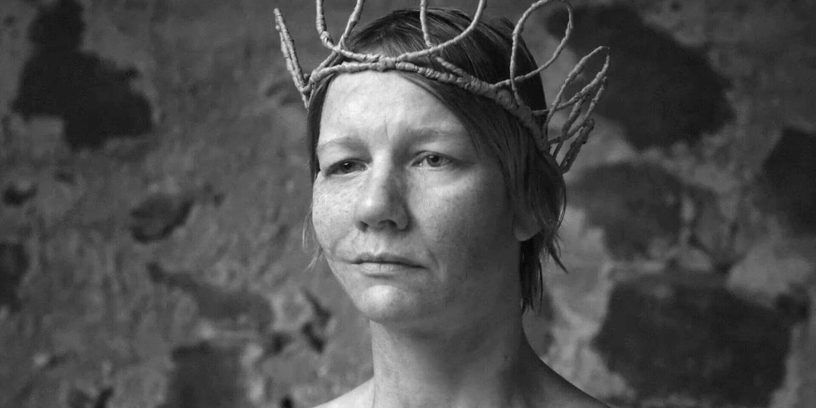
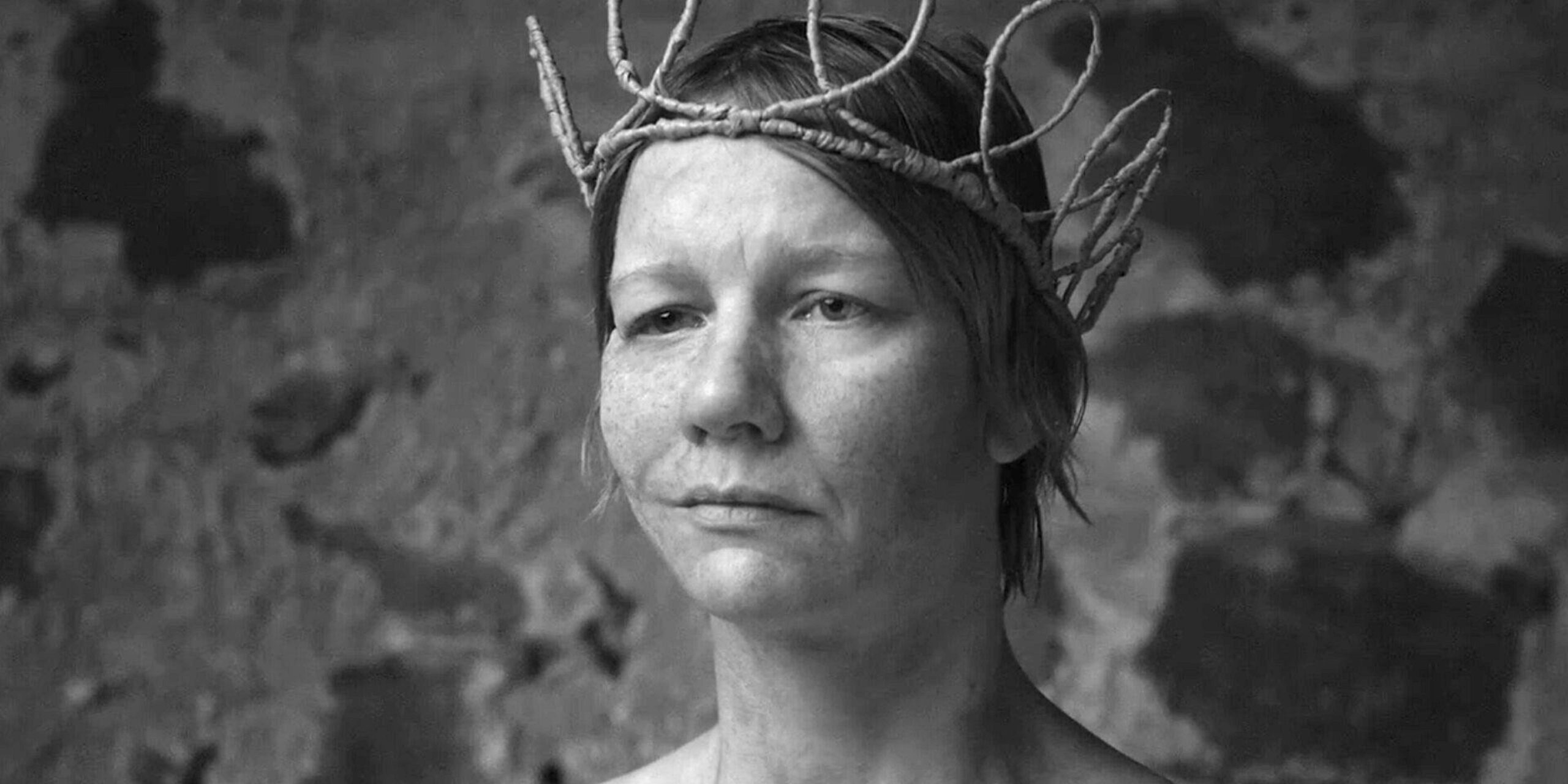
After Pawel Pawlikowski’s Fatherland, Markus Schleinzer’s Rose is the second film I’ve seen inside one month to feature Sandra Huller in a black-and-white historical German landscape with an unobtrusively brisk runtime. Sadly, it’s also the second film of this highly specific microgenre that I wish I’d liked more. An intriguing story of a woman pretending to be a man in Germany just after the devastation of the Thirty Years War, Huller is as fantastic as we’ve come to expect by now, but with underdeveloped supporting characters and a major overreliance on narration to sidestep narrative hurdles, Rose is tough to connect with.
By the time we meet her, Rose (Huller) is an expert at playing the gender game (even if, at least to the audience, her disguise is pretty unconvincing, particularly in her obviously feminine voice), having been serving as a man in the army for the last 10 years. She’s on her way to claim an abandoned parcel of land in a village she claims to have grown up in and the locals tentatively accept this strange man they refer to only as ‘The Gentleman’ or ‘The Master’. To expand her holdings, though, Rose is obliged to marry Suzanna (Caro Braun), the daughter of a local bigwig, and when Suzanna doesn’t fall pregnant quickly enough, suspicions are of course raised.
Huller is superb as Rose, aided by some truly exceptional make-up work to show off a very much not-faked war injury that has left a deeply scarred cheek and drooping eye (in moments of discomfort, Rose chews on the bullet that caused this, a tic that does more than you’d think to deepen the character). There’s confidence, even smugness, but also a fearful rage and when Rose’s/The Gentleman’s temper boils over, it’s genuinely startling. The rest of the actors get shorter shrift, their characters too often shunted away to be explained by the omniscient and slyly opinionated narration – narration that does way too much work.
There are important conversations we’re simply told about instead of seeing, and entire character traits that the narrator ensures us exist but aren’t actually all that evident on screen. It works to establish the fairytale parable tone Schleinzer and co-writer Alexander Brom are going for – the story is loosely based on real incidents of women faking manhood around this time in early modern Europe and there is a real sense that we could be reading about Rose’s story in a sensationalist pamphlet of the time – but it keeps the drama pretty thin.
It’s all shot very well, particularly in the interiors, which are given real depth and allowed to create frames within frames within frames through all the old fashioned woodwork, and it feels authentic to a cinematically underexplored time period. Rose is, fittingly enough, an oddity, the remarkable woman at its centre played remarkably and filmed with great care and consideration but never quite given the storytelling she deserves.

