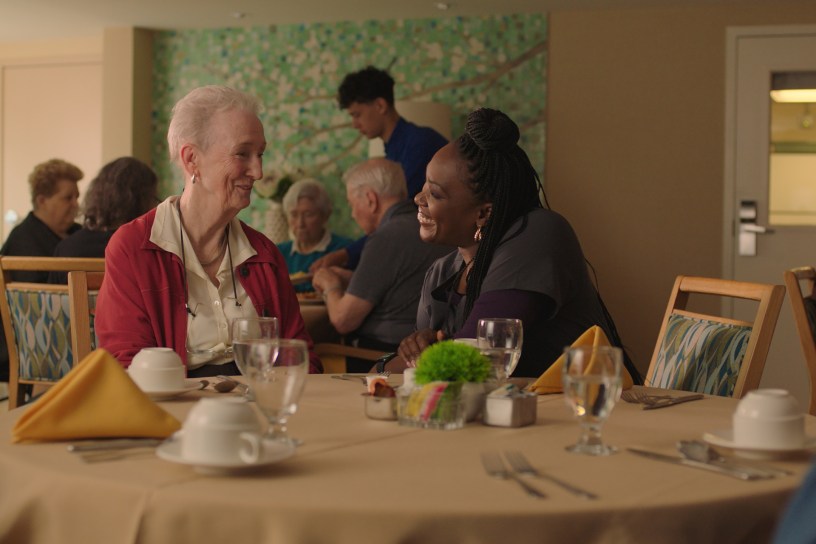
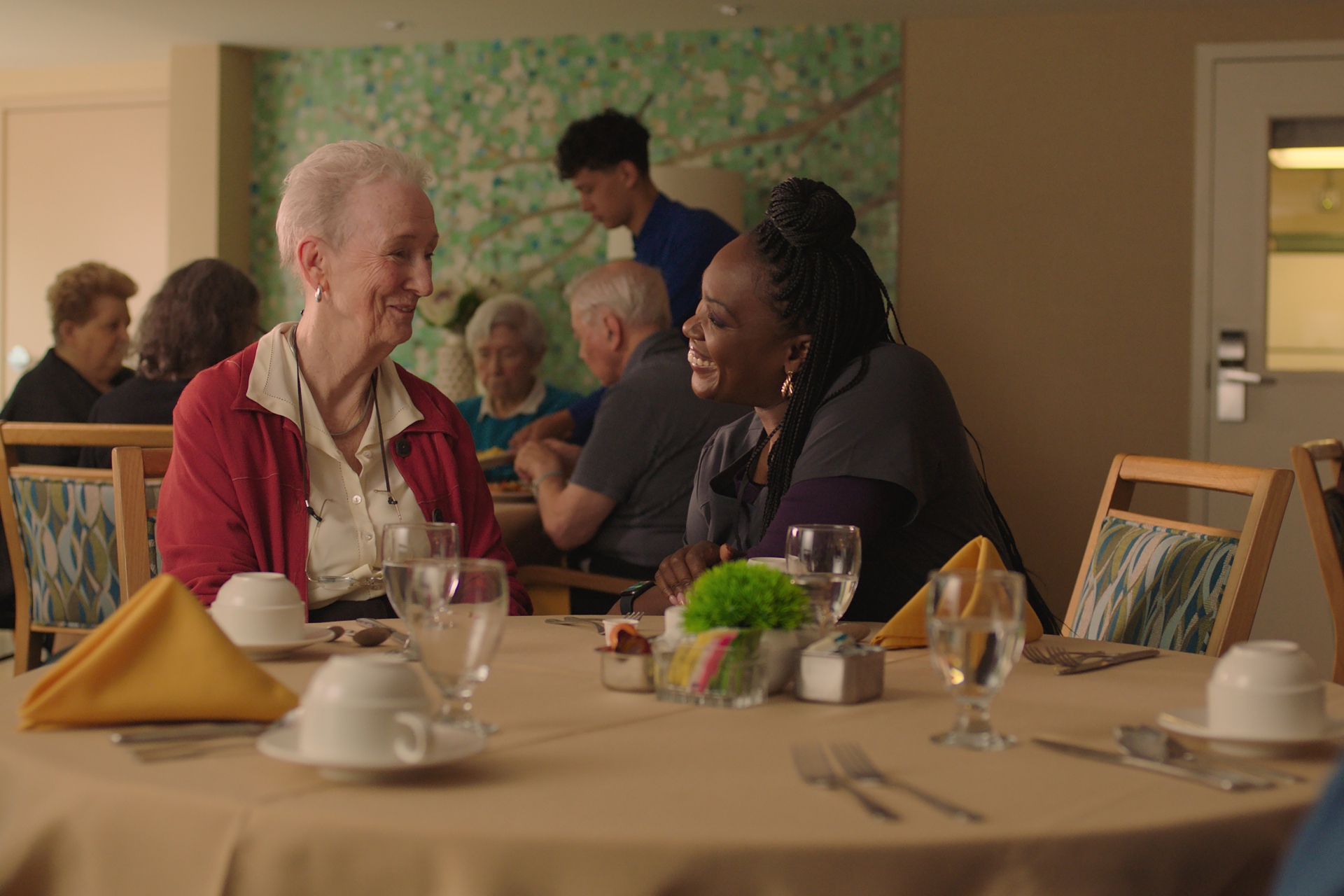
Shooting a narrative fiction film in an actively working retirement home and memory care facility sounds, on paper, like an emotionally, ethically, and logistically arduous task. Yet, if those difficulties did arise, choreographer Sarah Friedland’s debut directorial feature Familiar Touch shows no sign of them. Gentle and calm, it’s one of the least depressing films about dementia I’ve ever seen, never using the condition for drama but as a fact of life in an otherwise rather jolly (relatively speaking) day to day experience. The result is a truly unique story, albeit one with such a feather-light touch that an emotional distance remains throughout.
Though some of the facility’s residents ‘play’ themselves, Friedland, quite rightly, gives the lead role to an actual actress – American stage legend Kathleen Chlafant. She plays Ruth Goldman, who we first meet in her very well-kept home as she makes a truly divine looking breakfast for the nice younger man, Steve (H Jon Benjamin in a rare dramatic role), who has come to visit. The warning signs arrive slowly and subtly; Ruth putting her toast on a drying rack rather than the toast rack is a visual clue, the fact that she hasn’t recognised that Steve is her son is the more serious verbal one.
And so Ruth is moved to a high-quality care facility, still able to find plenty of moments of wit and elegance even as her brain betrays her now and again; in fact, it’s a question that Friedland leaves unanswered of whether this level of care is strictly necessary for Ruth yet. She befriends the staff, particularly ambitious nurse Vanessa (Carolyn Michelle) and attentive doctor Brian (Andy McQueen) and slowly gets used to her new home, and that’s pretty much the whole story. Friedland keeps things as grounded as possible, always, right down to the documentary-esque camerawork, and even a later escape/excursion from the facility is handled with about as much drama as the earlier chats about breakfast.
Chalfant is great, and there are moments of true beauty here even with the understated style and perhaps overly careful writing. A physical therapy session in the facility’s pool that returns Ruth to the state of being a child at the beach is as dreamy as Familiar Touch gets but almost every scene has a sort of bubble-wrapped air about it, with the kind of grey, kitchen-sink realism you might expect from a film of this logline and budget refreshingly absent.
For me, ultimately, Familiar Touch is just too quiet to really hit home, but if you can embrace its subtleties and rhythms, this is an important portrait of ageing that we don’t see enough of; not funny, not terrifying, not burdensome, just life at a slower, more vulnerable pace.
 Jack Blackwell – Film Reviews