
Thanks mostly to its marketing, Digger is a harder film to talk about than it needs to be. Alejandro Gonzalez Inarritu’s latest slice of grandiosity is absolutely not the thing it’s been sold as, at least not after its first 30 minutes, and to actually discuss where it (often) fails and (sometimes) succeeds necessitates diving into spoilers-that-shouldn’t-be-spoilers. With that out of the way, it’s safe to say that Digger is a fascinating but frustrating film, one that it is, frankly, amazing Warner Bros shelled out $130-ish million for, not to mention a real curveball for Tom Cruise to throw in with as his first non-action movie in forever. It’s very impressive that it exists at all, but often a lot less impressive to actually sit through.
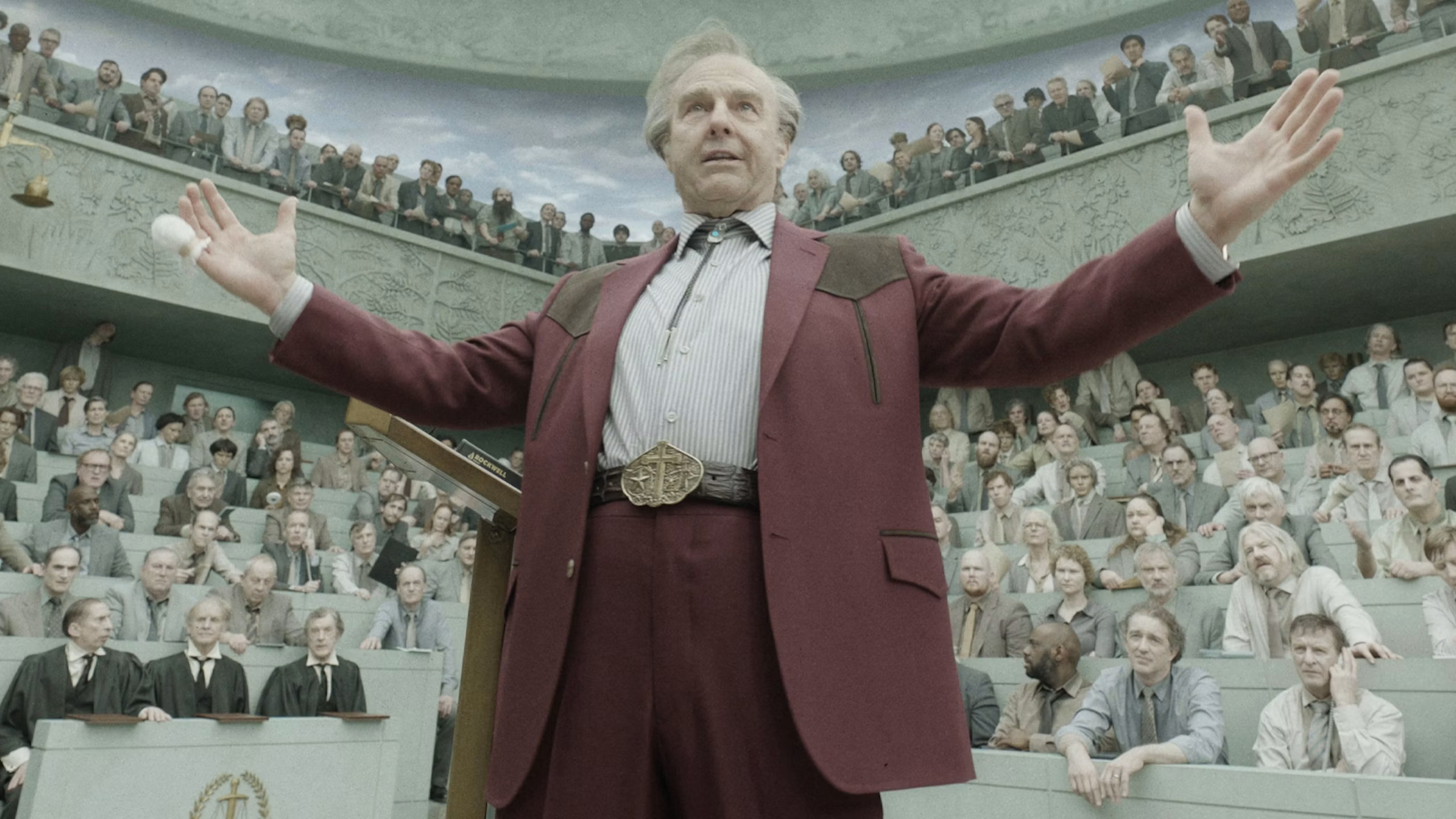
Cruise plays the eponymous Digger Rockwell, a Texan billionaire oil baron whose utter disregard for the environment and his own employees’ and scientists’ warnings ends up leaving him as the primary cause of an unprecedented ecological calamity that involves giant icebergs, a flooded Europe, and toxic waste everywhere. Well, he sort of does. See, Cruise actually plays Curtis Markson, an actor playing Digger Rockwell in a play being put on decades into the near-apocalyptic future that Digger unleashed, a reveal we get about half an hour into the film, switching from an apocalyptic comedy farce to a satire of theatre.
It’s an audacious conceit, undeniably, but it lands closer to irritating than interesting for the most part. It relegates the ‘Digger’ stuff to unimportance even as the stakes rise and rise while the ‘Curtis’ side of things feels too much like Inarritu reversing back into a less zippy version of Birdman. More important, perhaps, is that while both strands are meant to be comedies, albeit each one in a very different register, neither is very funny, Inarritu and his writing team leaning way too heavily on grotesquerie as their primary comic outlet with very few proper jokes.
And what of Cruise? Slathered in unflattering prosthetics, he’s still every bit a Movie Star and he does manage to anchor things as both Digger and Curtis, going very big and broad as Digger but letting a subtler, sadder insecurity fuel Curtis – a climactic speech he gives in-play manages to hit despite the complete unreality of it all. Meanwhile, Riz Ahmed gives excellent support as Digger’s top scientist Ganesh, but most of the other characters barely even qualify as ciphers, while John Goodman is mostly just offputtingly gross as the necrotic US President.
Of course, any film directed by Inarritu and shot by Emmanuel Lubezki is going to look grand, and Digger is no exception. The in-universe play is a well-funded production, with moving stages, fascinating perspective tricks, and a sweeping sense of scale, Inarritu (using the back-in-vogue VistaVision format) managing to fit what feels like a whole world on to one stage. There’s nothing here that matches the tricksiness of Birdman or the raw majesty of The Revenant, but Inarritu and Lubezki rarely compose an uninteresting frame.
And that’s the rub with Digger. A lot of it is not very good; hell, a lot of it is actively quite annoying, but when it works it’s something really unique, especially towards the very end where it reckons with art’s utter powerlessness. Most behind-the-scenes dramas get labelled ‘love letters’ to their medium, but you could never accuse Digger of that. It lands on its final message that art cannot alter reality and even those rare pieces with change-making capacity will have that power bought out and excised by those with the influence to halt that change, a cynical position that still feels profoundly earned by the end.
Often, high-concept productions like this find the final hurdle to be the hardest, but Digger, fittingly chaotically, doesn’t even hit a steady rhythm until it’s time to close the curtain, which it does incredibly effectively. The lumpy and unfunny first 110-odd minutes probably aren’t worth the final 10-minute payoff, but Digger sends you back out into the world with a feeling – somewhere between hopelessness and anger and pity – that is surprisingly hard to shake.

