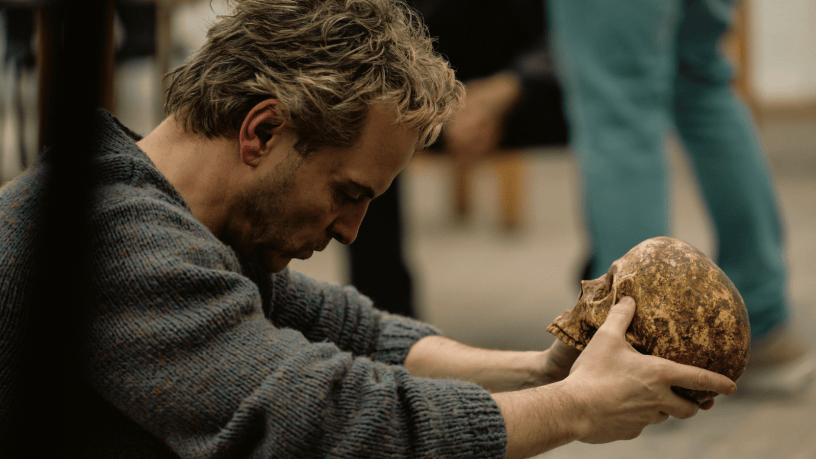
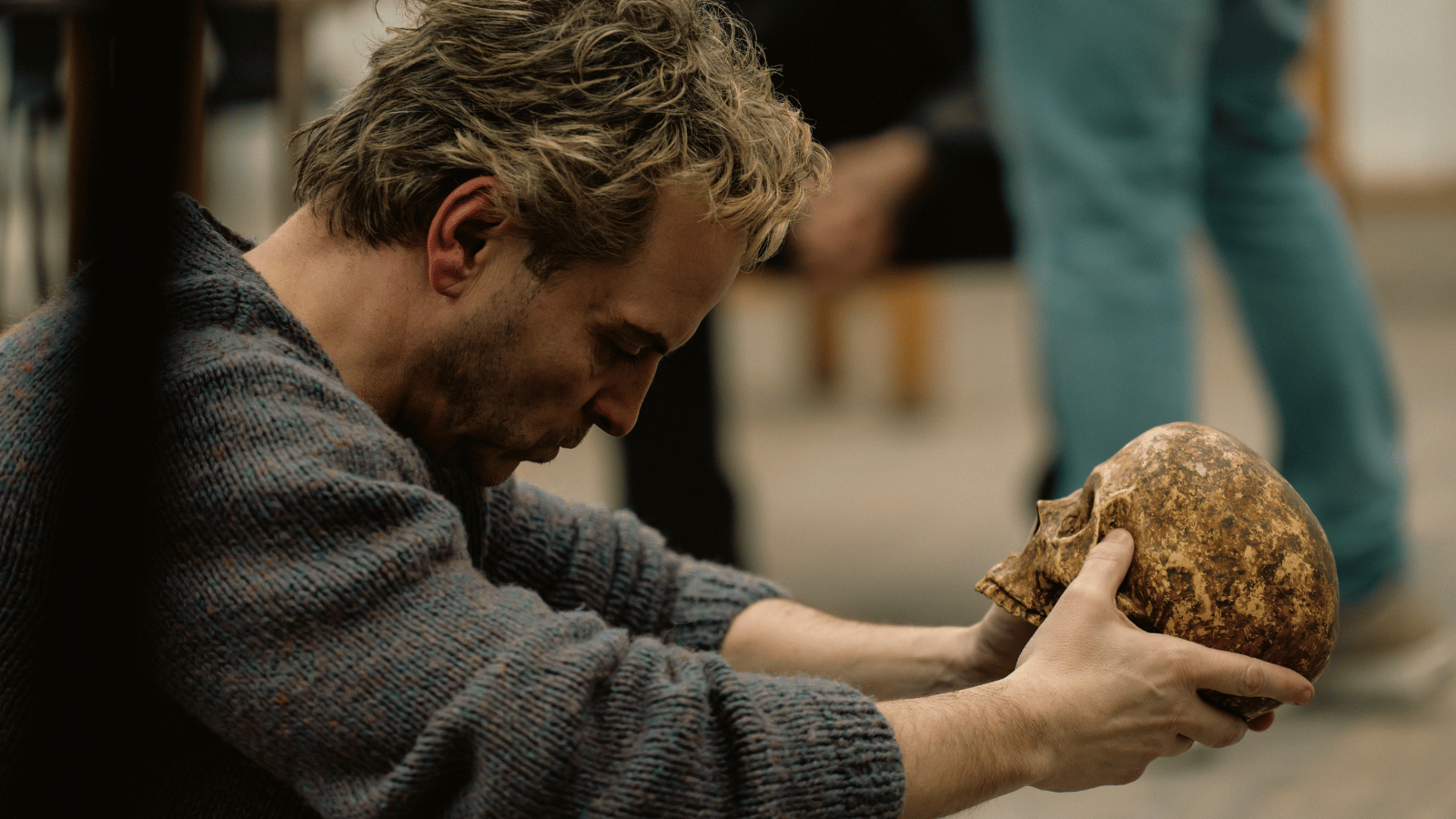
As he heads in for a costume fitting at The National Theatre, Ian Charleson – getting ready to play Hamlet – opines that he’d rather be on stage than on screen as he’d rather not leave his performance in the hands of editors who’ll chop him to pieces. If only the film he was in agreed with him. Simon Stone’s Elsinore, which tells the true story of Charleson playing the Prince of Denmark whilst dying of AIDS has an incredible keystone in the form of Andrew Scott playing the onetime Chariots of Fire star, giving an intensely moving performance that is nearly sabotaged by an edit that is never more than a few minutes from a montage.
The year is 1989 and Charleson’s career hasn’t really gone the way he wanted, a dissatisfaction that is given a much more urgent clarity when it becomes clear that he’s terminally ill. It’s been eight years since Chariots of Fire and all anyone *truly* remembers about it is the soundtrack. The film work he’s getting is pretty trashy and, soon after we first meet him, he develops his first AIDS lesion, entering what his once-friend Derek Jarman (spikily played by David Dawson) calls the ‘polka dot phase’ of the illness. But then, opportunity. Daniel Day-Lewis has had a nervous breakdown on stage and abandoned the role of Hamlet, a role Charleson feels a deep call towards and that the play’s director Richard Eyre (Johnny Flynn) thinks he’s perfect for, regardless of his ailing health.
And so, Charleson must battle through the agony of his illness (kept secret from the rest of the cast) in the midst of mastering the greatest single role in the history of the stage. It’s a mighty task, one that Scott rises to with immaculate skill, entirely elevating a script from Stephen Beresford that is rather ordinary on the page. He’s moving, funny, and (to no one’s shock) a brilliant Hamlet – all of Elsinore’s most powerful moments come when the film just slows down and basks in Scott’s mastery of the verse, which is consistently captivating. If you want to be reminded of why Hamlet might be the best drama ever written in the English language, Scott is the man to do so.
With such a strong anchor, Stone’s reliance on quick cut montages becomes all the more baffling. Scott’s performance doesn’t need anywhere to hide and the needlessly frenetic edit just gets in the way of a real gutpunch emotional build, especially in an ending that has all the right ingredients to shatter your heart and then just mixes them all wrong. The calmer stretches have a nice dreaminess (especially a misty stroll through a patch of woodland that offers both cruising opportunities and non-sexual community to gay men) and to them that feels very fitting for both the ghostly world of Hamlet and Charleson’s gradual march to the grave, but these are too few and far between.
Though it might seem obvious to compare Elsinore to last year’s own Hamlet-based tearjerker Hamnet, the recent film that most came to mind for me was actually the underwhelming romance We Live In Time – a straightforward tragedy tripped up by its own nervous editing. Elsinore is certainly better acted than that, from Scott to Flynn to Billie Piper being affecting as Charleson’s casting director best friend Patsy (though why Olivia Colman took on the flatly written and completely subdued role of pioneering AIDS doctor Margaret Johnson is a mystery) but it shares the core issue of never earning its overly fussy formal tics. Scott will almost certainly get a flurry of nominations for this performance, and they will all be richly deserved, but maybe those nominations would be likelier to lead to wins if he wasn’t being interrupted all the time.

