As simple, literal, and self-explanatory as it is, the very title of Paul Greengrass’s The Uprising has had a somewhat turbulent journey to cinemas, US distributors adding a last minute subtitle of The Rise of Robin Hood before being chastised by the UK distributors and just as swiftly removing it. It was a confusing, clumsy, and clearly nervous move that feels unfair to a film that, even with its flaws, is rarely any of those things, a hearty mud-and-blood epic that mixes true history with folk legend to consistently entertaining (though also consistently emotionally thin) effect.
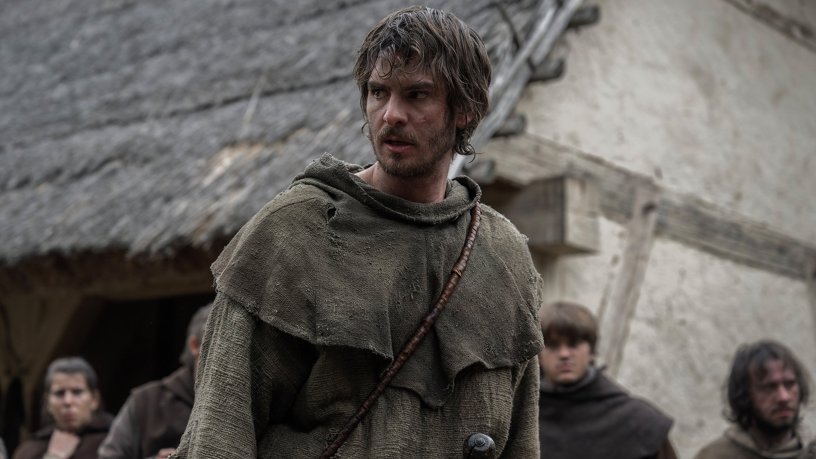
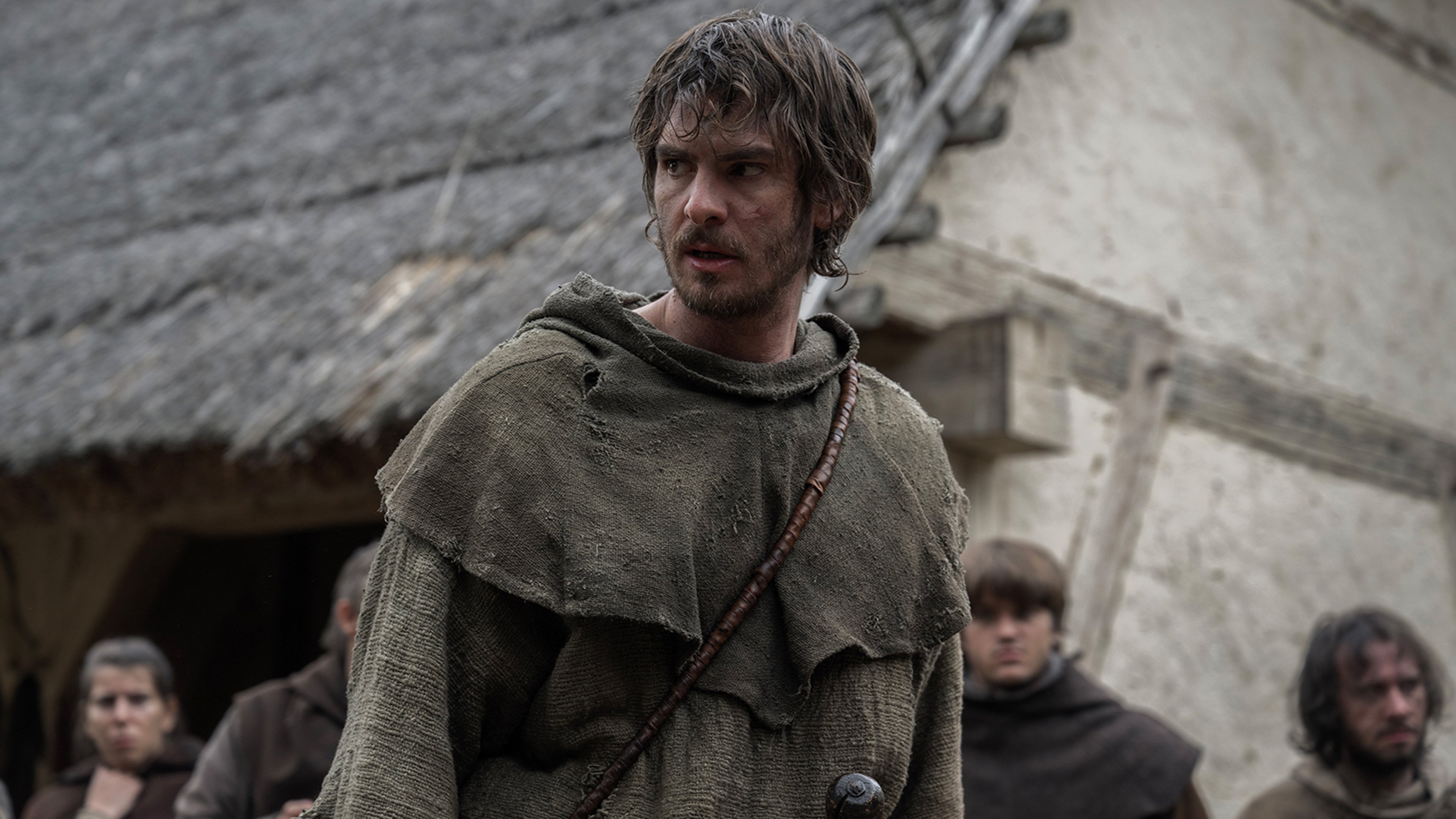
Set during the 1381 Peasants’ Revolt, Greengrass steeps us in the period – the trauma and grief of the Black Death still thick in the air, the Hundred Years War leading to impossible taxes being levied on the common folk, the beginnings of the move from a feudal society to a proto-capitalistic one – but keeps his protagonist fictional. This is Andrew Garfield’s Ploughman (never given a name beyond his work and presumably referencing the 14th Century poem of Piers Plowman, itself a key early source we have for the Robin Hood legends). Beaten down beyond what he can bear during a tax raid on his village, Ploughman snaps, beating a soldier to death and, somewhat unwittingly, leading his local townsfolk to join the wider rebellion and march on London.
Given the title kerfuffle, it’s not really a spoiler to say that Ploughman slowly but surely becomes a Robin Hood-esque figure, even if no-one mentions that precise name, but Greengrass doesn’t give him any folkloric Merry Men, instead having him fight side by side with the Revolt’s real architects. These are the former soldier Wat Tyler (Cosmo Jarvis), the true leader of the fight, and rebel priest John Ball (Jamie Bell), branded a heretic for his views on human equality.
Greengrass gets this story going respectably quickly and stays on the front foot throughout – The Uprising is very well-paced throughout and rarely lingers too long on anything. That does come with the cost of all of these characters being pretty underdeveloped, not helped by a muddy sound mix and some very mumbly (and, let’s say, *interestingly* accented) performances that obscure dialogue, and thus motivations, even further. You never really get a sense of exactly why Ploughman is able to inspire so much loyalty on the march, Garfield playing him as a mostly withdrawn man, lacking in true fiery charisma. On the evil authority side of things, the scheming boy king Richard II is solidly played by C’mon C’mon’s breakout child star Woody Norman, but it’s Tom Hollander and Stephen Dillane who steal the show as his slithering advisors.
Though the individual character work is lacking, Greengrass does do a better job of situating us in the 14th Century peasant mindset, and no one here talks, thinks, or acts like a modern Brit dressed in a mucky smock. They all genuinely believe that the king is God’s instrument and that their suffering is due solely to his corrupt council, and it’s impressive that this never reads as simple naivety but instead the natural result of centuries of indoctrination.
It’s a clever trick to pull off, but this earnest and well-studied writing doesn’t translate to the visuals, which are generic Grey And Mud medievalism that feels far too familiar at this point. Some of this, admittedly, is simply down to the Greengrass house style; he’s never been one for particularly bright or saturated colours, and his trademark shakycam action does feel a bit fresher in this context. I’ve seen complaints that it makes the battle scenes disorienting, even nauseating, but I can’t agree. The fights here are well-marshalled and convincingly grim, even when working with what is a more limited budget than these sort of films often demand.
Though the history demands a tragic ending, The Uprising is a mostly fun trip to the movies, speeding through riots, battles, double-crosses, and the half-mythical birth of a new England. With that said, very little of it makes a real mark, down in large part to the eminently forgettable characters who will be fading from your mind the instant you start heading for the cinema doors.

