Dominik Moll is the filmmaker behind the magnificently twisty and darkly hilarious crime thriller Only the Animals (one of the very best films to release during the original 2020 COVID lockdowns), as well as the more recent Night of the 12th, a ferociously angry look at lethal misogyny in modern France. His latest effort, Case 137, is a lot less fearsome than its immediate predecessors, a surprisingly conventional procedural that takes a clear moral stance but is otherwise a little, well, ordinary. As a sort of French spin on Line of Duty, it’s not without impact, but it is a cooling off for Moll’s hot streak.
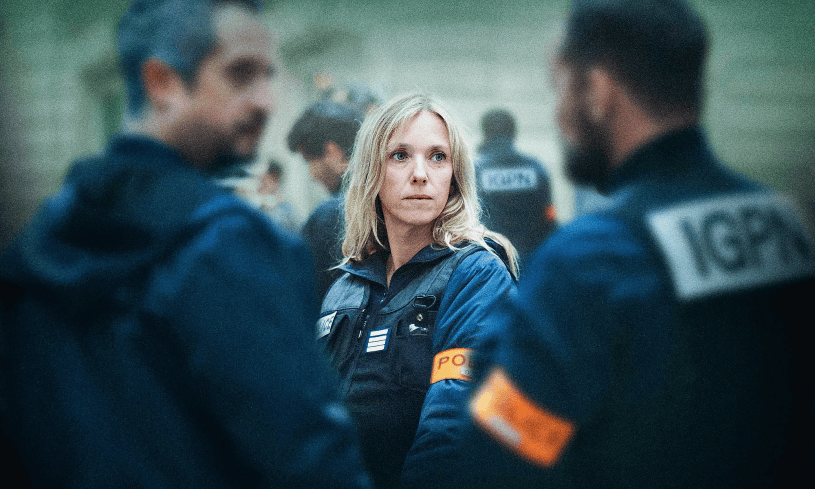
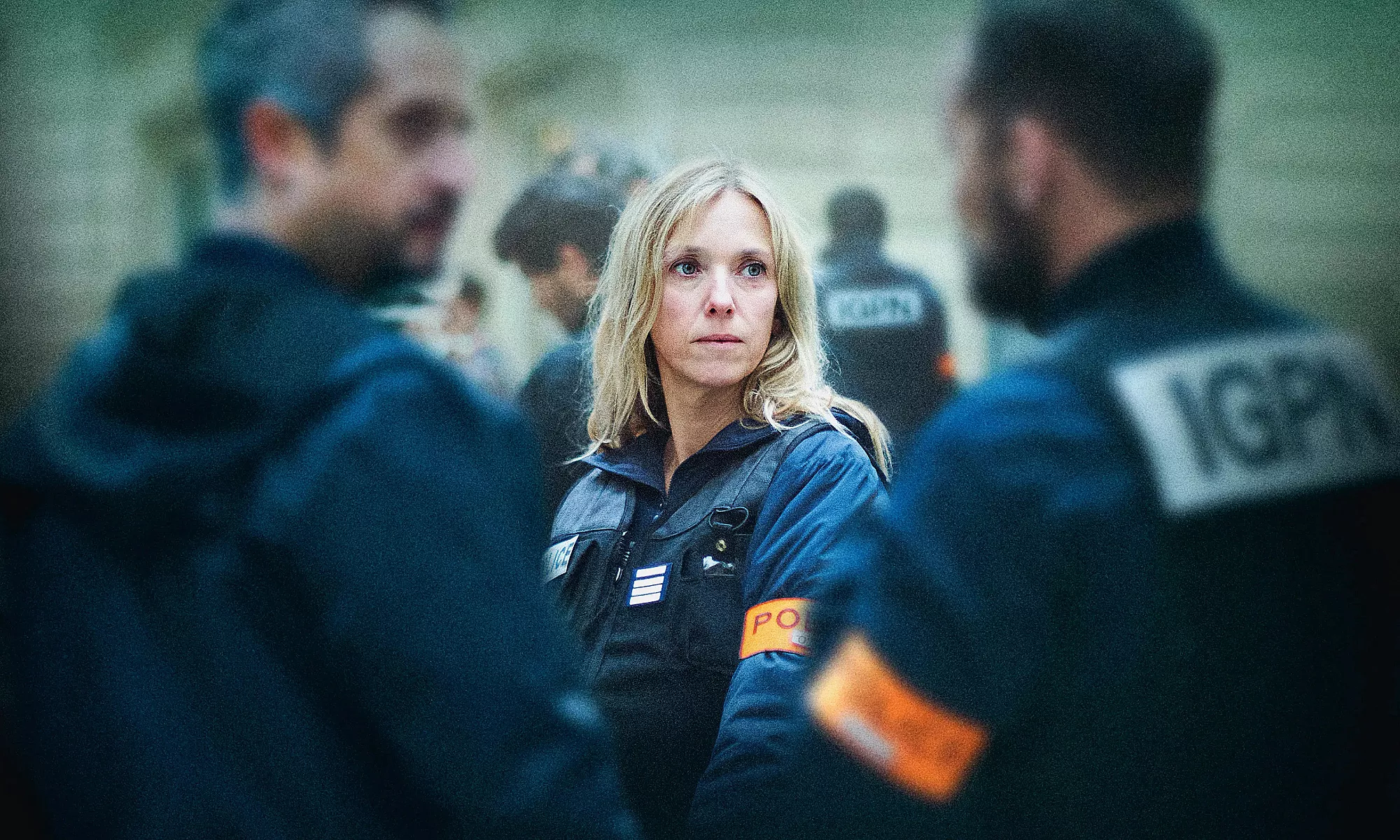
Coming out in UK cinemas almost a full 18 months after its original Cannes premiere, Case 137 couldn’t have really arrived at a more opportune time, its narrative centred on the late 2018 Gilets Jaunes protests just as Paris again descends into a war between police and the disaffected French citizens. Lea Drucker plays Stephanie Bertrand, an investigator for the IGPN (the French police’s internal affairs department) looking in to an incident in which a plainclothes officer fired a rubber bullet into an unarmed demonstrator’s head, causing permanent damage. Of course, her ostensible colleagues close ranks and so Stephanie must go through a gruelling process of evidence gathering that she knows is unlikely to end with any meaningful result.
She’s an interestingly compromised protagonist, able to see how the structures she works within protects violent, angry, trigger-happy cops from consequences but unable to admit that those structures are a fundamental problem. She’s a loyal cop at heart, even when her sympathies shift towards the victim after finding out he’s from the same hometown as her, rejecting the notion, brought to her by her sweet-natured son, that the police might be inherently flawed, and keeping a social circle exclusively of police.
Moll makes his own sympathies clear, especially towards the end, but Case 137 is a lot less didactic than, say, Night of the 12th. Of course, subtlety and letting your audience draw their own conclusions are generally regarded as the ‘right’ way of telling a provocative story like this, but Moll is exceptionally good at being didactic, and so this slightly more hands-off approach doesn’t play to his most compelling strengths. Add to that a pretty minimalist formal style – there aren’t many memorable visuals and the score is very rarely used – and Case 137 is very unlikely to achieve what Only the Animals did and stick in my head for six full years.
It’s mostly a testament to Moll’s last two films that Case 137 feels disappointing, though. This is still a very solidly written and acted piece (Drucker won the Lead Actress Cesar for her central performance, and it’s well-deserved for the way she can externalise the process of Stephanie’s constant mitigating and lying to herself), albeit one that rarely strays far from the trappings of its genre. As the (unintended) context of its release shows, French policing and trust in state institutions are entirely broken – it’s an inherently intriguing milieu, but one that could have done with a decent amount more fire.

