It’s been a very long eight years waiting for Lee Chang-dong’s follow-up to my 2018 film of the year, Burning, but, finally, Possible Love is here, and not a moment too soon. If there’s one thing this year has really lacked on the big screen, it’s world-class writing, but Lee and his co-writer Jungmi Oh have crafted a script that might even top Burning’s masterclass, another tale of class conflict and male anger this time filtered into a much subtler, more everyday story. Brought to life by a quartet of magnificent performances, it’s a novelistic screenplay to truly lose yourself in, paced to perfection across a luxurious near-3 hour runtime.
With its rather inscrutable title, Possible Love follows two couples – the working class Mi-ok (Jeon Do-yeon) and Ho-seok (Sul Kyung-gu), and the much more affluent Ye-ji (Cho Yeo-jeong) and Sang-woo (Zo In-sung). Working class husband Ho-seok was recently laid off from his job at SP Heavy Industries following a strike that was violently broken by the police (based on a real anti-union crackdown in 2009) and has just found new employment but is crushed and embittered by the injustice. Affluent wife Ye-ji, a documentary filmmaker, sees in Ho-seok a perfect subject for her next film, but his taciturn affect and reluctance to speak openly about anything means she must go through Mi-ok, and so a friendship with a deep power imbalance starts to form.
Lee uses his mammoth run time to sublime effect, perfectly pacing out every reveal about these characters, every shift and crack in their relationships. We see at least part of the story from each lead’s POV, as well as some shorter but crucial sections through the eyes of Mi-ok and Ho-seok’s young son (that they have a kid while their wealthy counterparts instead have a dog is a brilliant, vital touch), granting Possible Love a rare and hypnotic depth.
The cast respond to the magnificent writing with plenty of magnificence of their own. Jeon plays Mi-ok’s excitement at being asked to join, however briefly, the world of the culturally significant as a sort of smiling tragedy, while Sul gives complexity to Ho-seok’s anger by showing how uncomfortable he is with his own rage, his soul flattened by South Korea’s quasi-fascistic working culture. On the other side, Cho and Zo make for a fantastic double act in how they express Ye-ji and Sang-woo’s attitudes to their wealth and privilege, Ye-ji always faintly embarrassed by it while Sang-woo owns how out of touch he is without shame, counterintuitively making him an easier read for the poorer couple.
Lee and Oh keep splitting the cast off into different pairs, and so three very different chemistries are allowed to form as not-quite-infidelities start to pile up, the various rules and boundaries of monogamy proving much more porous than those of class. It’s all so endlessly clever – look out for how both couples invite voyeurism into their own lives in distinct yet paralleled ways – that you could just go on and on about the various ways these characters become unforgettably real, but it’s probably best to leave it at that.
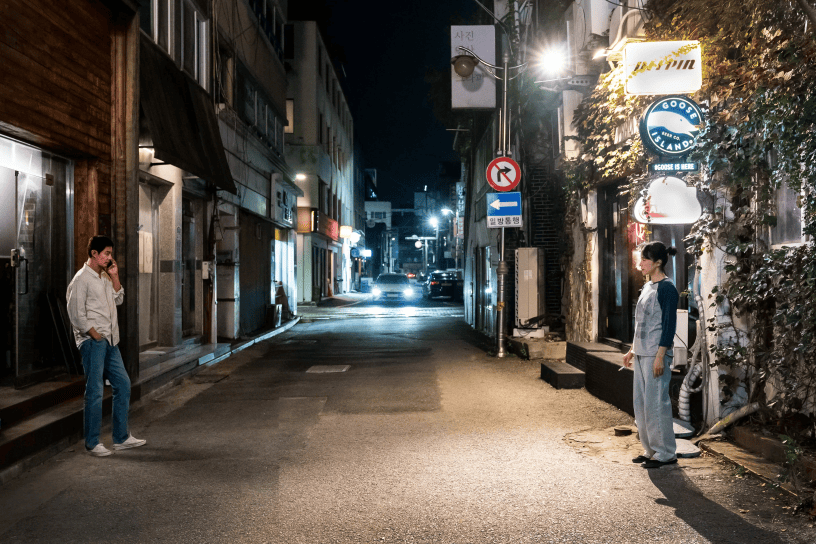
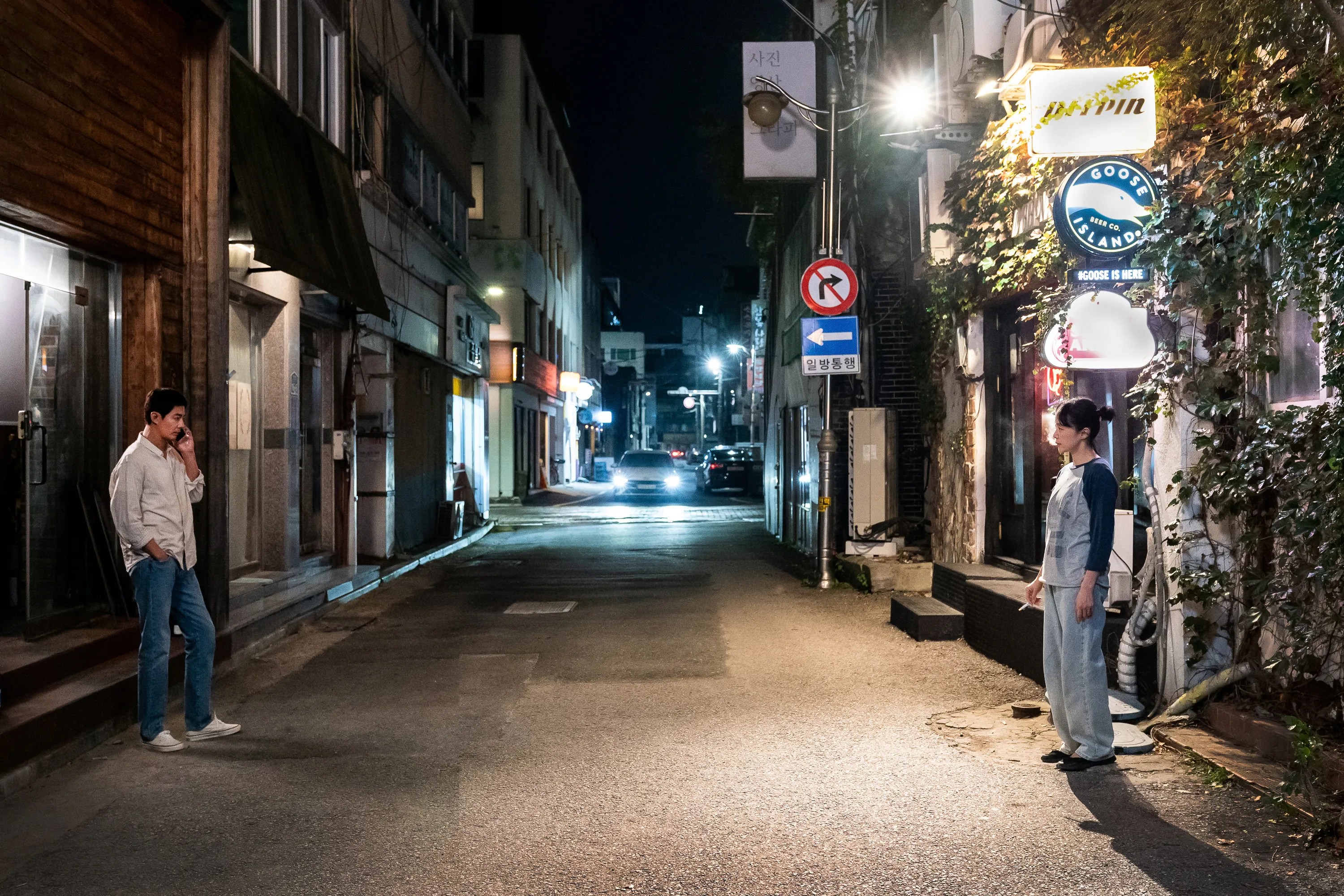
Suffice it to say that you feel utterly absorbed into these people’s lives, and Lee keeps things visually restrained to accentuate that fly on the wall feeling. That’s not to say that Possible Love is formally uninteresting – flashbacks, news reports, and the documentary itself mean we’re constantly switching back and forth between camera styles – but it is a bit less visually compelling (and *much* less sonically compelling) than Burning was. There’s a casual beauty to the dawn and dusk sequences that feels very fitting for the languid pace though, particularly once we reach Sang-woo’s glorious coastal cottage for a captivating extended finale that carry’s Burning’s flame of featuring an emotionally complicated and completely disarming moment of sudden, calculated nudity.
On paper, Possible Love looks like a rather simple list of ingredients, but each and every single one of those elements hides layers upon layers beneath it. An awkward encounter with a rideshare driver might, two hours later, be revealed as a profound betrayal, or a child’s reluctance to put on his taekwondo uniform become his only way to throw off the shackles his family have unwittingly put on him. It’s as rich a text as you can hope a script to be. Finally, after 10 months of the year, the first frontrunner contender for my film of 2026 has emerged.

