Marie Kreutzer crafts one of the year’s most bleakly provocative films with Gentle Monster, a Franco-German tale of hideous sex crimes, the men who commit them, the men who ignore them, and the women who, whether out of self-defence or something more outright cynical, rationalise them. An unsparing nausea seeps into most of its frames and, eventually, into any viewer, a growing power that more than makes up for the occasional strange stylistic misstep or structural bagginess. It’s a mature and very European take on tough subject matter that somehow still manages to have, deep beneath the surface, a current of astoundingly dark humour.
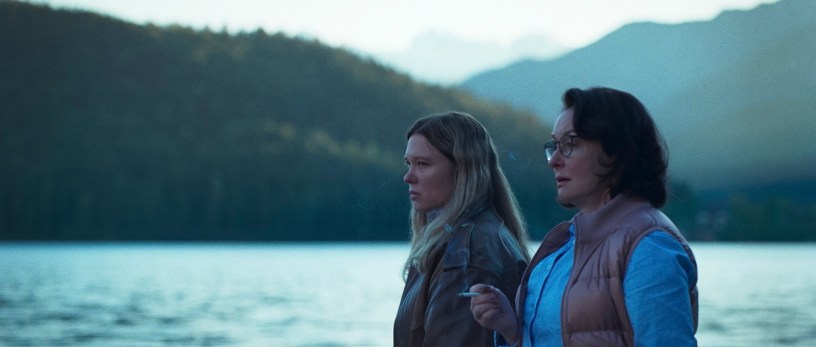
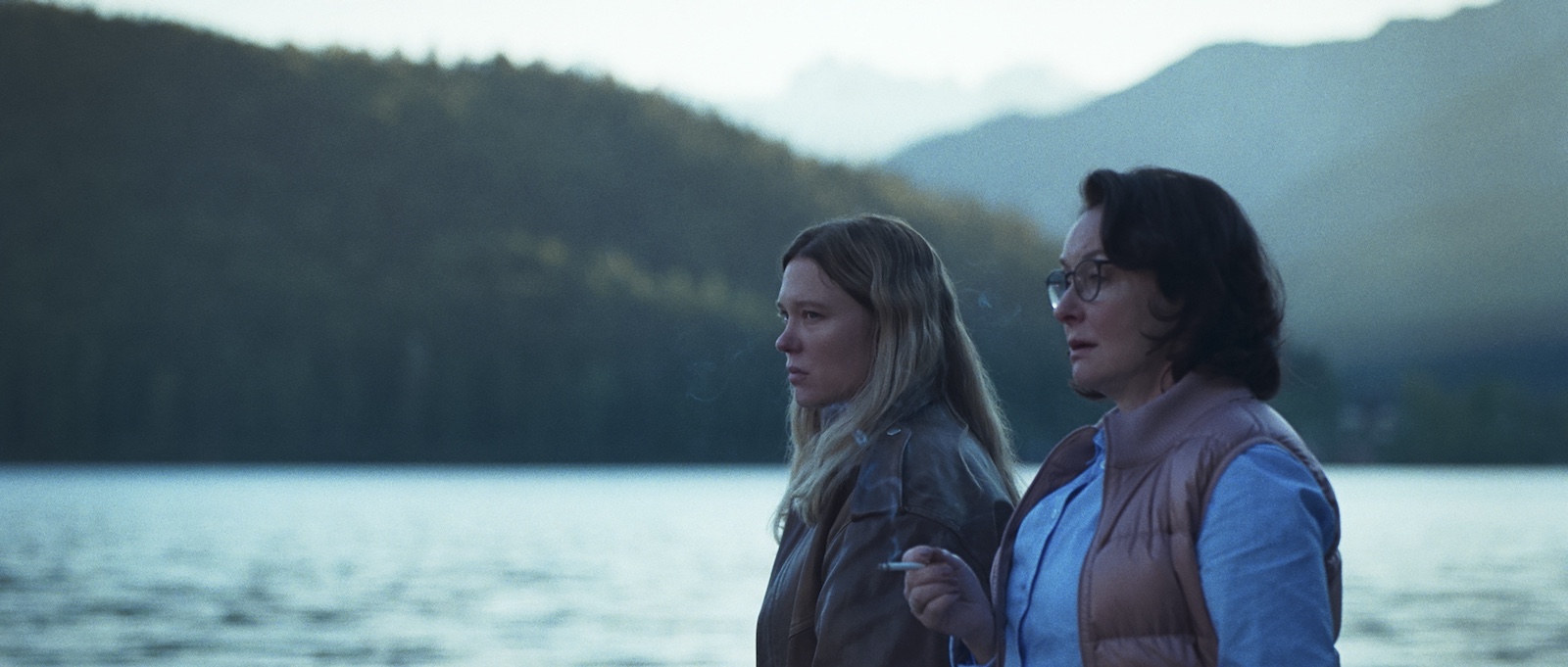
Lea Seydoux stars as Lucy Weiss, a French musician who makes her living in Germany as some sort of performance artist pianist and singer (her concert scenes are strange and honestly rather unconvincing, but hearing Seydoux belt out classic tunes is enough to make them worthwhile). She’s married to Austrian TV director Philip (Laurence Rupp) in an imperfect but happy multilingual relationship in rural Bavaria where they are both dedicated parents to their young son Johnny (Malo Banchet). It’s a marriage that is blown to pieces when the police show up at their house, seize Philip’s hard drives, and accuse him of both downloading and distributing child sex abuse videos.
Lucy is stunned and furious but also tragically open to grasping at straws to make things better. She chooses to believe Philip’s obvious lies about why he had the material on his computer (first it’s research for a documentary, then he claims it was a get rich quick scheme) while also replaying every interaction Philip ever had with Johnny in her head, her horror and bafflement inextricably intertwined. Seydoux plays this brilliantly well, making Lucy both frustrating and tragic in a way that feels discomfortingly real – Rupp is also excellent in his very tough role, the moment in which he greets the police at his door and realises he’s done for is spectacularly well played.
Her scenes are loaded with so much tension and disgust that it’s genuinely a relief every time we cut to the police actually investigating the case, headed up by detective Elsa Kuhn (Jella Haase), who is balancing her gruelling work with her dad’s deteriorating dementia and her brother’s utter uselessness at helping her care for him. Men, on the whole, do not come off well in Gentle Monster, horrifying predators at worst and dim-witted children at best, but Kreutzer doesn’t let her women off the hook either. Lucy’s denial is paralleled by Elsa’s treatment of the live-in carer she has hired for her dad, shrugging off the fact that her father is groping this poor woman, even trying to sneak into her bed – she first blames the carer for not locking the door properly before just trying to throw money at her to forget about it.
It’s a grim old watch, but never quite gratuitously so, Kreutzer peppering in little details that show a dark enjoyment of pushing so many dangerous buttons (most notably casting Catherine Deneuve, one of cinema’s few anti-MeToo women, as Lucy’s mother). If that sounds perhaps a bit insensitive on paper, it fits more naturally into this story in practice, acting more as a pressure relief valve than anything genuinely glib.
It adds a variation in tone that is hugely important, especially in a rather slack final act in which the story’s momentum really tapers off even as some big climactic reveals are made. Some of these come through flashbacks which are introduced via a very cartoonish dreamy fading out, one of a couple of distractingly, and I think unintentionally, goofy formal tics (another one comes in a moment in which Lucy tries to chase down Philip’s car, shot in a way that makes it look genuinely farcical).
These are genuine problems that do drag Gentle Monster down a bit, but Kreutzer’s fearless writing is, at its best, definitely enough to overcome them – there’s also a lot of efficient storytelling done through the excellent production design of the Weiss’s perpetually unfinished home, lives already unsteady before disaster. This is a clear-eyed look at one of the world’s most uncomfortable truths – that someone else’s sexual assault, even when it’s as extreme as paedophilia, can be compartmentalised into a mere obstacle for those who have to respond to it if it makes the rest of their life more difficult. It’s also that very rare thing – a harrowing watch that never insists on its own importance or ‘necessity’, brought to life by a bevy of great performances.

