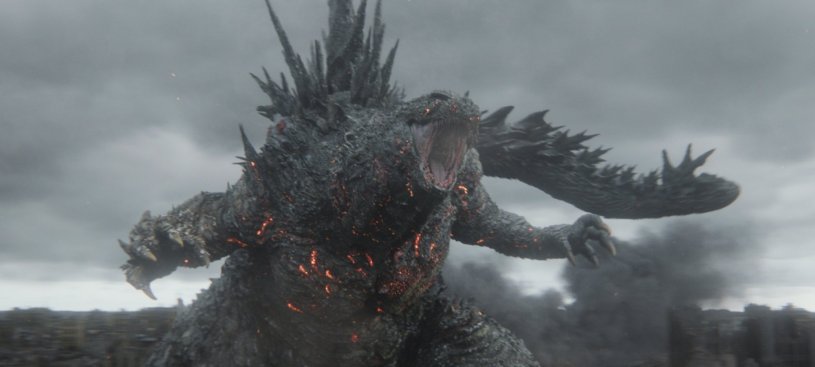
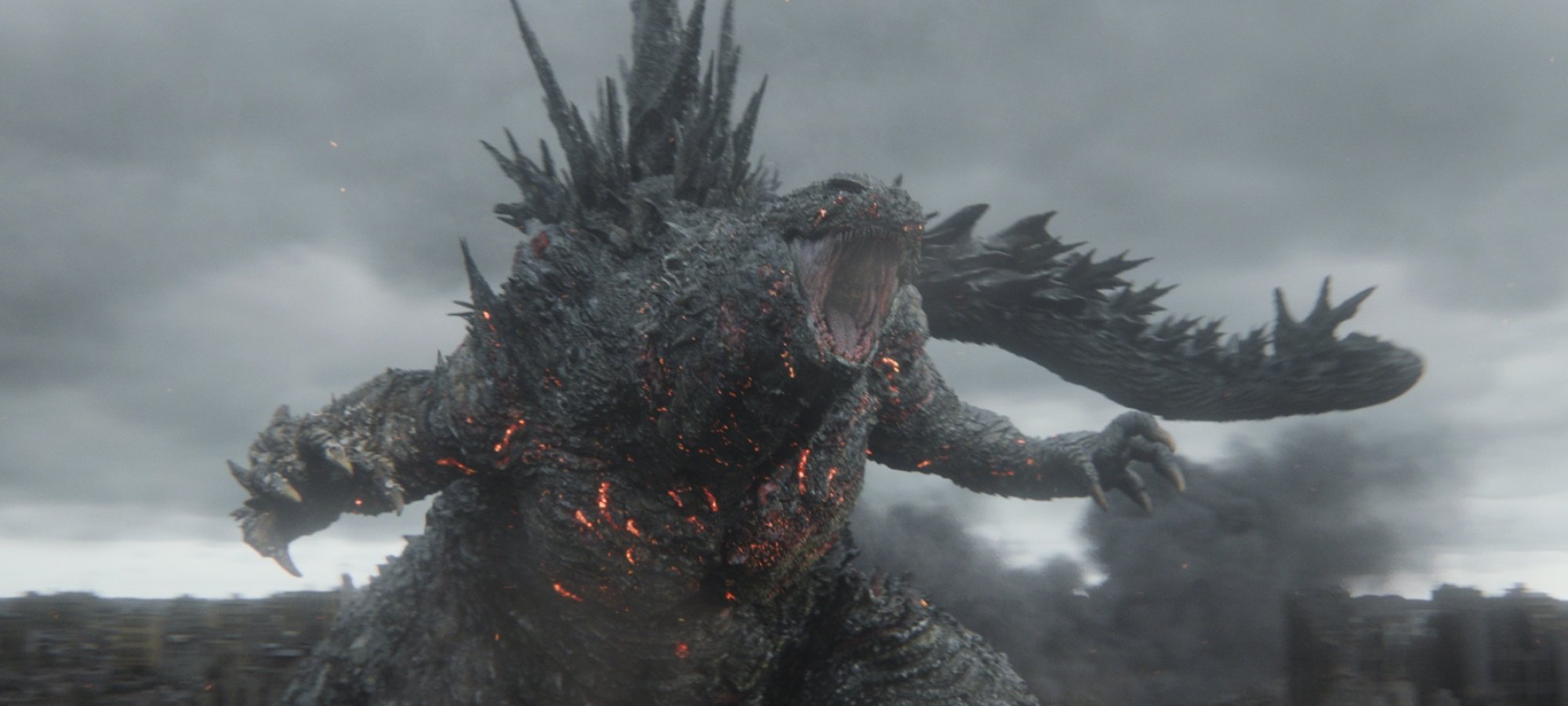
When Godzilla Minus One, rather by surprise, hit worldwide success back in 2023, what really made Toho’s latest reboot of the giant lizard franchise feel different from its American ‘Monster-Verse’ cousin (other than the period setting) was that it took its humans seriously. They weren’t just ridiculous sideshows to punctuate monster action (and occasionally do some embarrassing product placement), but instead the rapidly beating heart of the story. For sequel Minus Zero, writer-director Takashi Yamazaki doubles down on this admirable humanist instinct almost to the point of detriment, a melodramatic human-scale story of grief, guilt, and cycles of violence that at points threatens to overwhelm the fantastically good actual *Godzilla* stuff.
Picking up in 1949, two years after the events of Minus One, we’re reunited with the major players – failed kamikaze pilot turned national hero Koichi Shikishima (Ryunusuke Kamiki), nurse Noriko (Minami Hamabe), and scientist-bureaucrat Noda (Hidetaka Yoshioda) – as the emergence of a new threat forces them back into action. This is the three-headed alien lightning dragon King Ghidorah, which is ‘birthed’ from an asteroid chrysalis to start wreaking havoc in Japan’s provincial towns. Immune to human-made weaponry, a plan is hatched by series newcomer Murakami (Min Tanaka), a biologist who survived the Hiroshima bombing, to pit the recently healed/resurrected Godzilla against Ghidorah and have the two beasts kill one another.
Godzilla is absent for a lot of Minus Zero, playing third fiddle to the people and Ghidorah. The human story is baggier than last time out and played, in general, a bit more histrionically, which can be a bit testing at times. There’s still good stuff – Koichi and Noriko’s relationship with one another and their adopted daughter Akiko is very sweet, and Murakami’s Hiroshima flashbacks are sharp and sobering – but there are more than a few moments where you start finding yourself missing the monsters.
Part of that, though, is Minus Zero being a victim of its own success because the monsters are just so damn good. The effects work here remains exceptional, on a budget that has been expanded since Minus One but would still barely cover a quarter of a Marvel, no doubt in large part due to the fact that Yamazaki, on top of writing and directing, is also the VFX supervisor. Every flap of Ghidorah’s wings, every sinister look given by one of its three heads, and every nuclear Godzilla roar is imbued with weight and intentionality – you feel every terrifying stomp.
In another separation from the American take on this series, the destruction sequences here aren’t just technically impressive, but also manage to be the film’s most effective emotional beats. As houses crumble and people are lifted violently to the sky, the carnage is horrible and frightening. When a small town is wiped off the map, it’s not just to raise the stakes – we see the terror and pain of the locals, keeping things remarkably grounded in a film where nuclear laser breath is a recurring plot beat. The soundscape completes the visuals’ excellent work, crunching sound design complemented by powerful music – Ghidorah’s theme in particular sounds like ‘Ride of the Valkyries’ having a panic attack, the exact sort of sensory attack you need to make a threat like that feel real.
Not quite as streamlined as Minus One, Godzilla Minus Zero still very much feels like a continuation of a definitive take on Godzilla for the current era. Technically immaculate and never glib with the suffering it inflicts on characters both major and background, it combines the various sensibilities of different takes (Godzilla as hero, Godzilla as force of nature, satire of national bureaucracy, even some body horror here and there) for a best of all worlds (if perhaps master of none) approach.

