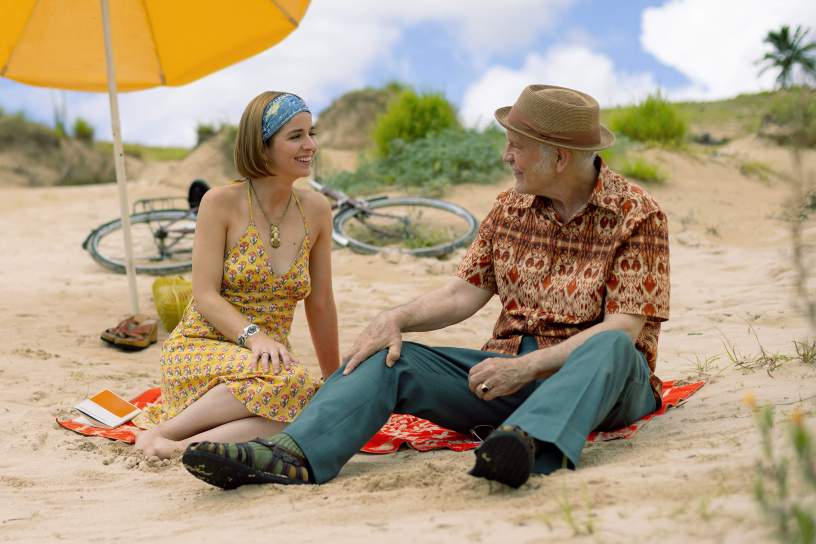
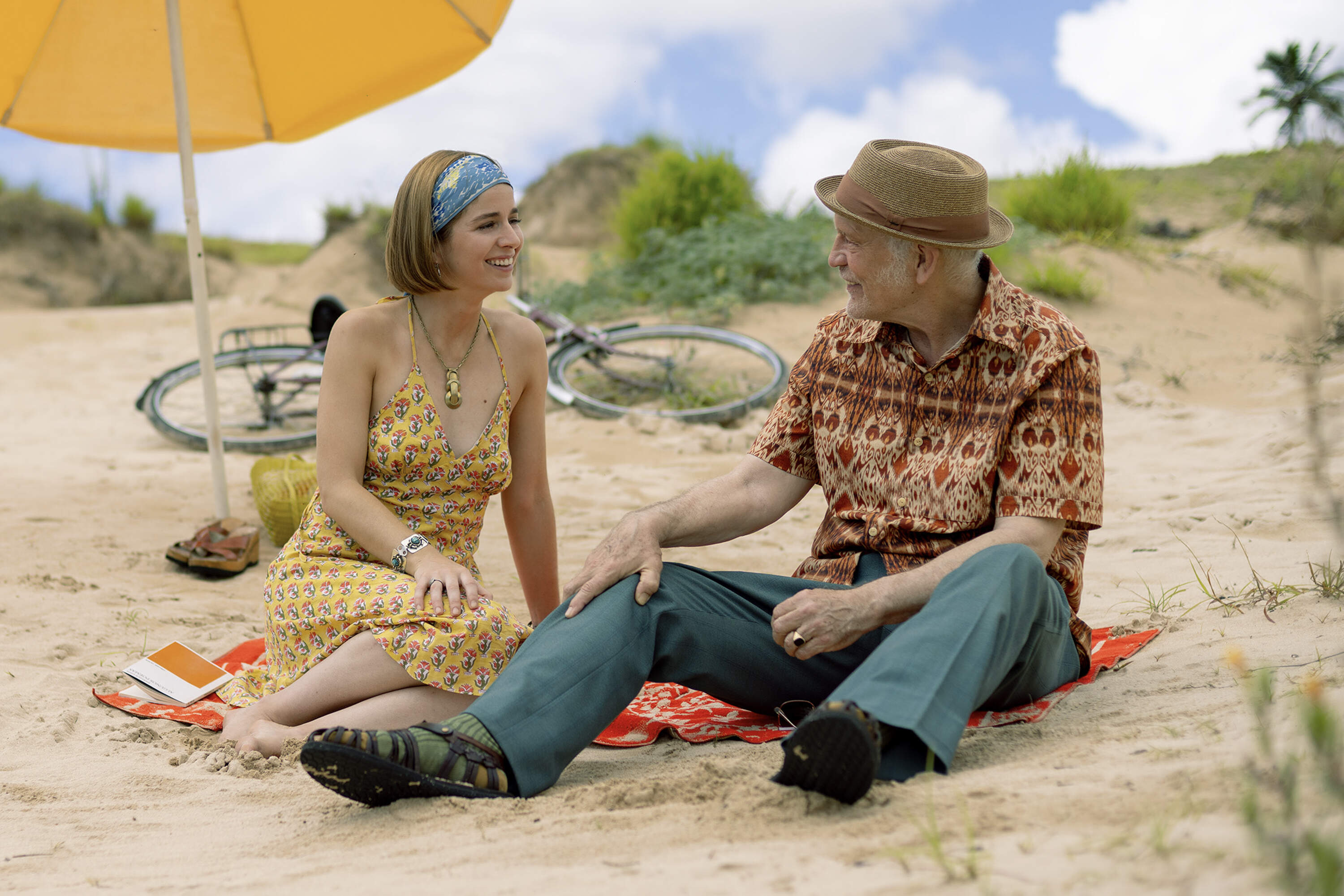
For an actor of his undeniable stature, it’s immiseratingly rare that we get to see John Malkovich at the full stretch of his talents. It’s been 7 years since he helped make The New Pope one of the most strikingly beautiful pieces of television in the last decade and almost two full decades since he was last given a truly worthy movie role in Burn After Reading but now, finally, Wild Horse Nine has him back at the peak of his powers. Martin McDonagh’s follow-up to The Banshees of Inisherin, Wild Horse Nine might not quite stack up as its writer-director’s finest hour, but Malkovich leads it sublimely.
Wild Horse Nine often feels like McDonagh making Banshees of Inisherin 2. Again, there’s a remote island (in this case Easter Island/Rapa Nui). Again, the backdrop is of a politically tumultuous piece of 20th Century history (the build-up to the 1973 coup against Salvador Allende that would plunge Chile into fascism). And again, there’s an age-gap male friendship in crisis – Malkovich’s Chris, a 72 year old CIA agent who predates the very organisation he works and kills for, and his younger partner and best/only friend Lee (Sam Rockwell), who might have to kill him.
Chris is dying of a potent mix of cancer and advancing dementia, forgetting where he is one moment and coughing up blood the next, and he himself has asked Lee to put him out of his misery after seeing the Easter Island heads, a request that suits their station chief MJ (Steve Buscemi) down to the ground. Chris’s reckoning with mortality has made him both more carefree and more regretful, and so he’s started to spout off a lot of CIA secrets, particularly ones about a certain infamous day in Dallas in 1963. There’s quite a bit of setup here, but McDonagh handles it with efficiency to mostly focus in on a mood piece about regret and friendship.
Though there are some laughs and plenty of chuckles in Wild Horse Nine, this is absolutely *not* the zany caper its marketing has billed it as, McDonagh instead in a melancholy mode that commits to neither the caustic quotability of Three Billboards or the wrenching sadness of Banshees. The result is one of his lesser screenplays, though for McDonagh that’s very relative, of course – the writing here is still sharper and more impactful than most of the scripts on offer in 2026, it’s just unlikely to sear itself into your memory than its two predecessors.
There’s a great throughline of the notion of what kindnesses you have left to offer the world after you’ve dedicated a lifetime to evil, a question that Chris, Lee, and even Lee’s cheating, frequently drunk wife Marge (Parker Posey) have to wrestle with. They’re all awful people in their own ways, but they still care about one another earnestly. You could see an uncomfortable trend for McDonagh/Rockwell collaborations of forgiving racist police brutality in Three Billboards and now CIA crimes against humanity here, but I think Wild Horse Nine walks that line by not being about redemption like its predecessor was – a final message of ‘all soldiers and cops are evil’ makes sure of that.
It’s a lot to juggle in a film that is also pretty loosely constructed, but Malkovich absolutely rises to the occasion. He’s exceptional, having Chris’s anger, fear, regret, and vulnerability bubble around every conversation without ever allowing you to forget that this is also a dangerous, nasty man. He also shares a great chemistry with Rockwell; even as each man gets annoyed with the other, the undercurrent of deep friendship is always there and always believable. While he does get plenty of fun moments, Rockwell really is in supporting mode here, and it’s a very generous performance that is as much about letting Malkovich bounce off of him as it is putting himself in the spotlight. Just like Banshees, there are some dynamite animal performances here too, one of the eponymous wild horses every bit the star that Jenny the Donkey was back in 2022.
Though it does feel like McDonagh is repeating himself in Wild Horse Nine, there are certainly worse films to repeat than Banshees of Inisherin. More mournful and contemplative (and less zippy and funny) than you might be expecting, it works best as a vehicle for Malkovich’s best performance since 2008, and that would be worth the price of admission even if there wasn’t thoughtful writing and beautiful ultra-remote scenery to go with it.

