Of the major recurring MCU players, who has the most artistically interesting career outside of Avengers-ing? It’s a question with a few legitimate answers, from Scarlett Johansson to Mark Ruffalo to Lupita Nyong’o, but my money has got to be on Sebastian Stan. His willingness to take any offbeat path offered – from playing dirtbag rocker Tommy Lee to a man haunted by his own face in A Different Man to Donald Trump himself – has proven admirable and compelling and reaches a prestige zenith with Fjord. It might not be quite his career-best work (that still goes to A Different Man), but it’s still an exceptional performance in a Palme d’Or winning film from European arthouse giant Cristian Mungiu, and I don’t think we’ll be hearing about Robert Downey Jr or Tom Holland doing anything like that in the near future.
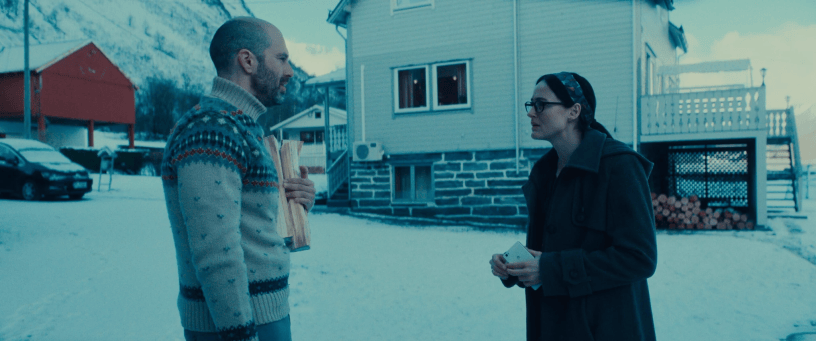
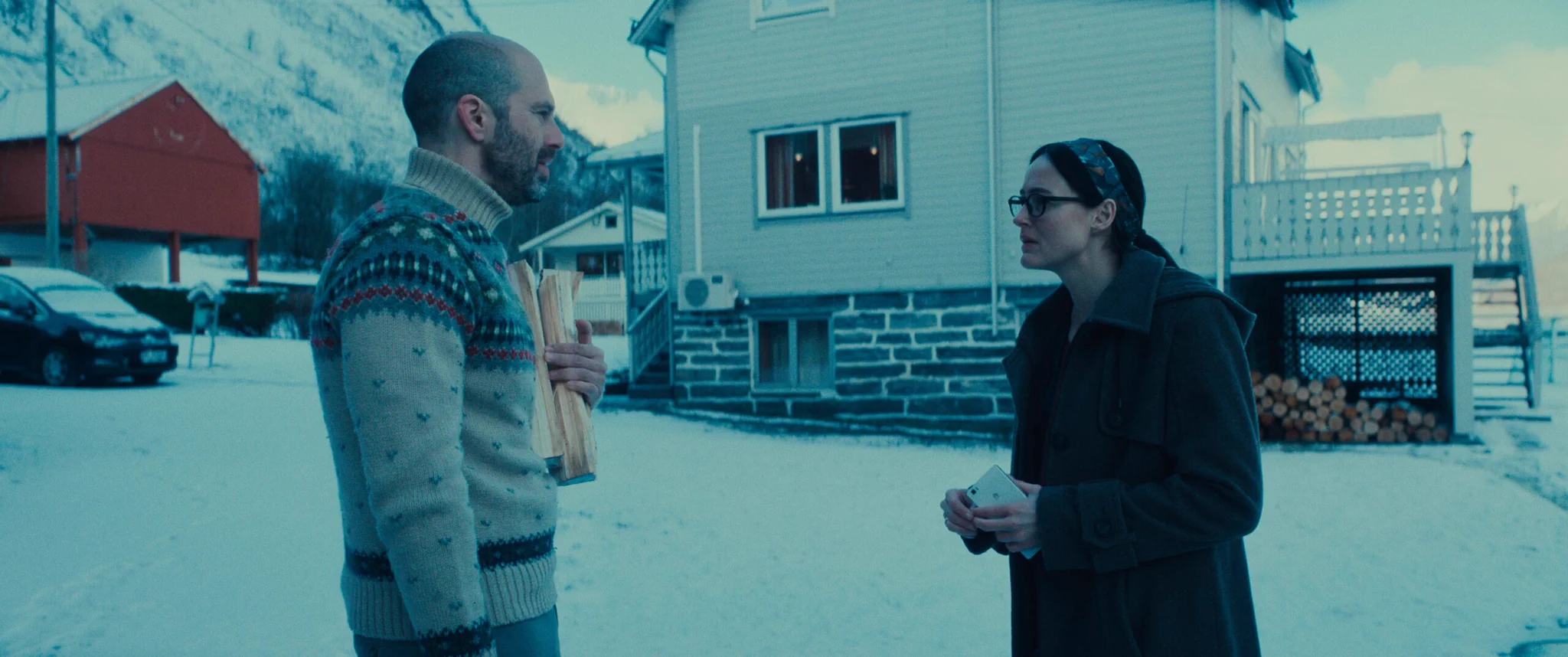
Stan plays Mihai Gheorghiu, a Romanian engineer who has just moved to his Norwegian wife Lisbet’s (Renate Reinsve) tiny, isolated home village to be nearer her parents to help with the raising of their five children. Devout and conservative Evangelicals, their piety causes discomfort in the ultra-progressive local population and when bruises are discovered on the eldest Gheorghiu daughter Elia (Vanessa Ceban), the authorities are let loose to act on their PC disquiet and seize all five kids before putting Mihai and Lisbet on both civil and criminal trial.
There’s been back and forth on what exactly Fjord’s worldview is – whether it’s fully reactionary or ‘just asking questions’ both sides-y – but, despite laughing at certain vulgarly conservative characters, the fact there’s even discourse on that seems mad to me. This is a profoundly conservative film, all about how the evil, godless, gender-obsessed state thinks they know better than you and will steal your kids, even as their faith and evangelism make them natural and irresistible leaders of their peers who might even inspire miracles.
It’s not exactly a set of opinions I share – and part of this is surely cultural, with the vast majority of child protection headlines in the UK being lamentations of evil parents not being separated from their kids quickly *enough* – but deep disagreement does not a bad film make. Yes, there are some moments where Mungiu rather overeggs it, especially in the first lawyer the Gheorghius hire being a miserably archetypal Uptight Feminist who instantly hates Mihai for being a patriarch, but the wrenching humanity and compounding shock and disbelief of the couple is consistently affecting.
Mungiu knows he’s likely playing to a mostly liberal audience – ultra-conservative god-botherers typically aren’t showing up to artsy cinemas – and so some of this is just good old-fashioned provocation. The Child Protective Services are so, so smug, and Mungiu’s look at how self-righteous names terminate critical thinking or dissenting opinions (“we’re Child Protective Services, how can anyone who Protects Children be wrong?”) is very well-observed, a phenomenon you do see frustratingly frequently in any and all current discourses. It’s very effective, and you can’t help but bristle against the platitudes offered by the authorities and their apparent surprise that Mihai and Lisbet are not acting with perfect calm.
Mungiu does also make some concessions in the other direction, though. When Mihai gets in contact with Christian conservative pressure groups back in Romania, they are a creepy, grifting bunch, and the Gheorghius are gifted secular kindness when Elia’s best friend Noora (Henrikke Lund-Olsen), a disobedient, self-harming, sexually-forward phone addict, becomes one of their biggest champions. Aside from the politics, it does create a very believable local smalltown community, people gossiping and disagreeing as the Gheorghius’ plight becomes a cause celebre. It’s a very rich screenplay from Mungiu that should be a prime example for the decreasingly popular viewpoint that a script doesn’t need to parrot your own opinions back at you to be considered clever and intriguing.
Stan and Reinsve reward the writing with a brilliant pair of lead performances, both fully disappearing into their roles until you’re genuinely just seeing Mihai and Lisbet. De-prettified in a major way, Stan instantly convinces as a European festival circuit leading man, while Reinsve ditches her usual vivaciousness for the much more quiet, restrained role of a woman whose internal, invisible life is just as important to her as the external, tangible one is.
It’s all shot mostly unfussily, the inherent grandeur of rural, fjord-y Norway doing most of the visual heavy lifting – you might not want any of these people as neighbours but you’ll almost certainly want to visit their town. Sometimes too didactic for its own good (and if you genuinely won’t be able to stand a full-on conservative diatribe, even a very well-made one, for nearly 150 minutes, this won’t be for you), Fjord is too unsubtle to needle at your own worldview but it will certainly needle at your emotions. At its heart, it finds an ultimate tragedy in how many ways there are to fail a child, be you parent, carer, or state-appointed authority, and that’ll cut anyone to the quick.

