And the prize for 2026’s single best *character* goes too…Andrew Haigh’s A Long Winter for its main supporting role of Lester (as played by Ebon Moss-Bachrach), the endlessly complex, often well-meaning, and occasionally antagonistic father of our hero Mike (Fred Hechinger). A man of deep flaws and also a man of his time – in this case 1950s rural Colorado – he’s also even-tempered, clever, and worldly, able to see deeply into the feelings of others even if he falls short of being able to prioritise these feelings. In other words, he feels as real as possible, a snapshot of A Long Winter’s great success in one character – a slow but constant build into a sublimely affecting intimacy.
Adapting Colm Toibin’s novella, but moving the action from Spain to a small farmhouse teetering high up in the imposing Colorado mountains, Haigh introduces us to Mike and Lester initially through their wildly differing relationships with Louise (Caitriona Balfe), Mike’s mother and Lester’s wife. A restless and ultimately unsatisfied woman with a severe drinking problem, she veers between dutiful love and self-pitying love for the men in her life, emotions made even more chaotic when Mike’s younger brother Tommy (Kit Connor) leaves to go and fight in Korea.
After an argument leads Lester to pour away all of Louise’s stashed wine, she takes her coat, boots, and dog out into a snowstorm, never to be seen again – as the initial searches for her prove unsuccessful it becomes clear that this march into the wilderness was less an escape attempt than a suicide. With Tommy at war and Louise just gone, Mike and Lester have to figure out what life looks like in an isolated winter (the nearest town is 15 miles away and the roads are easily blocked by snowfall) with just the pair of them.
In a very Three Colours Blue-esque manner, this loss, tragic and deeply felt by both men as it is, becomes a kind of freedom; nothing they can do will be useful until the spring, so they have the permission to do nothing. A distance grows between Mike and Lester and the ‘real world’ that becomes hypnotic, even surreal as their relationship gets more complicated as Mike finally grows up into a man of his own and Lester, no longer having to worry about Louise, can start keeping booze in the house for himself again.
It’s a wonderfully atmospheric piece that, even with a small cast, Haigh never allows to feel stagey or restricted. He introduces new supporting characters at a decent clip, from Louise’s brother/Mike’s uncle Frank (Martin Freeman, donning another chameleonically convincing new accent) to mixed-race local boy Jimmy (D’Pharaoh Woon-a-Tai), who Lester hires as live-in help when it becomes clear neither he nor Mike are any good at cooking or housekeeping. Outside of Louise’s disappearance, it is here that A Long Winter is at its most dramatic, Jimmy’s willingness to do ‘women’s work’ quasi-feminising him, leading to a charge between him and Lester that can read as anything from erotic to predatory to just plain bullying.
It’s the only time that A Long Winter gets abrasive and it’s needed, given the softness of the drama elsewhere, not to mention how naturally it fits in with this strange law-unto-itself of icily isolated rural Americana. It also provides an intriguing counterpart to Mike’s own sexuality – he’s gay and has his fantasies, but absolutely no shame and, incredibly unusually but profoundly refreshingly for a story like this, Mike’s queerness creates no real external or internal conflict. This could seem like A Long Winter is too uninterested in its own possible dramas, but instead it just keeps digging deeper into the wells of emotion contained by its own characters without any plot contrivances to artificially speed things along.
All this to say – in maybe too many words – that this is a spectacularly well-written and acted film, building slowly but surely to a climactic dinner table conversation that is just devastating in its nuance and empathy. Haigh pours out a bucket of broken glass and, without fuss or mercy, walks us along it until tears sting your eyes, an immensely moving treatise on how you can’t love others into sharing your dreams or even loving themselves.
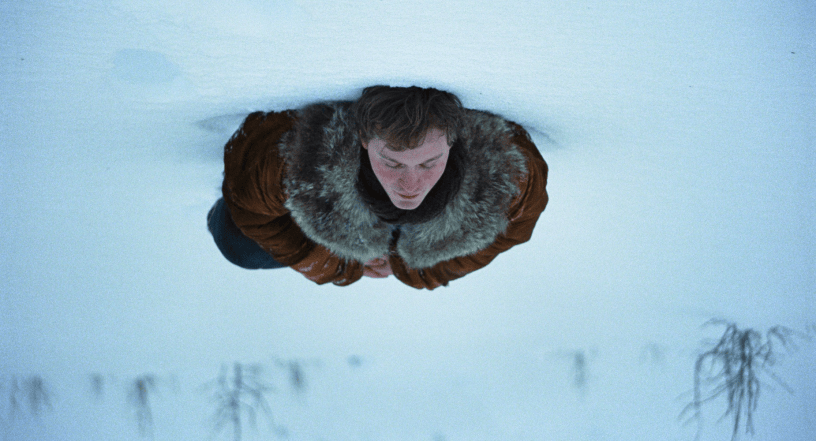
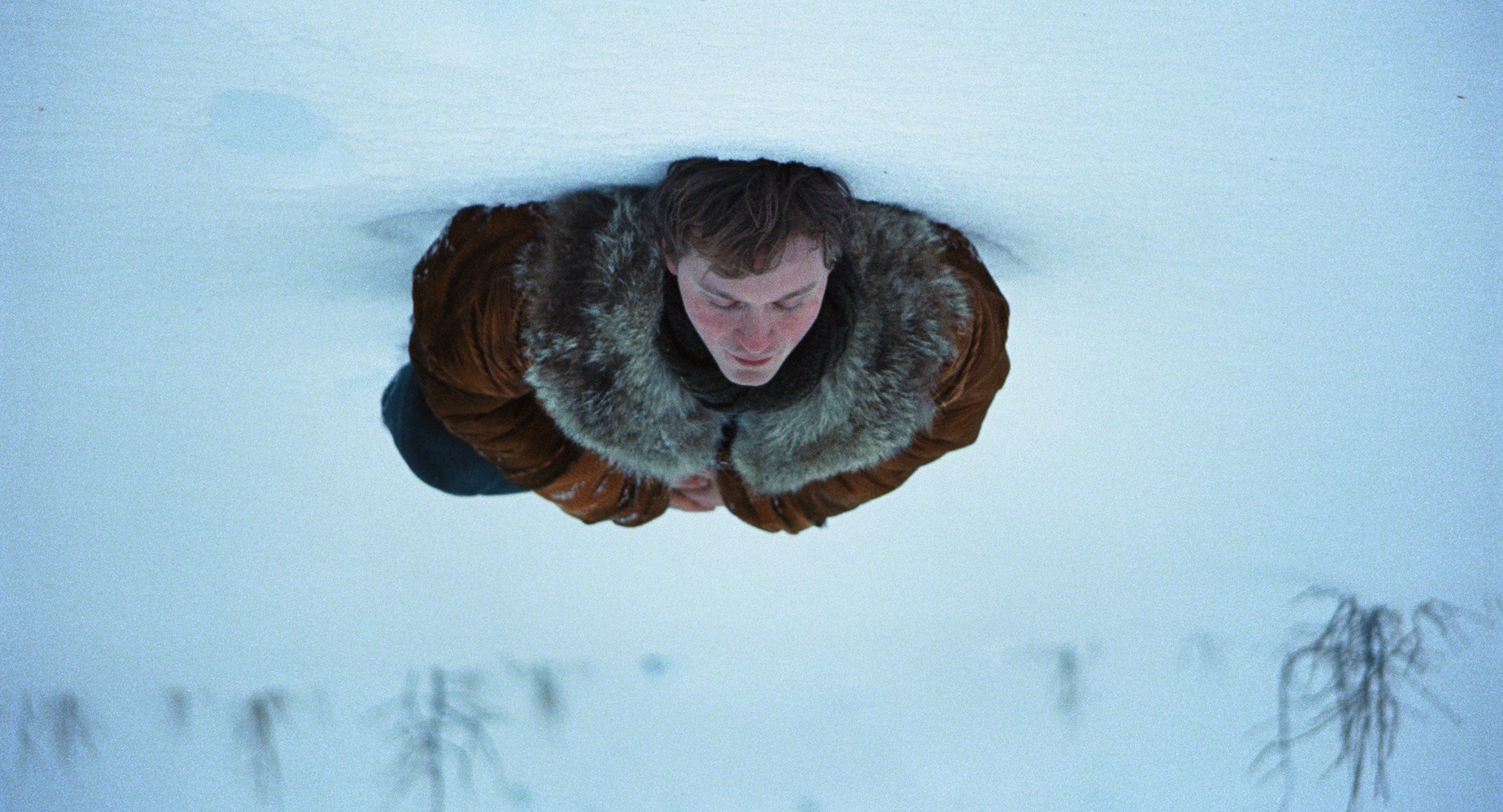
This is also, by a distance, Haigh’s most gorgeous film. You might think there’s a risk of a film set mostly in snow-covered mountains becoming visually repetitive, but Haigh and DP Andre Turpin, shooting on ironically warm 35mm film, find so many ways to show off winter’s beauty. It’s terrifying, dangerous, and surreal in places, but impossibly peaceful in others, blizzards stripping the colour from the environment even as they add new shades of cold-flushed red to characters’ faces. Exquisitely sedate is not a phrase I’d use to describe many movies, but A Long Winter makes its home in this odd achievement, patiently letting the emotional snowballs it rolls at the beginning become an overwhelming avalanche by the end.

